The 1946 Royal Navy revolt: solidarity amid sharpening polarisation Premium
The Hindu
Explore the significance of the 1946 Royal Indian Navy revolt as a moment of solidarity amid rising communal tensions in South Asia.
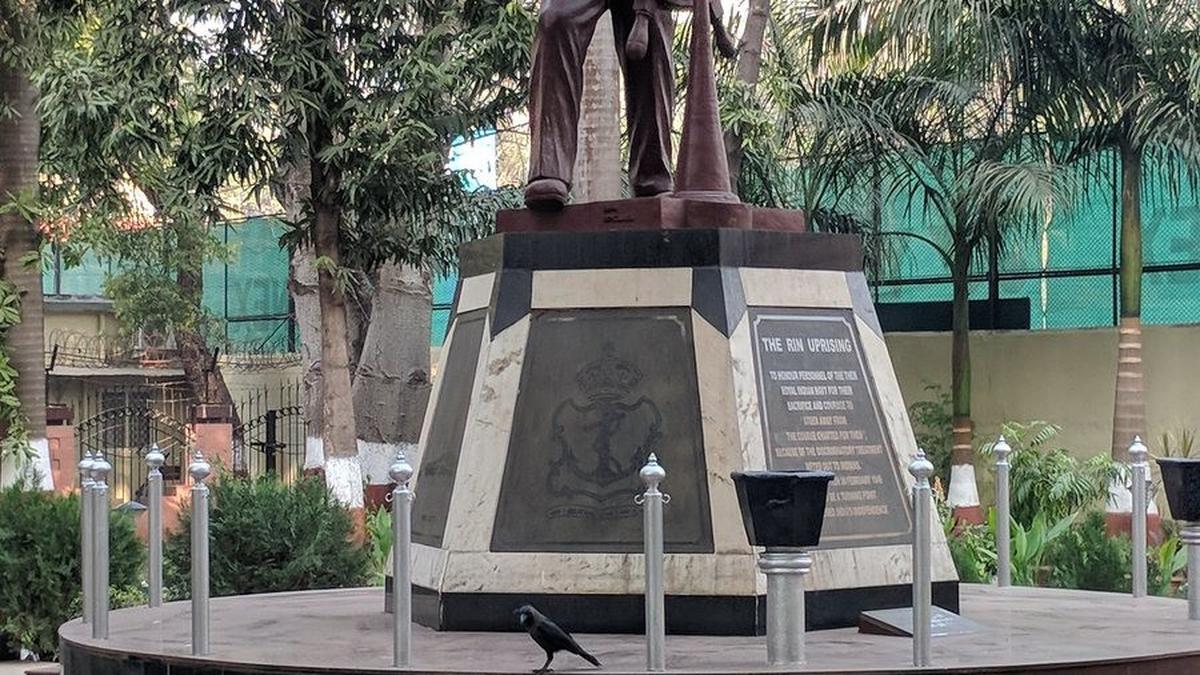
February 18 marks the 80th anniversary of the Royal Indian Navy’s (RIN) revolt of 1946, a brief armed uprising that began at the naval barracks in Bombay and quickly spread to the streets, gaining popular support.
Eighty years later, one must reassess the significance of this short-lived uprising amid these turbulent years, where South Asia is experiencing a worsening of inter-communal relations.
Characterising the revolt as a mere localised breakdown of military discipline and insubordination by naval ratings, which lacked both centralised leadership and coordination, successive colonial officials often described the insurrection as a mutiny. However, a brief account of the events that unfolded between February 18-22 would help one understand the scale of the ‘mutiny’.
The ‘mutiny’ started on February 18, 1946 when hundreds of ratings of the Royal Indian Navy at HMIS Talwar in Bombay went on a hunger strike. These ratings protested against poor food quality, low wages, and racial discrimination by British officers. As news of their strike spread, shore establishments across the castle and fort barracks, along with 22 ships anchored in the Bombay harbour, also refused to work. The naval ratings organised a procession in the city, carrying a portrait of Subhas Chandra Bose, and raised the flags of the Congress, the Muslim League, and the Communist Party on their ships. A naval central strike committee, formed shortly after the hunger strike, combined their grievances with broader national issues, such as the release of Indian national army soldiers.
On February 21, a more or less peaceful hunger strike transformed into a brief armed uprising in the city. It reached its climax when naval ratings inside the barracks waged a pitched battle with firearms against British military forces after they opened fire on the naval ratings. The threat of a full-scale military conflict hung over the city as the rebel ships, in response, manned guns, intending to defend their fellow ratings on shore. Over the next five days, the uprising spread to other naval establishments, ranging from Karachi and Bombay on the western coast to Madras, Cochin, the Andaman Islands, and Vishakhapatnam and Kolkata on the eastern coast. At its height, 78 naval ships from these naval establishments, 20 shore establishments, including one in Delhi, and nearly 20,000 naval ratings participated in this revolt.
Such a momentous event and a flashpoint in India’s decolonisation journey has, however, left so few traces in public memory. It was soon submerged in the abyss of communal polarisation and in the violence of the Partition.


A.P. DGP pays tribute to Potti Sriramulu on his 125th birth anniversary, honouring his sacrifice for a separate Andhra Pradesh.

Discover the cultural and health significance of neem and jaggery during Ugadi, explained by author Ratna Rajaiah.

A minor fire at Thiruvananthapuram government hospital led to patient evacuations; no casualties reported, situation now under control.

BJP reveals 144 candidates for Bengal Assembly polls, featuring Suvendu Adhikari contesting against Mamata Banerjee in Bhabanipur.

A look at Puducherry Assembly elections in 2021, highlighting the current CM N. Rangasamy and key ministers from AINRC and BJP.

Parliament Budget Session LIVE: Follow The Hindu's latest updates on the Parliament Budget Session on March 17, 2026.

Assembly Elections 2026 LIVE: Follow the latest updates on elections from across West Bengal, Tamil Nadu, Kerala, Assam and Puducherry.

Nvidia chief Jensen Huang on Monday said he expects the artificial intelligence chip powerhouse to bring in at least a trillion dollars in revenue through next year.

Political crossovers intensify in Kerala ahead of the 2026 Assembly elections, challenging traditional party loyalties and alliances.

Ten Lee Pharma employees were injured when their mini-bus overturned in Miyapur; all are in stable condition.

Discover how to turn creative passion into a sustainable business by mastering finance, IP, and strategic growth.

Arjun Krish and Ria Dinesh win Best Telefilm at Kerala State Television Awards for their impactful short film, F for Freedom.

redBus data reveals a significant 76% rise in solo women travelers from Karnataka since 2019, highlighting increasing independence in travel.