‘That fight to survive’: Dock tragedy is latest chapter in Gullah Geechee community’s long struggle
CNN
For Michael and Kimberly Wood’s two young daughters it was their first visit to the annual festival celebrating the culture of the Gullah Geechee community on Georgia’s Sapelo Island, the birthplace of their maternal grandmother and descendants of enslaved Africans.
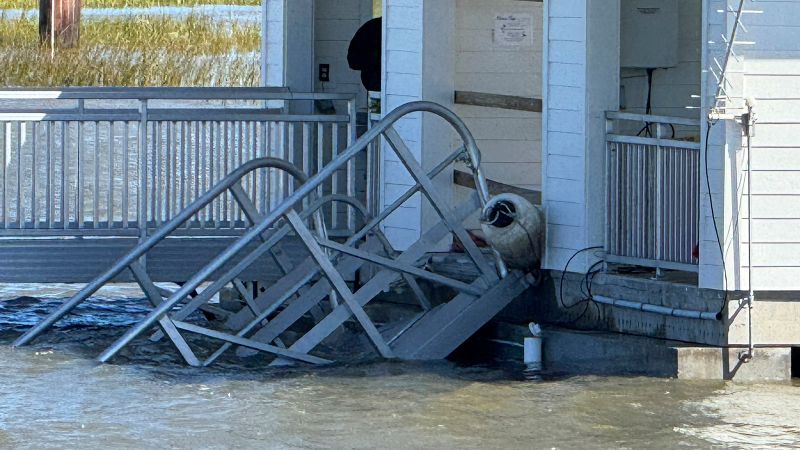
For the young daughters of Michael and Kimberly Wood, it was their first time at the annual festival celebrating the culture of the Gullah Geechee community on Georgia’s remote Sapelo Island, the birthplace of their maternal grandmother and other descendants of enslaved Africans. After a day of storytelling, poetry, religious dance and hope-filled spirituals a week ago Saturday, the Woods, other family members and dozens of festival goers waited on a floating dock and adjoining gangway for the scenic ferry ride to the mainland across marshy Doboy Sound. A loud cracking sound and a sudden shifting of the gangway were the only warning before the relatively new dockside aluminum walkway plunged into the water about 60 miles south of Savannah. The collapse killed seven people, injured several others and gave his two girls what Michael Wood said was their first glimpse of the Gullah Geechee community’s longtime heartache and resilience. “It’s that fight to survive,” said Wood, a quality assurance engineer who slid down the collapsed gangway, snatched his 74-year-old mother out of the water and handed her to a stranger on the dock. Wood said he unsuccessfully attempted to reach his 8-year-old daughter Hailey, who was eventually rescued by the boyfriend of a relative as she clung to part of the dock. His wife Kimberly, clinging to their 2-year-old daughter Riley and using a book bag as a flotation device, drifted away in the strong current before another stranger pulled them safely to shore. The October 19 tragedy is the latest chapter in the struggles of one of the last surviving Gullah Geechee communities in the Georgia Sea Islands. These descendants of Africans who were enslaved on coastal plantations in the Southeast have fought to preserve their ways of life amid what they describe as a long-standing policy of neglect by state and county officials.


This month, terrorist suspects in the alleged bomb-throwing in New York City and the synagogue attack in Michigan visited Phantom Fireworks stores shortly beforehand.

In near-daily briefings with top military officials at the White House, President Donald Trump has reviewed options that include sending American troops into Iran.

With his Atlantic City casinos in duress in the 1990s, Donald Trump saw a potential lifeline in sports betting and aggressively campaigned to legalize it in New Jersey. But when state powerbrokers shut him down, Trump vowed that he’d eventually find a way to win.

Unpaid Transportation Security Administration workers are struggling to stay afloat – and on the job – amid a partial government shutdown that has frustrated travelers inching through security lines that stretch for hours, with wait times only expected to worsen this weekend.

As Havana calls on Cuban exiles to invest in the island, many in the United States are rejecting the offer outright, viewing it as a desperate move by a government under mounting pressure.

After weeks of stalemate — and mounting airport delays nationwide — leaders in both parties are scrambling to work out a deal to reopen the Department of Homeland Security, though it remains unclear if a compromise is in reach.

Trump administration officials are making a desperate push to secure every available barrel of oil amid a worsening energy crisis — even if it means lifting sanctions on the very country that they’re fighting against.

A federal judge on Friday voided various parts of a restrictive press policy rolled out by Defense Secretary Pete Hegseth last year, ruling that they trampled on the constitutional rights of reporters who seek to cover the US military from within its sprawling headquarters.

President Donald Trump is reshaping a Colorado Republican primary by offering one of the candidates a role in his administration and returning his endorsement to the incumbent, whom he called a “RINO” just last month.

More than a month into the Department of Homeland Security shutdown, lawmakers on Capitol Hill are reckoning with their own travel privileges amid anxieties the funding crunch could exacerbate issues at already understaffed airports around the country.

TV host and comedian Bill Maher has been chosen to receive the prestigious Mark Twain Prize for American Humor, two sources close to the Kennedy Center told CNN.

Conventional wisdom has set in that President Donald Trump’s base is sticking with him on the Iran war, but he has alienated significant portions of his voters — and risks alienating more.

US officials are furiously trying to avert a potential monthslong closure of the Strait of Hormuz, privately acknowledging that reopening the key waterway is a problem without a clear solution and dependent at least in part on what lengths President Donald Trump is willing to go to force the Iranian regime’s hand, multiple administration and intelligence officials tell CNN.