TB or no TB is the battle
The Hindu
This week in Health Matters newsletter: pharma companies’ link to electoral bonds, IMA’s mental health helpline for doctors and how microplastics impact heart health.
This week in health: World TB Day, pharma companies’ link to electoral bonds, IMA’s mental health helpline for doctors and how microplastics impact heart health.
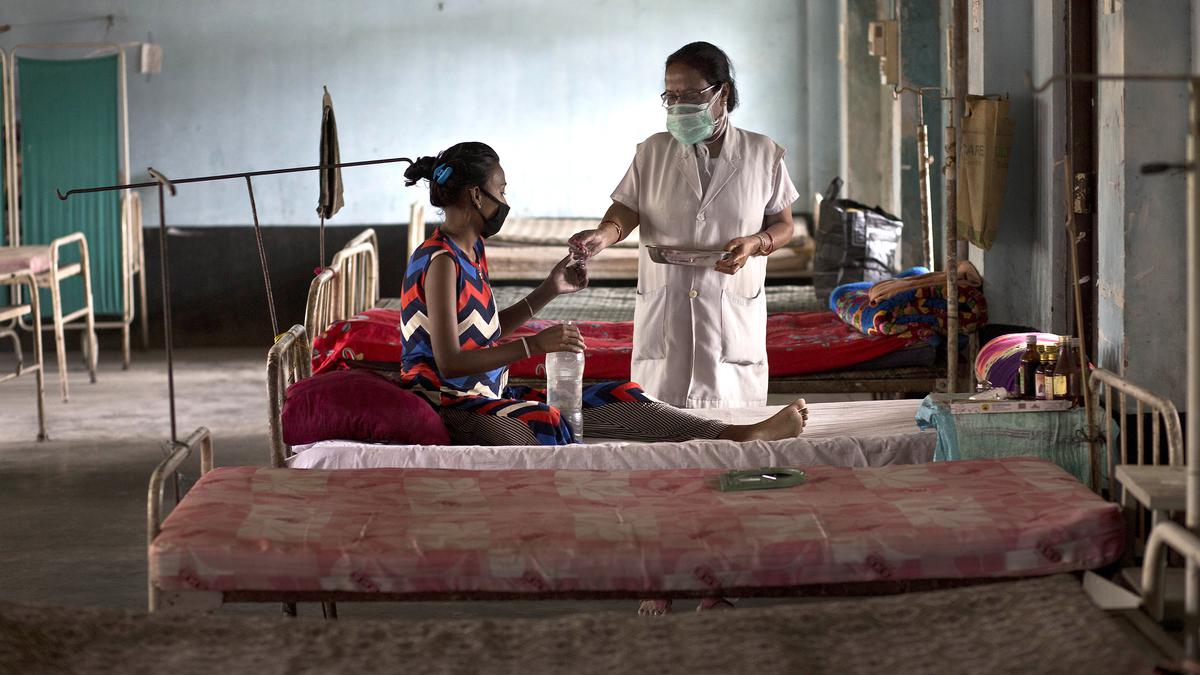
With a crucial target for the elimination of Tuberculosis literally round the corner (2025, to be precise), it was no wonder then that World Tuberculosis Day came with the noise and hoopla that a deadline deserves. We had a wide range of stories, covering a spectrum of issues relating to TB across the different columns and pages, the kind of attention that TB, given its magnitude and impact in India, deserves. With a target on our backs, it was appalling that India finds itself once again in the middle of a crucial TB drugs shortage, similar to the one that was witnessed last year. Clearly what was done in 2023 to stave off a further shortage of anti TB drugs was insufficient. Bindu Shajan Perapaddan reports an important story: TB, HIV patients and activists seek PM’s intervention over frequent shortages of anti-TB drugs. In a letter to Prime Minister Narendra Modi ahead of World TB Day, which is observed on March 24, activists, public health experts, tuberculosis survivors, and people living with HIV sought his urgent intervention to halt what they said were frequent shortages of anti-TB drugs. Till February 2024, [these] drugs — Isoniazid, Refampicin, Pyrazinamide and Ethambutol – are falling short. This is as per the limited information received from the community/TB people in the affected areas and records only a fraction of the actual shortages and stock-outs that have occurred, they added. This might be the worst move for a country operating on a deadline: The most severe impact of these persistent stockouts of anti-TB drugs is on people currently on treatment, leading to a situation of treatment interruption and a very high risk of developing resistance. This also affects treatment outcomes, increasing the risk of the disease in the community, and thereby putting an additional burden on the TB programme, the group warned. Taking the drugs to the people is of the utmost urgency, the government departments should not allow themselves to be distracted by the amazonian political exercise ongoing in the country, and instead focus on making sure the drugs are available.
C. Maya brings up another emerging issue in TB care. Subclinical tuberculosis throws up diagnostic challenges, she writes for Kerala, but the issue remains alive for the other States as well. Patient delays in perceiving the symptoms of tuberculosis and the confounding fact that close to 50% of the people who are tested positive for TB through sputum culture do not have the typical symptoms of the disease are complicating early diagnosis and treatment of TB, she writes. The National TB Prevalence survey (2019-21) reported that the TB diagnosis of 42.6% of survey participants would have been missed if chest X-ray had not been an additional screening tool. Because while their sputum culture was positive, they did not exhibit the typical symptoms of tuberculosis — cough, chest pain, fever, night sweats, or weight loss. “This means that there is a high probability that testing for TB only among those reporting symptoms could result in our missing half of the pulmonary TB cases. Chest X-ray should be roped in as an important modality to screen for TB wherein the persons may have no symptoms suggestive of TB. All cases where X-ray abnormalities are reported should be followed by a confirmatory molecular diagnostic test (NAAT), “ says P.S. Rakesh, senior Technical Advisor, International Union Against TB and Lung Diseases, Southeast Asia.
Sarabjit Chadha further elaborates on the diagnostics aspect, at the moment the most crucial part of the puzzle, here. Globally, diagnosis continues to be the “weakest aspect of TB care”, the author adds. According to the WHO’s ‘Global Tuberculosis Report 2023’, for the first time globally, 7.5 million patients were diagnosed with TB in 2022; yet there remained a large gap of some 3.1 million people who probably fell ill with TB but were not diagnosed and reported to national TB programmes. As the article surmised succinctly, “If we cannot find TB, we cannot treat TB. And if we cannot treat TB, we cannot end TB.” Naturally. The TB diagnostics pipeline is rich with several new innovative tests on the anvil. However, to maximise these tests, their rapid validation and adoption under the programme is critical. To ensure we truly reach the last mile, point-of-care testing and diagnosis is imperative.
Former WHO chief scientist Soumya Swaminathan and public health activist Chapal Mehra push the envelope further on treatment, calling for person-centred solutions. As India grapples with the complexities of controlling TB, we need a paradigm shift urgently — one that places those affected and their lived experiences at the centre of tackling this ancient disease, they write. At the core of this shift lies a fundamental recognition: the needs and the interests of patients and communities must be prioritised within the care paradigm and the healthcare system. This principle, echoed by survivors, communities, health experts and policymakers, underscores the need for a person-centred approach to TB care and management.
Over the years, strong TB survivor advocates have emerged who have stridently worked to put the needs of affected communities on the table. They have sought change in key areas and governments have listened and modified their own approach to meet community needs. A case in point is nutritional support, which while limited, is an important step. Further, the growing focus on patient support, addressing stigma, and gendered aspects of TB has also been important. Additionally, we need to focus on efforts to make care more humane. Hence, mental health support and gender responsive care become critically important. Efforts are also needed to strengthen community-based TB care models, empowering frontline health-care workers to deliver comprehensive care which addresses not just treatment but also social, economic and mental health needs and is closer to where patients live.
For an overview of the TB scenario in India, read Aruna Bhattacharya’s actionable ideas for TB control as she provides a summary of the situation until now, and what needs to be done in the future.


The government plans to amend the FCRA, introducing new regulations for NGO asset management and accountability for key functionaries.

The draft policy for “Responsible Digital Use Among Students”, released on Monday by the Department of Health and Family Welfare, has recommended that parents set structured routines with clear screen-time rules and prioritise privacy, safety, and open conversation with children on digital well-being.

Police Observer Sushant Kumar Saxena conducts surprise inspection at Shencottai police station, reviewing warrants and security arrangements ahead of elections.

Andhra Pradesh government to launch key projects in April, focusing on industrial growth and infrastructure development, says Nara Lokesh.

Lok Sabha refers the Corporate Laws (Amendment) Bill to a JPC amid opposition concerns over CSR provisions dilution.

SHG members in Kanniyakumari use snakes and ladders to raise election awareness and boost voter turnout.

Government accelerates consultations for early implementation of the Women’s Reservation Act to ensure women’s representation in 2029 elections.

CM A. Revanth Reddy distributes ₹1 crore insurance cheques to families of deceased Electricity department employees, enhancing financial security for workers.

The Bengaluru Traffic Police (BTP) registered 634 cases of drunk driving during a week-long special enforcement drive conducted across the city between March 16 and March 22.

GHMC intensifies action against property tax defaulters, seizing properties and offering a One Time Settlement scheme for payments.

CCB arrests three drug peddlers in Mangaluru, seizing ₹2.5 lakh worth of MDMA and other valuables.

TVK's 28 candidates in Puducherry include former BJP MLAs, a sitting Independent, and a retired police IG.

BRS submits notice on private member bill to Speaker