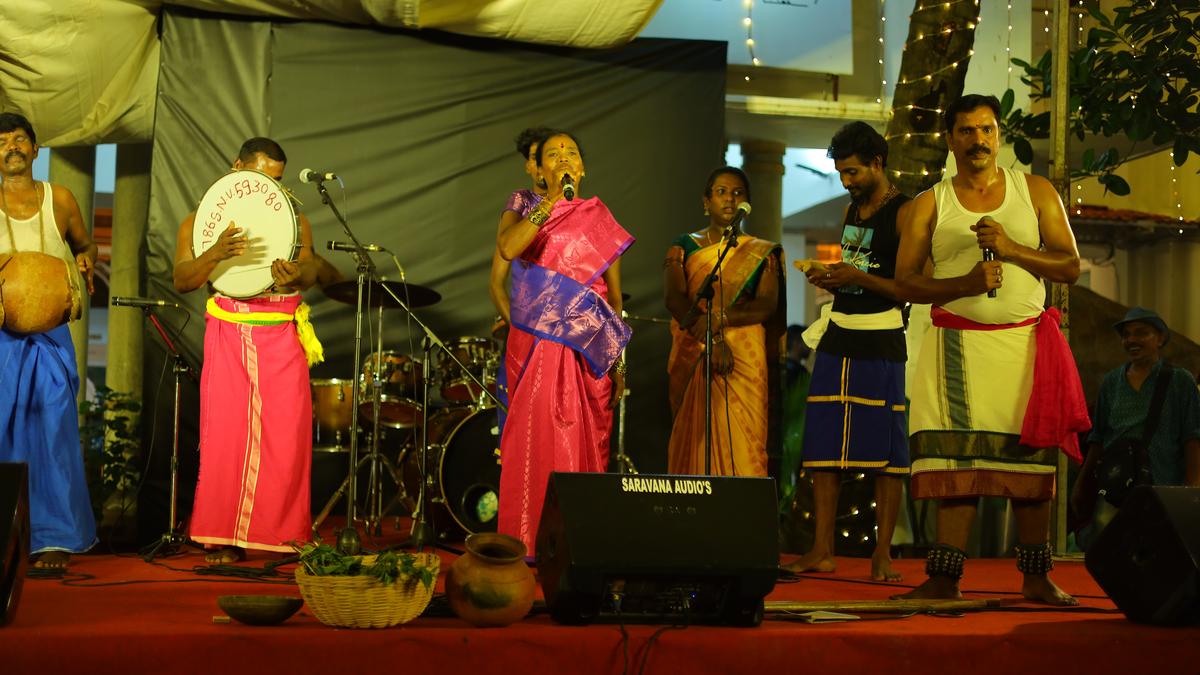
Tamil Nadu’s Irular community finds its voice with the Irular Ensemble
The Hindu
Experience the spirit of youth and celebration with the Irular Ensemble, sharing traditional music and stories of their land.
At the second edition of Alliance Française of Madras’ extravaganza La Nuit Blanche (Sleepless Night) on October 19, a stage was dedicated to music, another to dance and performance, one to games, and another to sound baths. Culture and conversation went on well into 3am, the following morning. The air was rife with the spirit of youth and the quest for celebration.
Somewhere at the back of the institute, tucked away from the chaos, was a band of 10, getting ready for their second major performance. It was just an inconsequential rehearsal to check if the vocal cords worked well and if the dol kattai (a traditional music instrument) could maintain a steady sense of rhythm.
However, once S Rani began singing and the percussion followed, a silence took over this rehearsal space. A scattered audience distractedly watching other performances, quickly grouped together like ants, mesmerised by the Irular Ensemble.
“This is not the actual performance. Come and watch us later tonight,” Rani announced.
Fifty three-year-old Rani, the lead singer of the Irular Ensemble, has an interesting story to tell. Until a few years ago, the music she sings today about plants, animals and folk deities which has been passed on for generations from her tribal forefathers, would not have been platformed the same way. Nor would it have elicited this Pied Piper-like response from the audience.
“We are part of India’s Scheduled Tribes list and come under the ‘Irular’ category. Traditionally, my grandfather and the generations before him, lived in the forests of Tamil Nadu and some nearby states. Over time, in search of livelihood, we moved out of there. Until then, we lived off forest produce as we worshipped the earth — the honey, animals and everything else we could find — were deemed ours. Things changed though. Once we left the forests, we found ourselves settling outside the society and rarely being part of it,” she says.
The Irular community, a Dravidian ethnic group from Tamil Nadu and parts of Telangana and Kerala, was relegated to function outside of society. They were only employed, with no choice, but to catch rats and snakes, and cut down trees. “We would be called only for such jobs,” Rani says.


The government plans to amend the FCRA, introducing new regulations for NGO asset management and accountability for key functionaries.

The draft policy for “Responsible Digital Use Among Students”, released on Monday by the Department of Health and Family Welfare, has recommended that parents set structured routines with clear screen-time rules and prioritise privacy, safety, and open conversation with children on digital well-being.

Police Observer Sushant Kumar Saxena conducts surprise inspection at Shencottai police station, reviewing warrants and security arrangements ahead of elections.

Andhra Pradesh government to launch key projects in April, focusing on industrial growth and infrastructure development, says Nara Lokesh.

Lok Sabha refers the Corporate Laws (Amendment) Bill to a JPC amid opposition concerns over CSR provisions dilution.

SHG members in Kanniyakumari use snakes and ladders to raise election awareness and boost voter turnout.

Government accelerates consultations for early implementation of the Women’s Reservation Act to ensure women’s representation in 2029 elections.

CM A. Revanth Reddy distributes ₹1 crore insurance cheques to families of deceased Electricity department employees, enhancing financial security for workers.

The Bengaluru Traffic Police (BTP) registered 634 cases of drunk driving during a week-long special enforcement drive conducted across the city between March 16 and March 22.

GHMC intensifies action against property tax defaulters, seizing properties and offering a One Time Settlement scheme for payments.

CCB arrests three drug peddlers in Mangaluru, seizing ₹2.5 lakh worth of MDMA and other valuables.

TVK's 28 candidates in Puducherry include former BJP MLAs, a sitting Independent, and a retired police IG.

BRS submits notice on private member bill to Speaker