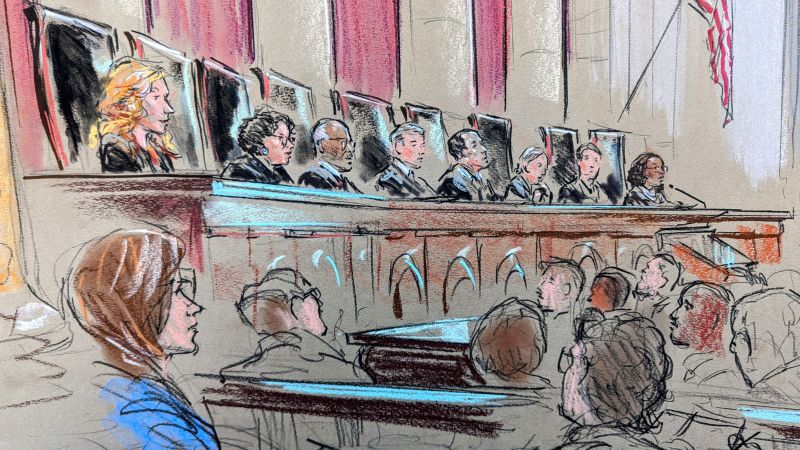
Takeaways from the Supreme Court’s historic decision granting Donald Trump immunity
CNN
The Supreme Court handed down a landmark decision Monday granting Donald Trump partial immunity from special counsel Jack Smith’s election subversion case, handing the former president a significant win during his reelection bid.
The Supreme Court handed down a landmark decision Monday granting Donald Trump partial immunity from special counsel Jack Smith’s election subversion case, handing the former president a significant win during his reelection bid. Though the 6-3 ruling technically allows Smith to inch the prosecution toward resolution, the majority opinion from Chief Justice John Roberts left many technical questions unresolved – making it increasingly unlikely that a trial can get underway before the November election. “The president is not above the law,” Roberts wrote for the conservative majority. “But Congress may not criminalize the president’s conduct in carrying out the responsibilities of the executive branch under the Constitution.” Smith’s case now returns to lower courts, which must review the specific steps Trump took to overturn the results of the 2020 election and whether those actions were official, and therefore receive immunity, or private, and do not. Here’s a look at the key takeaways from a historic decision: In several key respects, Trump got what he wanted from the 6-3 court – and more.


Kentucky Gov. Andy Beshear, speaking in JD Vance’s home state of Ohio on Saturday, tore into the vice president, questioning his Appalachian roots and telling voters they “deserve better.”

President Donald Trump has said ICE agents will head to US airports tomorrow amid a partial government shutdown. Follow for live updates

Cuba is working to restore the electricity supply after another island-wide blackout left more than 10 million people without power.

President Donald Trump said Sunday border czar Tom Homan will be in charge of deploying Immigration and Customs Enforcement agents to airports on Monday, with Homan telling CNN the agents will help with security at entrances and exits to ease the Transportation Security Administration’s workload.

Donald Trump wants us to believe that a deal with Cuba is close at hand. After this past week, I am not so sure.

President Donald Trump has said ICE agents will head to US airports tomorrow amid a partial government shutdown. Follow for live updates

President Donald Trump said Sunday border czar Tom Homan will be in charge of deploying Immigration and Customs Enforcement agents to airports on Monday, with Homan telling CNN the agents will assist with security at entrances and exits to ease TSA workload amid a partial government shutdown.

Janet Mills and her allies are counting on a gender gap to narrow Platner’s wide lead ahead of the June 9 primary to decide who will face incumbent Republican Sen. Susan Collins. They are betting that the unfiltered style that has brought Platner widespread attention as someone who could help Democrats reach young men will backfire with women.

Why do people “pledge allegiance” to a “state” that is no longer a state? And what spurs someone to not just attack innocent people, but to then make a statement of loyalty while doing so?

A Supreme Court case examining state deadlines for election ballots sent in the mail is just the tip of the spear in President Donald Trump’s war on mail-in voting.

As a shrinking number of Transportation Security Administration agents work to keep hourslong security lines moving despite not being paid, President Donald Trump stepped into the fray Saturday, announcing he will send Immigration and Customs Enforcement officers to airports by Monday if Congress doesn’t agree to a plan to end the partial government shutdown.

Donald Trump wants us to believe that a deal with Cuba is close at hand. After this past week, I am not so sure.

The search for missing 84-year-old Nancy Guthrie, mother of “Today” show host Savannah Guthrie, has stretched into another anguished week, with mounting pressure on investigators and a family grappling with uncertainty.