Take a dip into cocktails and bar bites at Mumbai’s new bar — Bombay Daak
The Hindu
Mumbai’s latest bar called Bombay Daak takes a deep-dive into India’s daaru-chakna culture with a food menu featuring dishes from food writers and family members to the duo’s building guard
India had a drinking culture even before awards and lists, the rise of clarification, and the Made-In-India gin boom. Mentions of alcohol production in the country date back to 2,000 BC with citations from the Indus Valley civilisation and in the Mahabharata. Apart from this, there was also the 12th-Century text, Manasollasa, which outlined the art of preparing wine from grape and sugarcane, alongside less-obvious sources such as palm, coconuts, and dates. All this is to say that when it comes to drinking, India has a vast and vibrant repository worth dipping or diving into just like chef Niyati Rao and her team did for one year, in anticipation of their August 2024 opening: a vibey, 32-seater in Mumbai’s edgiest neighbourhood, Bandra West, called Bombay Daak.
“Everyone knows about regional Indian food and now, people are getting into micro cuisines, but I don’t think that anyone has ever ventured into the chakna [bar snacks] or liquor space, where you’re really highlighting how Indians eat and drink,” says Niyati, who helms the establishment along with her business-and-life partner, Sagar Neve. The duo also owns the well-regarded restaurant Ekaa and the adjacent café KMC in the city’s south.
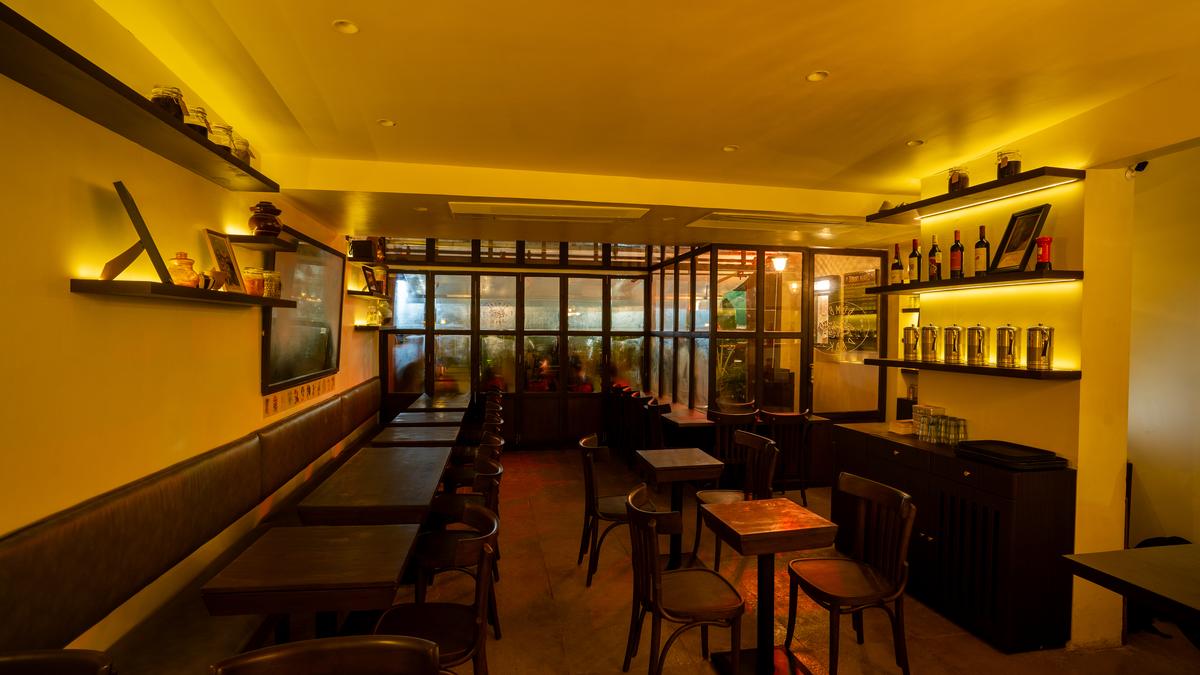
Located at the fag end of a seedy bylane, the bar-cum-restaurant tries to create an amalgam by drawing from drinking habits and traditions as seen in living rooms, toddy shops, dreggy watering holes, and universally loved dive bars across the country. Moulded by data gathered from extensive travels: some intentional; some per-chance — during vacations or while visiting for takeovers and pop-ups — this is an expressive space. It comes cloaked in deep wood and tons of knick-knacks, such as brass lamps restored from an old Bombay British whiskey bar, photo frames, soda bottles, and stainless steel jugs straight out of your local theka. Atmospherically, the mood is right: there is a soundscape woven out of clamour and chatter, interrupted only by the mellifluous voice of Nadia Hassan aka the Queen of South Asian Pop.
The food menu is succinct and features dishes inspired by stories collected over conversations with 114 people, ranging from food writers and family members to the duo’s building guard (12 of these are commemorated at the space on what is now christened the Donor’s Board). For instance, the standout creations — the piquant Zhanzanit Kakdi, a salad-toss of cucumber, peanuts, and green chilli that draws from a similar snack served at one of Kolkata’s oldest, colonial-era bars, Chhota Bristol. Or, the lovely smoke and pork, which mimics a pork chakna Niyati discovered during her frequent visits to the Northeast.
Speaking about her process, she says, “I wanted to start from somewhere as simple as home, without going too far away. Before this, I didn’t even know that my grandmother hosted parties, because she doesn’t drink. My mom doesn’t drink, and neither did my father. We are all teetotalers. But they loved entertaining. So, I wasn’t aware that they had an entire collection of chaknas until the topic came up again. And it completely changed my perception, because for me, they were new people all over again. It wasn’t just my grandmother. It was my new, bougie grandmother.”
The bar menu, on the other hand, showcases a roster of cocktails utilising local Indian spirits; desi ingredients like ghee and flavours like rasam in drinks like The Finding Feni featuring gin, feni, raw mango, jaggery, spices, and asafoetida. Or the Instagram-favourite Santra Season (it comes in a paua or quarter bottle) with gin, pickled karvanda (Indian berry), thecha, santra, strawberry wine, Malvani masala hydrosol, and tonic water.
While audacious and creative, these drinks get lost in translation. The idea of a rasam powder hydrosol, amaro, caramelised tomato, and gin-based cocktail — named after a Tamil chartbuster, Whistle Podu — for example, ended up being more interesting on paper. The Finding Feni, in comparison, had more flavour and has the potential to evolve into an easy-sipping tipple — like a no-brainer gin and soda at a dive — with a streamlined composition and some balance. What this means for a place that is trying to position itself as a cocktail-first establishment (with a six-course tasting menu just for the cocktails, no less) is a skewed narrative — one where the food, albeit inadvertently, steals the show.


Karnataka government to consult legal experts on pursuing action against Adani Group's ACC Ltd. over ₹850 crore in disputed dues.

The FCRA amendment bill aims to create an authority for managing NGO assets after license loss, addressing misuse of foreign funds.

Telangana Minister assures adequate petroleum stocks for three months, warns against illegal fuel carrying amid panic buying rumors.

TMC calls for the removal of Bhabanipur returning officer, citing alleged ties to BJP and concerns over neutrality.

Kerala CM Pinarayi Vijayan condemns UDF's misogynistic attacks on CPI(M) legislator U. Prathibha, highlighting political degeneration.

Selected from 9,400 submissions across 37 countries, the 100 photographs on display traverse intimate and political terrains. In MRC Nagar, photographer Swastik Pal captures life in the Sundarbans, where severe climate change has brought humans and wildlife into closer contact. Shane Hynan’s Beneath Beofhod reflects on Ireland’s boglands as sites of memory and restoration, while Mateo Trevisan’s More than the Sun examines the impact of coal-driven industrialisation in the Western Balkans.

Hyderabad officials assure sufficient fuel supply for 60 days, warn against misinformation and illegal sales amid panic buying.

Telangana MP urges Centre to expedite ₹1,270 crore dues transfer from Andhra Pradesh for financial fairness and development.

A Karnataka man was detained with ₹62.5 lakh in cash during election checks on NH 544, claiming it was from a property sale.

Telangana Government issued 16 notifications to fill 31,798 vacancies, with 67,763 total recruitments since Congress took power.

Supreme Court directs Tarun Butolia's family to seek safety assessment from Delhi Police after fatal Uttam Nagar clash.

CM Stalin asserts unity in the DMK-led alliance, dismissing division attempts and emphasizing collaborative efforts for the upcoming elections.

Rahul Gandhi to skip Kerala rally due to Sonia Gandhi’s ill health; Kharge to attend Kozhikode event
Rahul Gandhi will miss the Kerala rally due to Sonia Gandhi's health; Congress president Kharge to attend instead.