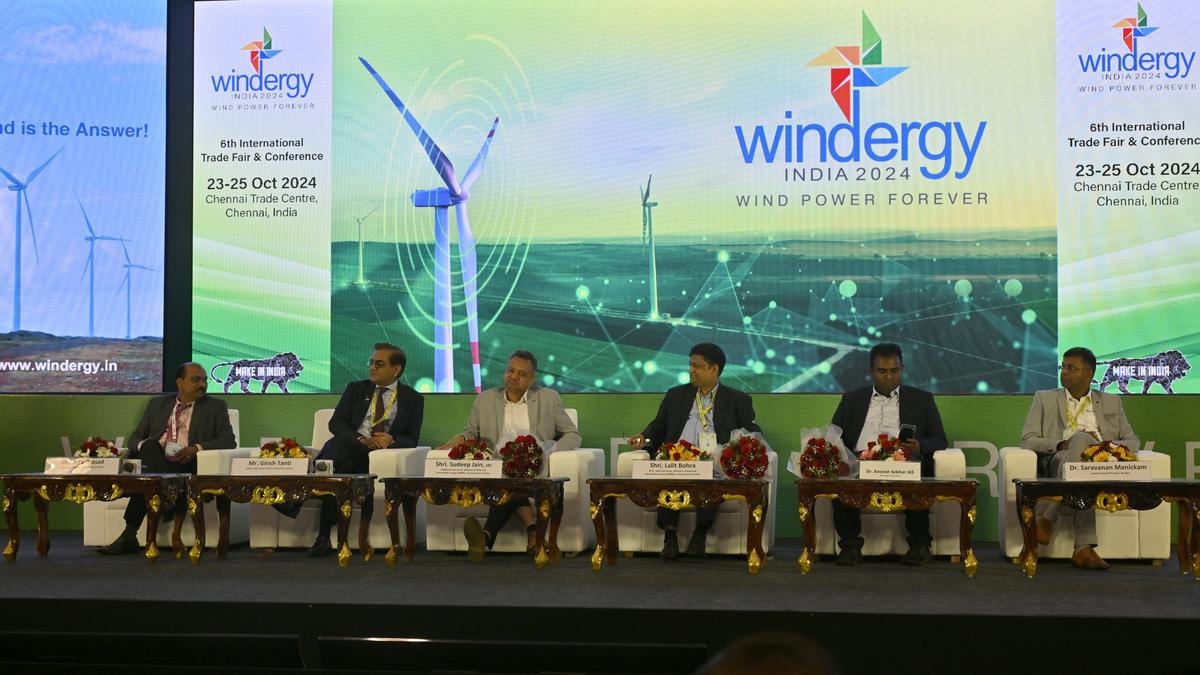
‘T.N. will add 30 GW of renewable energy capacity in the next six years’
The Hindu
Tamil Nadu aims to add 30 GW of renewable energy capacity in 6 years, focusing on wind energy transition.
The State will add 30 gigawatt (GW) of renewable energy capacity in the next six years, said Aneesh Sekhar, Managing Director, Tamil Nadu Green Energy Corporation Ltd.
“We have a total renewable energy capacity of 24 GW. We have set a target of 50% of energy consumption coming from renewable energy sources by 2030,” he said speaking at the Windergy India 2024 conference on Wednesday.
Mr. Sekhar said, “Tamil Nadu has a wind installed capacity of 10.5 GW and is a pioneer in wind energy. Wind energy will play a big role in the State’s energy transition. The Union Ministry of New and Renewable Energy (MNRE) has estimated Tamil Nadu’s wind potential to be 75 GW. We have an offshore wind potential of 35 GW.”
Mr. Sekhar said the key to energy transition is execution. He also said the State had come out with a re-powering policy for the wind sector. Speaking on the sidelines of the conference, Mr. Sekhar said the State received five proposals for repowering and expecting more.
“We are expecting about 1,400 MW of projects to come up for re-powering initially. The challenge to be addressed is the infirm nature of wind energy and storage is one option which is being looked at to make it a firm power,” he added.
Sudeep Jain, MNRE Additional Secretary and Girish Tanti, Vice-Chairman of Suzlon. hailed the pioneering role played by Tamil Nadu in the wind energy sector.


Congress criticises Modi government, citing reports about Pakistan's diplomatic role amid U.S.-Iran tensions, labelling it a setback for India.

Folk music with the Barmer Boys that crosses all boundaries

Tamil comic blockbuster Thaai Kizhavi releases on JioHotstar this week, as actress Radikaa Sarathkumar rewrites rules on pay, age, and women in Tamil films

"The jury has difficulty coming to a consensus regarding one defendant, do you have any advice on how to move forward?" the jurors told Judge Carolyn Kuhl

Maharashtra relocates 25 leopards to Gujarat's Vantara facility amid rising leopard and tiger populations, says Forest Minister Naik.

Assembly polls 2026: Follow updates from The Hindu on the upcoming elections in five States on March 24, 2026

Delhi's per capita income is projected to grow 7.09% by 2025-26, highlighting the city's economic progress and infrastructure challenges.

Review meeting held in Dharmapuri with election observers and nodal officers to discuss upcoming Assembly elections.

Execution of development projects, infrastructure augmentation to occupy centre stage in electioneering

Telangana Cabinet approves Hate Speech and Parents Support Bills, ensuring accountability for neglecting elderly and curbing hate-driven offences.

EU and Australia finalize a free trade agreement and establish a new defense partnership to enhance economic and military cooperation.

U.S.-Israeli war on Iran LIVE: Iran faces deadline of US President Donald Trump warning to open Strait of Hormuz. Follow The Hindu for more LIVE updates on March 23 2026 on Iran-Israel war.

KPCC chief Sunny Joseph emphasizes UDF's focus on Sabarimala and corruption while expressing confidence in winning Kerala's upcoming Assembly elections.