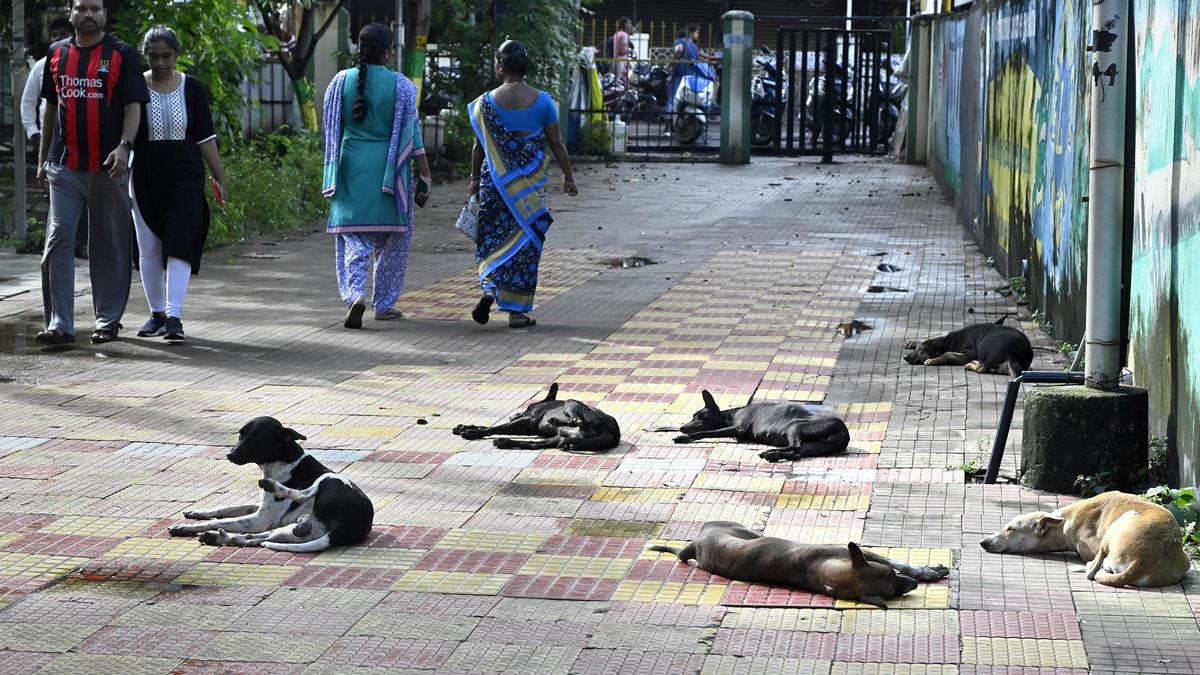
T.N. govt. to discuss methods to control stray dog population
The Hindu
The Tamil Nadu government will hold meetings with officials of the Municipal Administration and Water Supply (MAWS) and Animal Husbandry Departments over the stray dog problem in the State and come up with methods besides animal birth control to check their rising population.
The Tamil Nadu government will hold meetings with officials of the Municipal Administration and Water Supply (MAWS) and Animal Husbandry Departments over the stray dog problem in the State and come up with methods besides animal birth control to check their rising population.
Amid growing concerns, Health and Family Welfare Minister Ma. Subramanian said a meeting with the departments would be conducted after the State’s Budget presentation.
According to officials of the Public Health Department of the GCC, over 17,000 dog bite cases — involving both domestic and community dogs — are reported every year.
GCC Ward 152 councillor S. Bharathi said it had been nearly two years since the last anti-rabies vaccination drive for stray dogs was conducted. “They scavenge through garbage, scattering waste and posing a health hazard for residents. This issue will be raised again in the upcoming council meeting,” she added.
Further, A. Krishnan, a resident of East Tambaram, alleged that packs of ferocious dogs were often seen chasing locals, especially at night. “Instead of discharging the animals back to the areas after animal birth control, they must be impounded,” he said. Impounding is a process of confining dogs to a public enclosure.
Both GCC and Tambaram Corporation authorities, however, said permanent sheltering of stray dogs could not be taken up due to certain provisions under the Prevention of Cruelty to Animals Act and the Animal Birth Control (ABC) Rules 2023. They noted that even if civic bodies were allowed to impound them, there could be heavy backlash from animal lovers and rights activists.
Citing urbanisation as the cause for a lack of spaces for animals to wander, a volunteerof an animal shelter, said that just as humans wanted their fears and concerns respected, those of animals too must be considered. “People were not against stray animals on the streets previously. Around 50-60 years ago, when Koyambedu had several green and open spaces, people and animals coexisted.”


Srirangam residents seek improved infrastructure and amenities to support rapid urbanization and growing tourism demands in the constituency.

Alandur faces unresolved civic infrastructure issues, including lack of water and drainage, despite recent development efforts ahead of TN Election 2026.

Delhi's fiscal deficit surged by 62% in 2025-26, reflecting revenue declines and raising concerns about the city's economic health.

Kerala Assembly Elections 2026: Anvar and Firos face multiple namesake rivals in their constituencies amid a crowded candidate field.

Kamal Haasan announces support for DMK in 2026 elections, emphasizing the need for 'Dravidian Model 2.0' for Tamil Nadu's welfare.

DMK finalises seat-sharing for the 2026 Tamil Nadu Assembly elections, contesting 175 seats with allies DMDK and VCK.

Parliament may adjourn early for Assembly elections, allowing MPs to campaign in key election-bound states.

Indian vessels can freely sail through the Strait of Hormuz without needing permission, confirms a senior government official.

The Hindu Morning Digest gives a select list of stories to start the day. Read the top news today on March 25, 2026

An IndiGo flight at Vijayawada airport was grounded due to a tyre burst, but all 79 occupants are safe.

Tamil Nadu Assembly election 2026: TMC(M) gets five seats in NDA, to contest on BJP's 'Lotus' symbol
TMC(M) secures five NDA seats, to contest Assembly elections using BJP's 'Lotus' symbol in Tamil Nadu.

The Karnataka government will discuss with officials the possibility of creating a portal for unemployed youth to share their details and access job opportunities in micro, small and medium enterprises (MSMEs), Minister for Small Industries and Public Enterprises Sharanabasappa Darshanapur said in the Legislative Council on Tuesday.

AIADMK's 2026 manifesto promises free rations, women's benefits, education reforms, and economic growth initiatives for Tamil Nadu.