Swallowtail butterflies in key Assam habitat face a citrus worry Premium
The Hindu
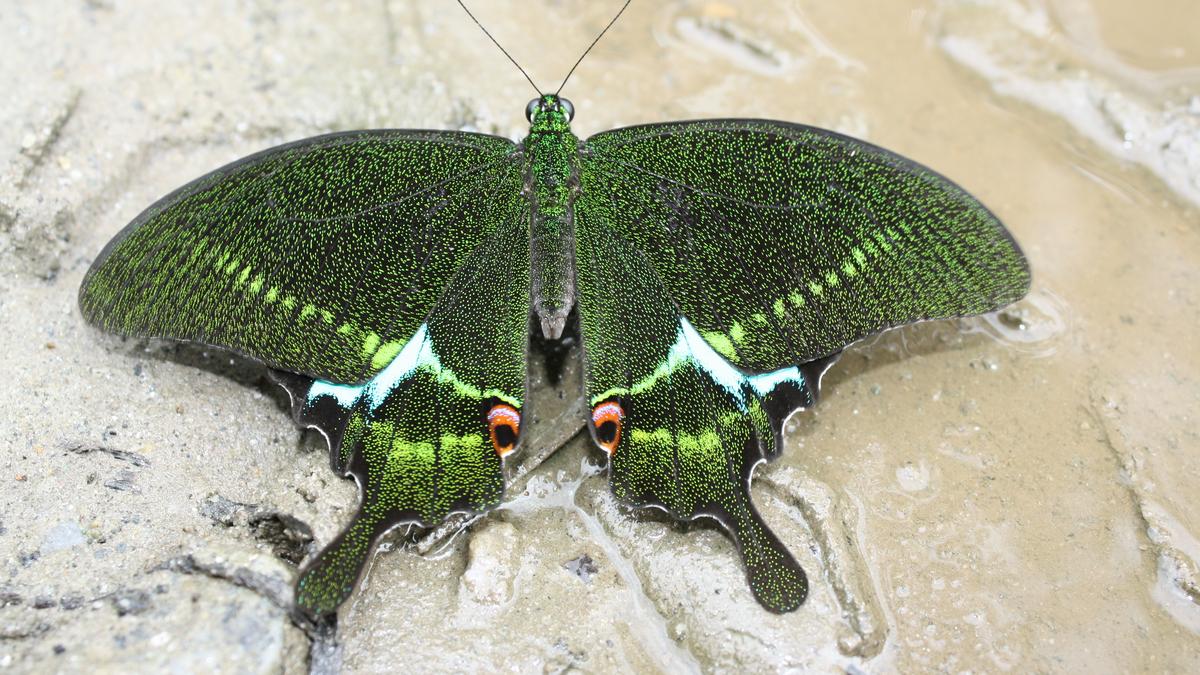
The overexploitation of 25 species of host plants valued for their medicinal properties has affected swallowtail butterflies in forests on the Brahmaputra’s northern bank.
The overexploitation of 25 species of host plants valued for their medicinal properties threatens the swallowtail butterflies in the forest habitats of a part of Assam often referred to as the “citrus belt of the world”, a new study has found.
The study, conducted in the Bodoland Territorial Region on the northern bank of the Brahmaputra River, also underscored illegal cattle farming within the protected areas, agriculture and tea cultivation near the habitats, illegal tree felling, and pesticide use to be among the crucial factors contributing to the decline in the number of these butterflies.
Kushal Choudhury of Bodoland University’s Department of Zoology is the author of the study, which was published in the Journal of Threatened Taxa.
“The decline of swallowtail butterflies in forest habitats, which was not a major concern about two decades ago, made the International Union for Conservation of Nature mark them as globally endangered,” he said.
India hosts 77 of the 573 swallowtail butterfly species recorded across the world so far. The International Union for Conservation of Nature designated the northeastern part of the country, where 69 species have been recorded, a ‘swallowtail-rich zone’ under the Swallowtail Conservation Action Plan.
Dr. Choudhury’s study documented 4,267 individuals belonging to 35 species representing eight genera. Three are endemic to the region while 12 enjoy federal protection.
“Butterflies are valuable indicators of the environment, whose health can influence their presence, abundance, and diversity. The findings suggest that the studied landscape [in the Bodoland Territorial region] is crucial in supporting larval host plants, adult resources of swallowtail butterflies, and other abiotic factors,” he said.


Congress criticises Modi government, citing reports about Pakistan's diplomatic role amid U.S.-Iran tensions, labelling it a setback for India.

Folk music with the Barmer Boys that crosses all boundaries

Tamil comic blockbuster Thaai Kizhavi releases on JioHotstar this week, as actress Radikaa Sarathkumar rewrites rules on pay, age, and women in Tamil films

"The jury has difficulty coming to a consensus regarding one defendant, do you have any advice on how to move forward?" the jurors told Judge Carolyn Kuhl

Maharashtra relocates 25 leopards to Gujarat's Vantara facility amid rising leopard and tiger populations, says Forest Minister Naik.

Assembly polls 2026: Follow updates from The Hindu on the upcoming elections in five States on March 24, 2026

Delhi's per capita income is projected to grow 7.09% by 2025-26, highlighting the city's economic progress and infrastructure challenges.

Review meeting held in Dharmapuri with election observers and nodal officers to discuss upcoming Assembly elections.

Execution of development projects, infrastructure augmentation to occupy centre stage in electioneering

Telangana Cabinet approves Hate Speech and Parents Support Bills, ensuring accountability for neglecting elderly and curbing hate-driven offences.

EU and Australia finalize a free trade agreement and establish a new defense partnership to enhance economic and military cooperation.

U.S.-Israeli war on Iran LIVE: Iran faces deadline of US President Donald Trump warning to open Strait of Hormuz. Follow The Hindu for more LIVE updates on March 23 2026 on Iran-Israel war.

KPCC chief Sunny Joseph emphasizes UDF's focus on Sabarimala and corruption while expressing confidence in winning Kerala's upcoming Assembly elections.