Supreme Court to weigh if South Carolina may cut Planned Parenthood funding
CNN
The Supreme Court on Wednesday will debate whether patients may sue states that cut Medicaid funding for Planned Parenthood, teeing up a dispute over preventive healthcare that has been drawn into the fraught national fight over abortion access.
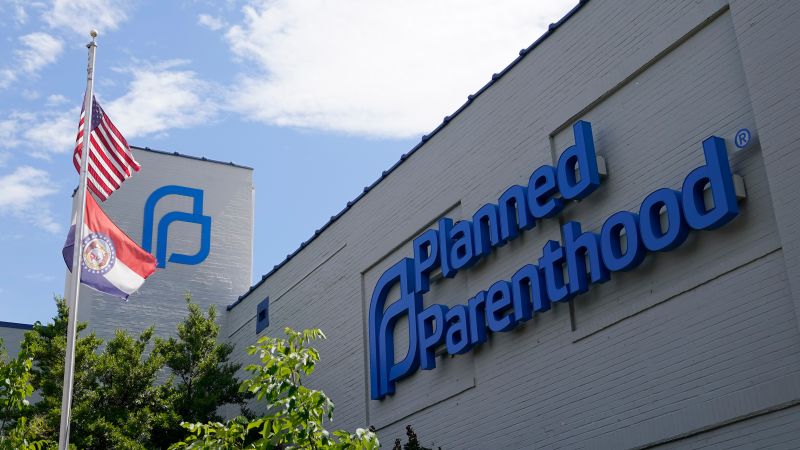
The Supreme Court on Wednesday will debate whether patients may sue states that cut Medicaid funding for Planned Parenthood, teeing up a dispute over preventive healthcare that has been drawn into the fraught national fight over abortion access. A ruling from the conservative Supreme Court, expected by the end of June, could have profound implications for the ability of patients to access care at Planned Parenthood clinics across the country and may shed light on when Americans may sue to enforce the requirements that Congress includes in spending laws. Though technically not about abortion, the appeal has attracted enormous attention from groups engaged in that issue. In one telling sign of that dynamic, the director of the South Carolina Department of Health and Human Services will be represented at the Supreme Court by Alliance Defending Freedom, a religious legal group that helped orchestrate the overturning of Roe v. Wade in 2022. At issue is an executive order South Carolina Gov. Henry McMaster signed in 2018 that yanked Medicaid funding for the state’s two Planned Parenthood clinics. The Republican governor argued that those payments amounted to a taxpayer subsidy for abortion. Federal and state law prohibit Medicaid from paying for abortions in most cases. McMaster’s order had the effect of also blocking patients from receiving other services from Planned Parenthood. A patient named Julie Edwards, who has diabetes, and Planned Parenthood South Atlantic sued the state, noting that federal law gives Medicaid patients a right to access care at any qualified doctor’s office willing to see them.


It’s looking like the Department of Homeland Security shutdown could soon be over. The two sides seem to have made serious progress, and President Donald Trump hasn’t rejected anything, even if he’s a little sour. But it’s likely the resolution will disappoint many Democrats.

California Gov. Gavin Newsom said that he regretted using the word “apartheid” to describe the Israeli government’s treatment of Palestinians, though he warned “that’s a word you may hear others use” if Prime Minister Benjamin Netanyahu pushes for territorial gains.

Haiti is about to get a new set of foreign boots on the ground. The goal sounds simple: fight the gangs that have brought life to a standstill.

Oklahoma’s governor picks energy executive Alan Armstrong to fill US Senate seat through end of year
Oklahoma’s governor on Tuesday appointed energy executive Alan Armstrong to serve in the US Senate through the end of the year and finish the term of Republican Markwayne Mullin, the new homeland security secretary.

Newly confirmed Homeland Security Secretary Markwayne Mullin told senators during his confirmation hearing that he wanted to keep the department out of the headlines. That won’t be easy.

A trader made nearly $1 million since 2024 from dozens of well-timed Polymarket bets that correctly predicted US and Israeli military actions against Iran, according to an analysis shared with CNN.

Travelers have been dealing with worsening airport wait times as ICE agents deploy to more than a dozen airports. Follow for live news updates.

President Donald Trump voted in Tuesday’s state House special election by mail even as he suggested on Monday that “mail-in voting means mail-in cheating.”

CNN’s 5 Things AM brings you the news you need to know every morning.

The Supreme Court on Tuesday will consider the legality of a policy championed by President Donald Trump during his first term that prevented scores of migrants arriving at the southern border from starting the process of applying for asylum.

A young, well-liked facilities manager at the Kennedy Center has gone from being described as “in charge of HVAC and toilets” to head of the renowned arts institution.

Democrats in Florida are hoping to capitalize on the party’s recent special election overperformances and come out on top Tuesday in a special state House election for a Palm Beach district that includes President Donald Trump’s Mar-a-Lago residence.

The Supreme Court on Monday appeared ready to limit mail-in ballots, a move that would reinforce the justices’ pattern of shrinking voter protections and that has, at bottom, favored Republican interests and the Trump administration.