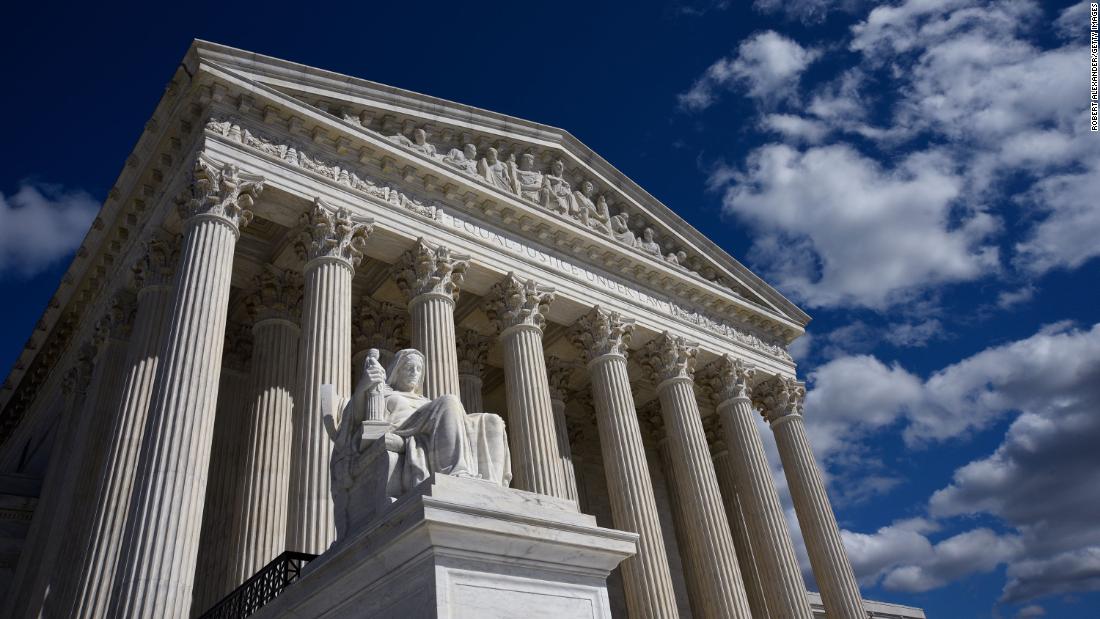
Supreme Court lets Texas 6-week abortion ban stay in place and will hear oral arguments November 1
CNN
The Supreme Court allowed a Texas law that bars most abortions after six weeks to remain in place for now, but it agreed to hear oral arguments on the law next month.
The law, banning abortions often before a woman knows she is pregnant is in stark contrast to Roe v. Wade, the 1973 landmark decision legalizing abortion nationwide prior to viability, which can occur at around 24 weeks of pregnancy.
In agreeing to hear the case under such an expedited time frame, the court said Friday that it would focus specifically on the unusual way in which the Texas legislature crafted the law. It also said it will review whether the US Justice Department can challenge the law in court.


President Donald Trump appeared to flip someone off as he toured a Michigan Ford plant in an incident caught on video Tuesday, and the White House defended the action as an “appropriate” response to someone screaming at the commander-in-chief.

White House officials are heaping blame on DC US Attorney Jeanine Pirro over her office’s criminal investigation into Fed Chair Jerome Powell, faulting her for blindsiding them with an inquiry that has forced the administration into a dayslong damage control campaign, four people familiar with the matter told CNN.

The interim Venezuelan government has freed at least four Americans who were imprisoned in Venezuela, a source familiar with the matter told CNN on Tuesday.

Elon Musk’s SpaceX is now providing free internet access via its Starlink satellite service to users in Iran as the country’s regime continues its bloody crackdown on anti-government protests, according to a tech expert in touch with Iranian Starlink users.

The aircraft used in the US military’s first strike on an alleged drug boat in the Caribbean, a strike which has drawn intense scrutiny and resulted in numerous Congressional briefings, was painted as a civilian aircraft and was part of a closely guarded classified program, sources familiar with the program told CNN. Its use “immediately drew scrutiny and real concerns” from lawmakers, one of the sources familiar said, and legislators began asking questions about the aircraft during briefings in September.

DOJ pleads with lawyers to get through ‘grind’ of Epstein files as criticism of redactions continues
“It is a grind,” the head of the Justice Department’s criminal division said in an email. “While we certainly encourage aggressive overachievers, we need reviewers to hit the 1,000-page mark each day.”

A new classified legal opinion produced by the Justice Department argues that President Donald Trump was not limited by domestic law when approving the US operation to capture Venezuelan President Nicolás Maduro because of his constitutional authority as commander-in-chief and that he is not constrained by international law when it comes to carrying out law enforcement operations overseas, according to sources who have read the memo.

President Donald Trump is working to tighten his grip on his party this week as he faces an unusual threat from Congress: an embarrassing rebuke of his military actions overseas.

Bill and Hillary Clinton refused to appear on Capitol Hill Tuesday to testify in Congress’ Jeffrey Epstein probe in the face of threats from the House Oversight Committee to hold them in contempt.

Former teacher Arnulfo Reyes was questioned repeatedly in court Tuesday about how doors were left open at Robb Elementary School in Uvalde, Texas, before a gunman entered in May 2022 and killed 21 children and teachers.

The Trump administration does not know the whereabouts of 137 Venezuelans it unlawfully deported last year, Secretary of State Marco Rubio said, adding that attempting to offer them due process would impact US foreign policy interests in the country.

Around 1,000 additional US Customs and Border Protection agents are expected to deploy to Minneapolis, Minnesota, according to two federal law enforcement sources. Follow for live updates.

President Donald Trump’s efforts to leverage the Justice Department for political purposes and to exact retribution against his perceived foes haven’t suffered from a series of setbacks.