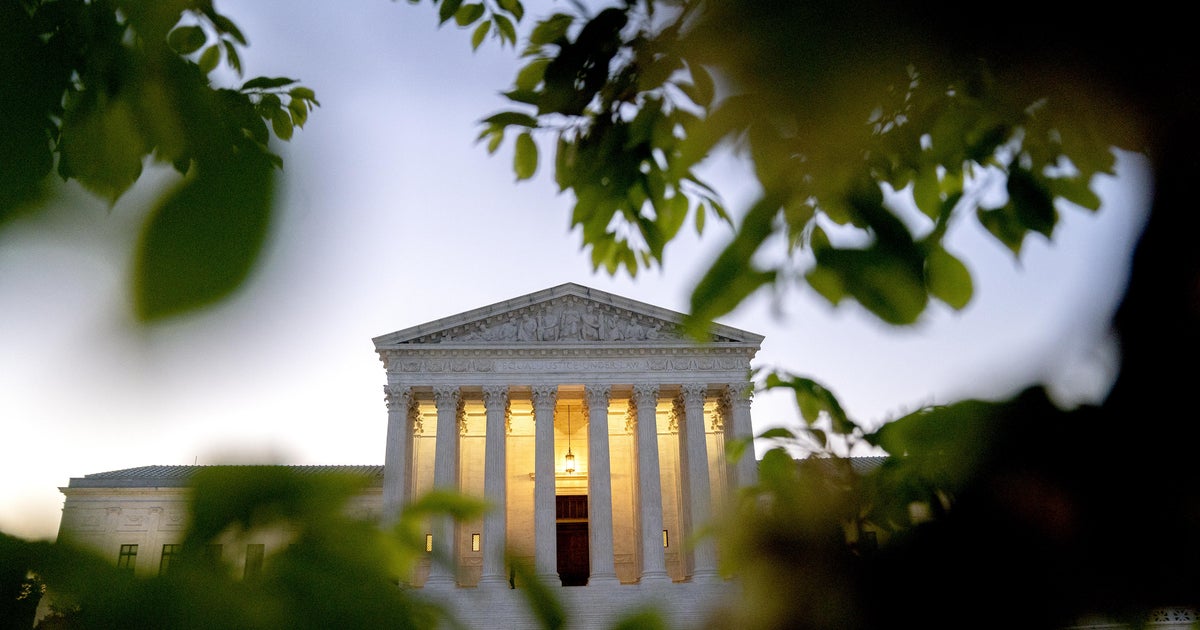
Supreme Court declines to put new limits on juvenile life-without-parole sentences
CBSN
Washington — The Supreme Court on Thursday said it would not place new restrictions on sentences of life without the possibility of parole for juvenile offenders, siding with the state of Mississippi in the case of an inmate convicted of murder when he was a teenager.
The high court ruled 6-3 along ideological lines to uphold the life-without-parole sentence of Brett Jones, who was convicted of killing his grandfather when he was 15. The divided Supreme Court said its rulings in a pair of earlier cases involving juvenile sentencing do not require sentencing judges to determine whether a juvenile offender is permanently incorrigible, or incapable of rehabilitation, before ordering them to spend the rest of their lives behind bars. Justice Brett Kavanaugh delivered the opinion on behalf of the court's conservative justices, writing "Jones's argument that the sentencer must make a finding of permanent incorrigibility is inconsistent with the court's precedents" in Miller v. Alabama from 2012 and Montgomery v. Louisiana from 2016.
More Related News