Study sheds new light on exclusive hallucinogenic drug rituals in ancient Peru
CBSN
An ancient society in the Peruvian Andes likely used psychoactive drugs during exclusive rituals that may have helped establish social and political hierarchies seen later throughout the region, according to a new study.
The prehistoric Chavín people held private and potentially secret gatherings where elite figures used "snuff tubes" to consume tobacco and hallucinogenic plant residue with properties of DMT, which can be found in a wide variety of plants, said the study published Monday in the peer-reviewed journal Proceedings of the National Academy of Sciences. When ingested, DMT causes brief, episodic visual hallucinations, according to the National Institute of Health.
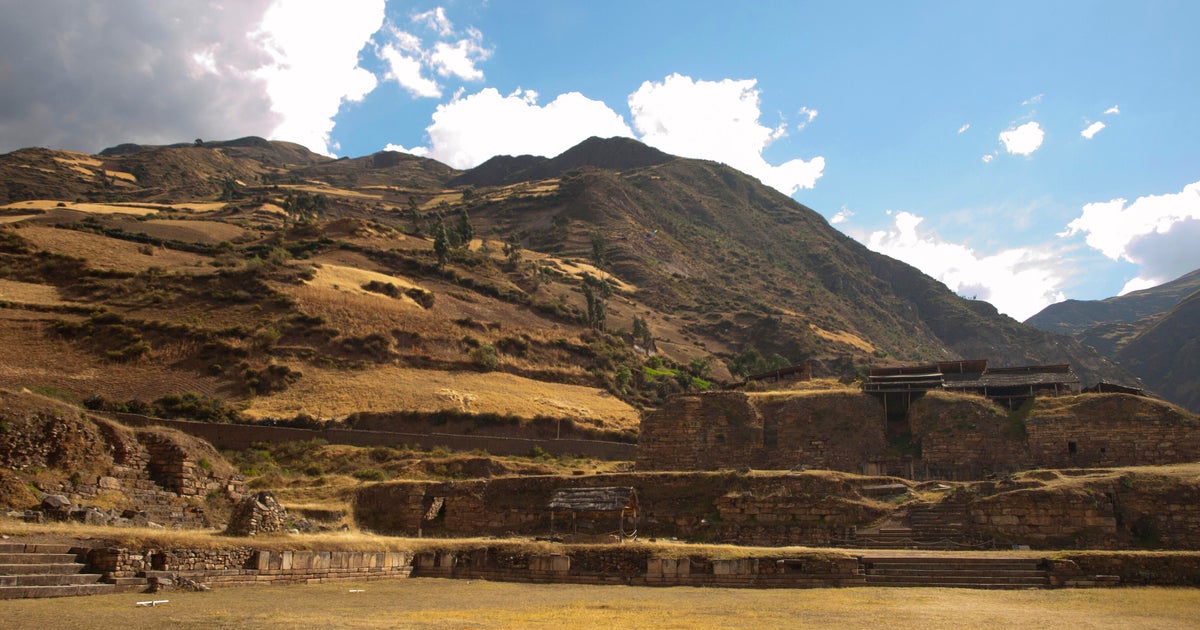
The study was conducted by a group of archaeologists and researchers led by Daniel Contreras, an anthropologist and professor at the University of Florida, who sought to investigate a centuries-old Chavín compound for evidence of drugs involved in the ritual practices already understood to be a central part of their culture. To do that, Contreras and his team explored and analyzed artifacts found at Chavín de Huántar, a UNESCO World Heritage Site in the Andean highlands some 250 miles north of Lima.


Iran executed three men on Thursday who were accused of killing police officers during protests in January, with activists warning of the risk of a new surge in hangings as war rages with Israel and the United States. In:

Finland has been crowned the happiest country in the world, according to the 2026 World Happiness Report. Nordic countries have topped the happiness list for decades, and Denmark has consistently ranked in the top three. In:

A man who is wanted in Colombia and Ecuador for the assassination of Ecuadorian presidential candidate Fernando Villavicencio in Quito in 2023 was arrested in Mexico and transferred to Colombia, authorities said Wednesday. Agence France-Presse contributed to this report. In:

Costa Rica on Wednesday closed its embassy in Havana and told Cuba's communist government to pull its diplomats from San José. Joe Walsh contributed to this report. In:

Washington — The Senate defeated a war powers resolution on Wednesday that aimed to block President Trump from ramping up the war with Iran, as the operation approaches a fourth week. In:

A Ukrainian drone technology startup saw the most explosive U.S. stock market debut in the last year during its first day trading on Nasdaq. Shares in Swarmer, whose software enables single pilots to control hundreds of drones at once, soared over 700% before closing at $31 on Tuesday. In:

Rome — Outside the Great Synagogue, in the narrow streets of Rome's historic Jewish quarter, Italian soldiers patrol with automatic weapons slung across their chests. It is part of a visible surge in security following a wave of antisemitic incidents across Europe. In:


Top Iranian security official Ali Larijani was killed in overnight strikes, Israel said Tuesday, marking a significant moment for the Islamic Republic in the conflict. In:

Shigeaki Mori, a Japanese atomic bomb survivor in Hiroshima and a historian but best known for a big hug he was given by then U.S. President Barack Obama during his historic visit to the city a decade ago, has died. He was 88. Agence France-Presse contributed to this report. In:

The Taliban in Afghanistan claim that a Pakistani military airstrike on a drug rehabilitation hospital in Kabul has killed over 400 people and injured 250 others.

Washington — President Trump said Monday that he's requested to delay his trip to China because of the war with Iran, now in its third week. Joe Walsh contributed to this report. In:

Officials in Cuba reported an island-wide blackout Monday in the country of some 11 million people as its energy and economic crises deepen. Cuba has blamed its woes on a U.S. energy blockade after President Trump in January warned of tariffs on any country that sells or provides oil to it. In: