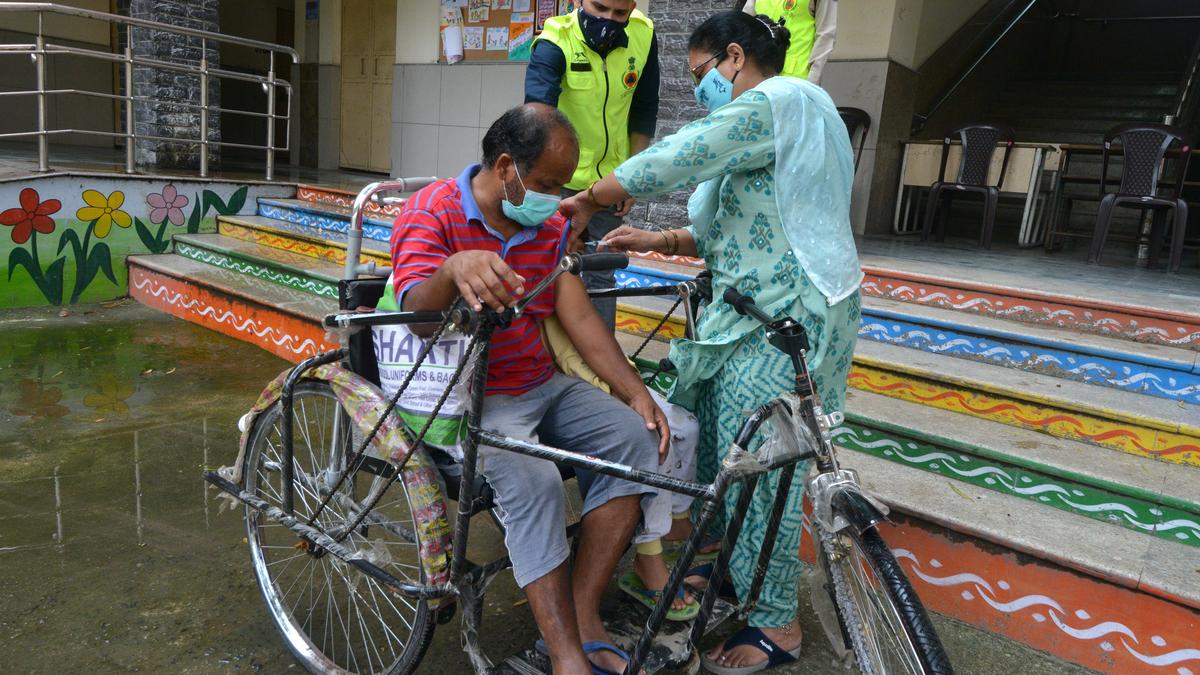
Study highlights multiple barriers faced by persons with disabilities, transpersons in accessing Covid-19 vaccine
The Hindu
Study on Covid-19 vaccine access barriers for disability, transgender, and gender-diverse communities in India reveals inequities and challenges.
A recent paper that explored structural inequities in the access to, and uptake of, the Covid-19 vaccine among the disability, transgender and gender-diverse communities in India, has flagged several barriers that made it difficult for these communities to get vaccinated. The barriers included information and communication gaps, barriers in vaccine registration, transport and infrastructure among others, pointing to, the paper said, “longstanding and pervasive inequities within health and allied systems.”
”The paper, ‘Understanding structural inequities in Covid-19 vaccine access and uptake among disability, transgender and gender-diverse communities in India’ by Sharin D’souza et al of the Initiative for Health Equity, Advocacy and Research, Bhopal Hub, Sangath, Bhopal, was published in ScienceDirect recently.
A total of 45 individuals were interviewed for the study from the transgender and disabled communities alongside health system representatives and other key stakeholders.
India had the world’s largest Covid-19 vaccination programme, rolled out in January 2021 and India’s vaccine acceptance rate was higher than that in many developed countries. The study found however, that by May 2021, when approximately 11.7% of the general population was vaccinated, the coverage among trans and gender diverse persons (TG) was only 5.22%. By November 2021, this rate was approximately 0.03% within the disability community.
“In India, the TGD and disability communities, both face a higher risk of neglect, violence and lack of family support. This, combined with stigma and discrimination marginalises both communities socio-economically and within the health system. Both communities have higher rates of unemployment, lack of education and poverty. Many of them are dependent on precarious employments such as begging (in both communities) and sex work (in the TGD community). Combined with poorer immune status linked to their disability, co-existing HIV infections and poorer health in general both communities were at a higher risk of COVID-19-related mortality necessitating early vaccination,” the study pointed out.
The study highlights four main themes with regard to barriers faced: structural neglect of disability and trans-specific information: how the vaccine would affect those who had medical conditions or those who had transitioned for instance, was a concern, signaling gaps in vaccine research and communication. This was compounded by the communities’ past, sometimes negative experiences with the healthcare system.
Procedural barriers, the second theme, included the digital inaccessibility of the vaccine registration platform CoWIN and the Aarogya Setu app, alongside other issues such as the mandatory requirement of identity documents for the TGD community.


A-G informs Madras High Court no govt. sanction needed for FIR in K.N. Nehru's cash-for-jobs scam case.

President of Karnataka Beary Sahitya Academy U. H. Umar on Wednesday appealed to Madhu Bangarappa, Minister for School Education and Literacy to introduce Beary as the third optional language from Class 6 from the academic year 2026-27.

Karnataka Dalit Sangharsha Samiti (DSS) has urged the State government to begin the process of filling up 56,432 posts only after rectifying the mistakes in fixing the roster and implementing the internal reservation among Scheduled Castes.

Rebel nominations in Karaikal expose tensions within electoral alliances, risking voter fragmentation ahead of the Puducherry Assembly elections.

CCPA prohibits restaurants and hotels from imposing unfair LPG charges, labeling them as unjustified and against consumer protection guidelines.

Andhra Pradesh receives ₹19.47 crore for 44 handloom clusters, benefiting over 10,000 weavers under the National Handloom Development Programme.

Stay updated with The Hindu’s on-ground Tamil Nadu Assembly election coverage and voter insights across key constituencies.

Mettur dam water level reaches 82.770 feet, with inflow at 361 cusecs and discharge at 801 cusecs.

Udhagamandalam faces challenges in tourism and tea sectors due to poor infrastructure, pollution, and urbanization ahead of summer season.

Social activists and journalists from Shivamogga, who placed the demand for a strict law to stop honour killings, have thanked the State government for tabling the Bill and getting it passed in both Houses of the legislature with the support of all other parties.

Erode (East) voters prioritize pollution control, traffic solutions, and urban infrastructure as key issues ahead of upcoming elections.

T. Jeevan Reddy resigns from Congress after 42 years, criticizing party leadership and the influence of defectors.

Kanniyakumari Collector inspects vulnerable and sensitive polling stations