Students’ postcard push to reform school education Premium
The Hindu
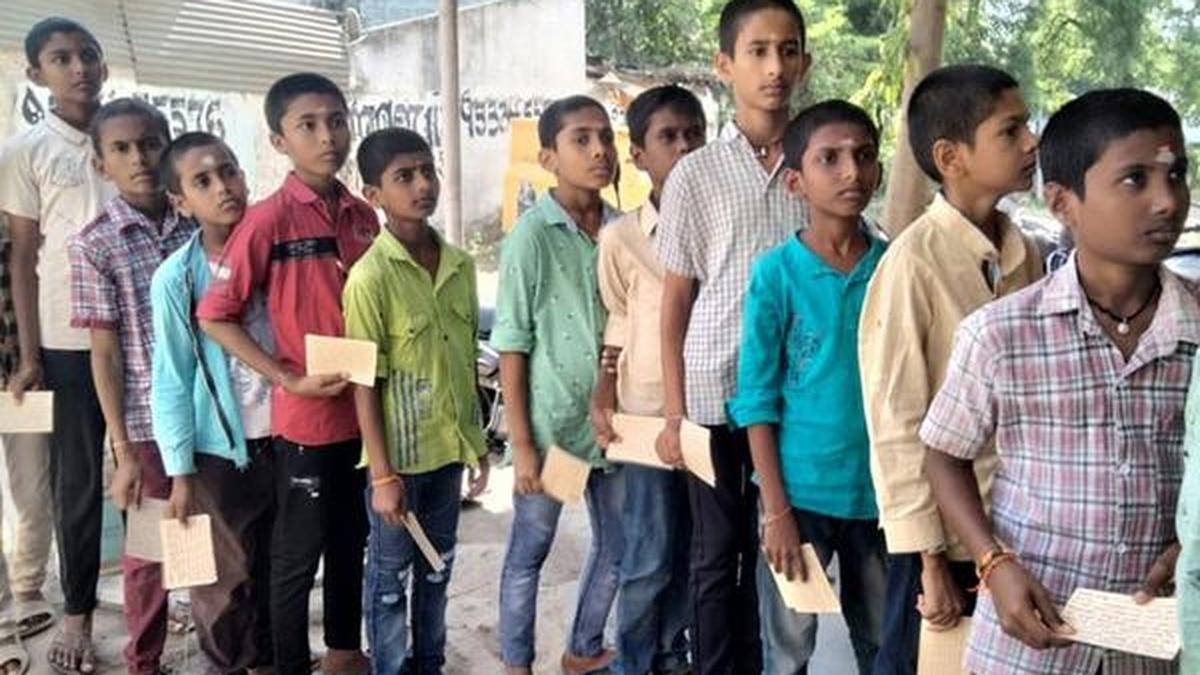
Students across Telangana unite in a postcard campaign urging the Chief Minister to address critical issues in government schools.
Dear Chief Minister, our school lacks adequate security measures, leaving our belongings vulnerable to theft. We humbly request the recruitment of Class-IV employees to safeguard our school premises.”
This poignant appeal has surfaced from the corridors of a government school in Telangana’s Mahabubnagar district, penned by class 8 student N. Srinidhi.
G. Aravind, a student of another school in the same district, echoes similar concerns in his letter to the Chief Minister — need for improved infrastructure, mainly toilets with sweepers, running water for the toilets, better security, lab equipment, library resources, and transportation facilities for students from neighbouring villages.
Such impassioned pleas have found resonance beyond the confines of Mahabubnagar; more than 20,000 postcards have been sent from various corners of Telangana to the CM’s office in Hyderabad, the State capital. Students from even the remotest villages, nestled within the hinterlands of Agency areas in Kumaram Bheem Asifabad and Mulugu districts, have fervently voiced their concerns and appealed for intervention.
Echoing this sentiment across Telangana is a State-wide student-led postcard campaign, spearheaded by a non-profit think-tank called ‘Dial Your Village’ (DYV) being run by Telangana NRIs. The campaign, which commenced on January 19 this year, aims to spotlight pressing issues in educational institutions in the State.
Originating from the Telangana movement, DYV, initially comprising NRIs, shifted focus to comprehensive development initiatives following the State’s formation in 2014. Notably, their ‘Dial Your Sarpanch’ programme, which directly addressed village-level issues, showcased their dedication to grassroots development. Over the span of four years, the organisation facilitated weekly discussions involving experts from various fields, shedding light on concerns ranging from education and healthcare to agriculture.
Central to the ongoing campaign is the critical analysis of government schools across Telangana. With 30,108 government institutions, including Gurukuls (residential schools run by Social Welfare, Tribal Welfare, and Minority Welfare departments) and Kasturba Gandhi Balika Vidyalayas, the educational framework grapples with severe shortage of teachers, apart from deficiencies in infrastructure and essential amenities such as toilets, additional classrooms, libraries, and laboratories. Recent reports, including the Performance Grading Index compiled by the Central government, underscore the magnitude of these challenges, leading to Telangana’s low standing in terms of overall performance and infrastructure advancement.


Experts highlight urgent need for increased awareness of colorectal cancer signs, as many remain unaware of early warning signals.

Assam candidate Sewli Mohilary declares 37 bank accounts and 32 vehicles, with assets totalling ₹54.04 crore.

The All India Major Ports Volleyball & Beach Volleyball Tournaments 2025–26 at the New Mangalore Port Authority (NMPA) Sports Complex Premises and Panambur Beach were inaugurated on Tuesday, by NMPA Deputy Chairperson S. Shanthi.

EVMs, VVPATs moved to Assembly constituencies after first randomization

B.Y. Raghavendra, MP, urges artisans and youth to utilise the PM Vishwakarma Scheme for a self-reliant future in Shivamogga.

Two arrested for dangerous bike stunts near Secretariat, Lumbini Park

Dakshina Kannada Member of Parliament Captain Brijesh Chowta on Tuesday, urged the Union Finance Ministry to give go ahead for the merger of Konkan Railway Corporation Ltd., (KRCL) with the Indian Railways.

Protesters rally against plans to convert Ooty Race Course into an eco-park, citing environmental and legal concerns.

Join the Chaitra Drama Festival in Belagavi, celebrating World Theatre Day with performances and awards from March 27-29.

Commodore Ben H. Berson, Command Education Officer, Southern Naval Command, Kochi, on Tuesday, said students should come forward to choose the armed forces as a career.

Bengaluru police arrest lorry driver for smuggling ₹3.57 crore ganja, seized 333 kg concealed in vegetable consignment.

Kalaburagi district celebrates 79 gram panchayats declared TB-free, achieving over 90% treatment success, says Deputy Commissioner.

Fuel crisis leads to rising food prices in Coimbatore, affecting restaurants, retailers, and the common man.