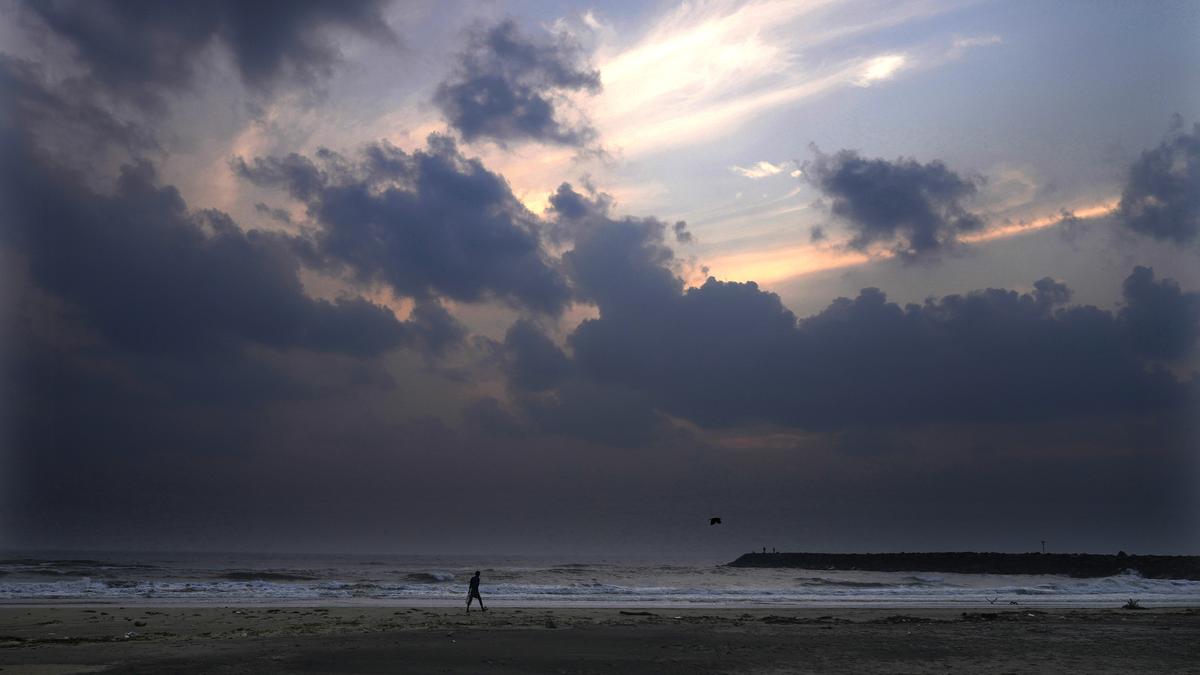
Storm fears overshadow India coast decades after tsunami
The Hindu
The deadly tsunami that swamped India’s southern coast two decades ago was a one-off disaster, but storms that are growing ever more intense spark panic each time howling gales whip up waves.
The deadly tsunami that swamped India’s southern coast two decades ago was a one-off disaster, but storms that are growing ever more intense spark panic each time howling gales whip up waves.
Maragathavel Lakshmi shudders when she hears lashing rains or winds, recalling how her daughter was swept away when the 2004 tsunami, triggered by a huge earthquake off Indonesia, crashed onshore almost without warning.
“Weather alerts have made life easier, but the fear of what a heavy rain or strong wind might bring is still there,” 45-year-old Lakshmi said.
More than 220,000 people were killed as the devastating waves hit shorelines around the Indian Ocean, including 16,389 in India, according to the international disaster database EM-DAT.
Fear of the weather is based on a very real threat -- and the risks are increasing.
Dangerous cyclones, the equivalent of hurricanes in the North Atlantic or typhoons in the northwestern Pacific, are an annual menace.
Better forecasting and more effective evacuation planning have dramatically reduced death tolls, but scientists say human-driven climate change is intensifying their power.


Test your knowledge with the quiz on Science films at the Oscars through history

Set between the Siwalik hills and the plains, Butwal offers travellers a mix of regional cuisine, pilgrimage trails to Lumbini and the comfort of Hyatt’s new hospitality landmark

Explore 2026's wallpaper trends in India, highlighting botanicals and handmade designs that enhance modern homes with nature-inspired aesthetics.

Mercedes-Benz CLA 250+ with EQ Technology review: design, performance, range and features explained. Discover how the new electric CLA combines advanced AI, long range, fast charging and futuristic styling for the next generation of luxury EVs.

AI tool for sparrow conservation

BTS’s comeback with ‘Arirang’ marks a major global music event. When does the album release, and where can you watch their concert live stream? We have all the details

The 2026 U.S. cholesterol guidelines urge starting screening and treatment at 30 to prevent cardiovascular disease effectively.

Olam Festival 2026 in Thiruvananthapuram returns March 27-29 with 120+ vendors, music, art, and cultural zones.

A few storytellers in Thiruvananthapuram share their journeys, challenges, and evolving methods on World Storytelling Day, inspiring young minds.

76-year-old Kurian Jacob from Kerala triumphs with seven medals, including five golds, at the Open Masters Games in Abu Dhabi.

Explore the nature of the human mind as an emergent property of brain activity and complex neural interactions.

CERN's Large Hadron Collider discovers the Xi-cc-plus particle, enhancing understanding of quantum mechanics and baryon behavior.

Vibha Batra’s latest book, Spotless (Hachette India) is a novel in verse for young adults