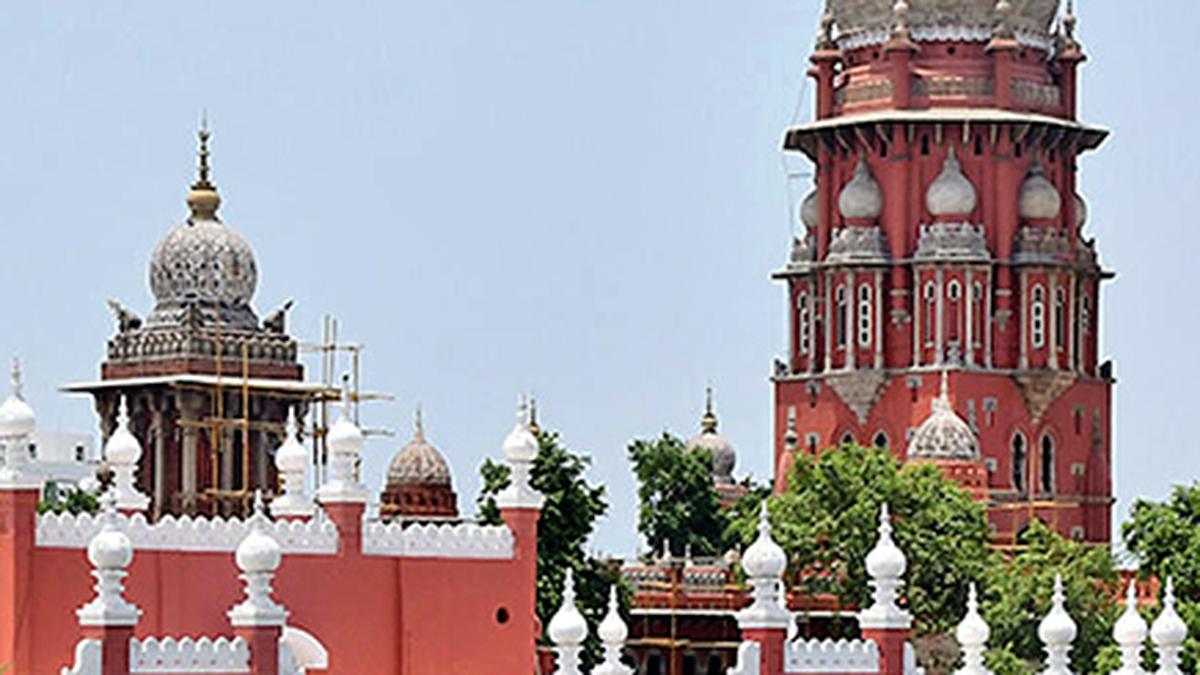
State governments duty-bound to provide judicial infrastructure without citing excuses, says Madras High Court
The Hindu
Madras High Court orders Tamil Nadu government to provide required judicial infrastructure, disregarding financial constraints, for TNSCDRC.
It is the fundamental right of every citizen to be provided with required judicial infrastructure and the State governments are duty-bound to provide the same without citing excuses such as financial constraints, the Madras High Court has observed.
First Division Bench of Chief Justice K.R. Shriram and Justice Sunder Mohan made the observation while directing the Tamil Nadu government to sanction one additional member to the Tamil Nadu State Consumer Disputes Redressal Commission (TNSCDRC).
The judges pointed out that the commission had made a request to the government, for sanctioning an additional member, as early as in 2022 since the workload had increased manifold. However, the government kept the request pending citing financial constraints.
After the High Court took up a suo motu public interest litigation petition in 2024 following a news report regarding lack of infrastructure at the consumer courts, the first Bench took serious note of the TNSCDRC’s request pending for over two years.
On February 6, 2025, the Bench comprising the Chief Justice and Justice Mohamed Shaffiq passed an interim order stating that the government’s inaction reflects its lack of interest in addressing the problems faced by TNSCDRC which was short of hands.
Then, the Bench had also directed an officer not below the rank of Additional Chief Secretary to file an affidavit regarding the issue. Despite such an observation by the court, the government had not sanctioned an additional member to the TNSCDRC, the judges pointed out.
Though it was represented that the government would certainly reconsider the commission’s request, the Bench on Wednesday, wrote: “We are not inclined to give an option to the government to again shoot down this request. It is the fundamental right of every citizen to be provided with required judicial infrastructure and it is the duty of every State to provide the same.”


The government plans to amend the FCRA, introducing new regulations for NGO asset management and accountability for key functionaries.

The draft policy for “Responsible Digital Use Among Students”, released on Monday by the Department of Health and Family Welfare, has recommended that parents set structured routines with clear screen-time rules and prioritise privacy, safety, and open conversation with children on digital well-being.

Police Observer Sushant Kumar Saxena conducts surprise inspection at Shencottai police station, reviewing warrants and security arrangements ahead of elections.

Andhra Pradesh government to launch key projects in April, focusing on industrial growth and infrastructure development, says Nara Lokesh.

Lok Sabha refers the Corporate Laws (Amendment) Bill to a JPC amid opposition concerns over CSR provisions dilution.

SHG members in Kanniyakumari use snakes and ladders to raise election awareness and boost voter turnout.

Government accelerates consultations for early implementation of the Women’s Reservation Act to ensure women’s representation in 2029 elections.

CM A. Revanth Reddy distributes ₹1 crore insurance cheques to families of deceased Electricity department employees, enhancing financial security for workers.

The Bengaluru Traffic Police (BTP) registered 634 cases of drunk driving during a week-long special enforcement drive conducted across the city between March 16 and March 22.

GHMC intensifies action against property tax defaulters, seizing properties and offering a One Time Settlement scheme for payments.

CCB arrests three drug peddlers in Mangaluru, seizing ₹2.5 lakh worth of MDMA and other valuables.

TVK's 28 candidates in Puducherry include former BJP MLAs, a sitting Independent, and a retired police IG.

BRS submits notice on private member bill to Speaker