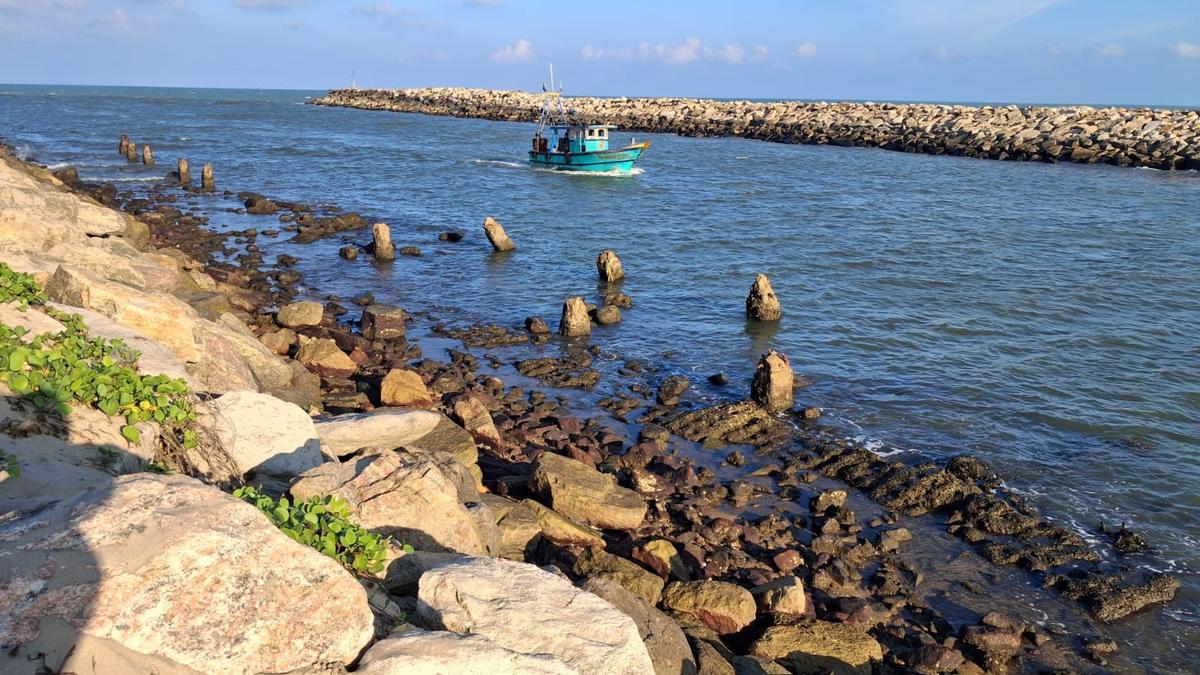
Stakeholders call for deepening of sea at Nagapattinam Port to enable cargo services
The Hindu
Stakeholders have called for the deepening of the Nagapattinam port to accommodate cargo vessels
Stakeholders have called for the deepening of the Nagapattinam port to accommodate cargo vessels.
While the district administration is keen to capitalise on the potential economic boost cargo operations could bring, experts point out that the current sea depth at the port was insufficient for large cargo movement.
According to official sources, a feasibility study and detailed project report to deepen the port are under way, with technical support from IIT Madras. As of now, the sea depth was a little over two metres, whereas a minimum depth of 5 to 6 metres was required for larger cargo vessels. At present, only vessels with a capacity of around 800 tonnes can be operated but stakeholders have raised concerns over the limited availability of such small cargo vessels in the market.
Subham Sundararaj Ponnusamy, Chairman and Managing Director of Subham Group, who operates the passenger ferry service between Nagapattinam and Kankesanthurai, told The Hindu that he had expressed interest in launching cargo services on the same route. However, he pointed out that the present draft level was not conducive for it.
Mr. Ponnusamy highlighted four key requirements for the successful launch of cargo services: dredging, installation of cranes, weighment scale facilities, and most critically, the extension of the breakwater channel. “As the breakwater and port mouth are aligned, it poses a significant navigational risk for incoming vessels,” he said.
Sources from the Tamil Nadu Maritime Board confirmed that the State government had been approached by the district administration to initiate dredging and other necessary upgrades. A list of interested traders has been compiled, and officials remain optimistic that cargo services could be introduced in the coming months.
However, challenges are not limited to the Indian side. Officials said similar infrastructure limitations exist at the Kankesanthurai port in Sri Lanka, which could hinder the smooth rollout of cargo operations on the route.


Sobha Surendran refutes V.D. Satheesan's claims of a BJP-CPI(M) deal, attributing them to fear of electoral defeat.

V.D. Satheesan praises G. Sudhakaran as a just administrator, highlighting respect amid political differences in Kerala Assembly polls.

Kerala court sentences G. Sandeep to life imprisonment for the murder of Dr. Vandana Das, with appeals for a death penalty pending.

Erode (East) voters prioritize pollution control, traffic solutions, and urban infrastructure as key issues ahead of upcoming elections.

Civil supplies department seizes 55 illegal LPG cylinders, booking 19 individuals to prevent domestic supply shortages in Vizianagaram.

Hyderabad police bust illegal samosa unit, seizing 500 stale eggs and used cooking oil, risking public health.

Eid prayers are held in Delhi's Uttam Nagar under heavy police presence amid heightened communal tensions and security measures.

Tensions rise in Mathura as locals protest cow vigilante's death, prompting a strong response from authorities and police.

Join the Met Centre Hyderabad's open house on March 23 to learn about weather forecasting and its real-life applications.

Kerala CM Pinarayi Vijayan blames Congress and BJP for India's cooking gas crisis, citing failures in energy policy and corporate interests.

An 81-year-old businessman loses ₹15.4 crore in a digital arrest scam involving fake CBI and RBI officials.

AP cadre IAS officer A. Vani Prasad is reallocated to Telangana cadre following a Telangana High Court order.

TMMK hosts special Eid prayers in Chennai, emphasizing peace amid ongoing West Asia conflicts and supporting those in need.