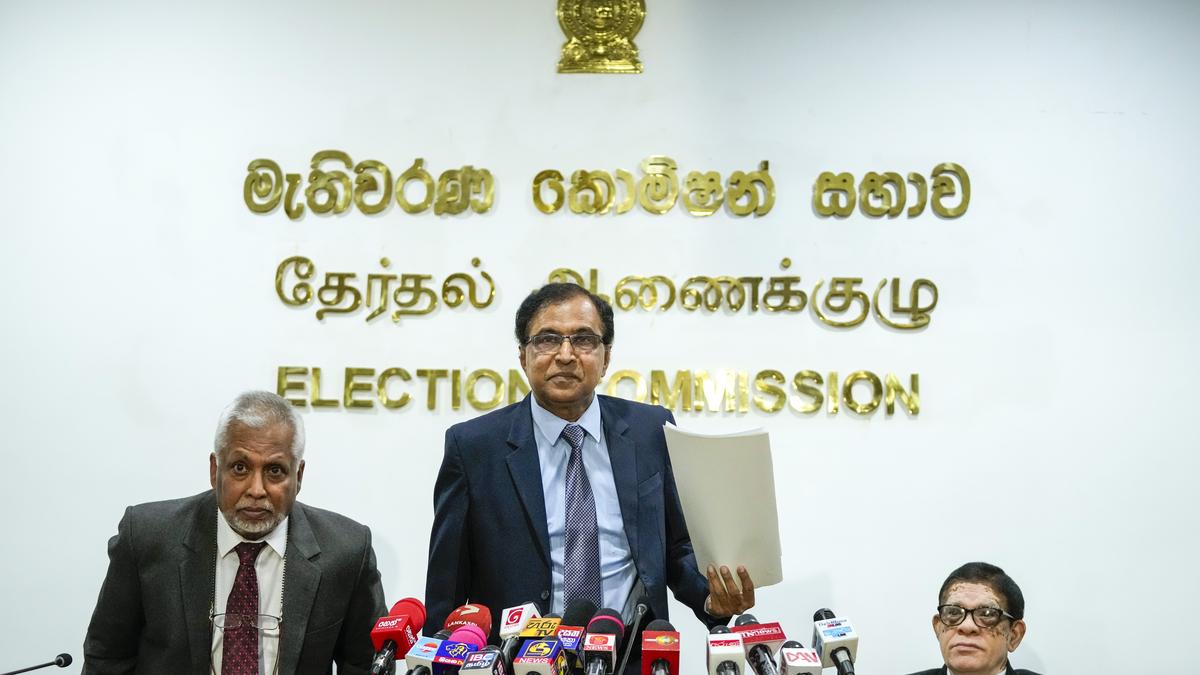
Sri Lanka will hold presidential election on September 21, its first since declaring bankruptcy in 2022
The Hindu
Sri Lanka to hold presidential election amid economic crisis, testing confidence in President Wickremesinghe's reforms and debt restructuring efforts.
Sri Lanka will hold a presidential election on September 21 that will likely be a test of confidence in President Ranil Wickremesinghe’s efforts to resolve the country’s worst economic crisis. The date was announced in a decree the independent elections commission released on July 26. It also said nominations will be accepted on August 15.
It will be the first election in the South Asian island nation after it declared bankruptcy in 2022 and suspended repayments on some $83 billion in domestic and foreign loans. That followed a severe foreign exchange crisis that led to a severe shortage of essentials such as food, medicine, fuel and cooking gas, and extended power outages.
President Ranil Wickremesinghe is expected to run while his main rivals will be opposition leader Sajith Premadasa and Anura Dissanayake, who is the leader of a leftist political party that has gained popularity after the economic debacle.
It will be the first election in the South Asian island nation after it declared bankruptcy in 2022 and suspended repayments on some $83 billion in domestic and foreign loans. That followed a severe foreign exchange crisis that led to a severe shortage of essentials such as food, medicine, fuel and cooking gas, and extended power outages.
The election is largely seen as a crucial vote for the island nation’s efforts to conclude a critical debt restructuring program and as well as completing the financial reforms agreed under a bailout program by the International Monetary Fund.
The country’s economic upheaval led to a political crisis that forced then-President Gotabaya Rajapaksa to resign in 2022. Parliament then elected the then-Prime Minister Ranil Wickremesinghe as president.
Under Mr. Wickremesinghe, Sri Lanka has been negotiating with the international creditors to restructure the staggering debts and to put the economy back on the track. The IMF also approved a four-year bailout programme last March to help Sri Lanka.


Russia claims control of Potapivka village in Ukraine's Sumy region amid ongoing military efforts to establish a buffer zone.

Iranian missile strikes on Israeli towns cause widespread damage and injuries, marking a significant escalation in the ongoing conflict.

As Gor makes first trip as U.S. Special envoy to South Asia, Delhi watches strategic signals closely
Sergio Gor's inaugural trip as U.S. Special Envoy to South Asia signals strategic U.S. engagement amid regional tensions.

Slovenians vote in a tight election between liberal and populist candidates, impacting the country's future domestic and foreign policies.

Netanyahu asserts U.S.-Israel alliance fights Iranian threats, emphasizing global security after missile strikes on Israeli and European targets.

Israeli settlers attack Palestinian villages in the West Bank, causing injuries and destruction amid ongoing settlement expansion.

Britain asserts no evidence of Iran planning missile strikes on Europe, despite Israeli claims of missile capabilities.

UNESCO reports over half of countries have banned phones in schools due to concerns about attention, cyberbullying, and social media impact.

Analysis reveals a U.S.-operated Patriot missile likely caused a pre-dawn explosion in Bahrain, injuring numerous civilians.

Sri Lanka raises fuel prices by 25% amid ongoing West Asia conflict, impacting petrol and diesel costs significantly.

Iran strikes near Israeli nuclear research center as Trump threatens attacks on Iranian power plants
Iran's missile strikes near Israel's nuclear site escalate tensions as Trump threatens retaliation against Iranian power plants.

Saudi Arabia intercepts one of three ballistic missiles targeting Riyadh amid ongoing regional tensions and threats from Iran.

Iran's death toll exceeds 1,500 amid escalating war, with heavy airstrikes and shifting U.S. and Israel strategies reported.