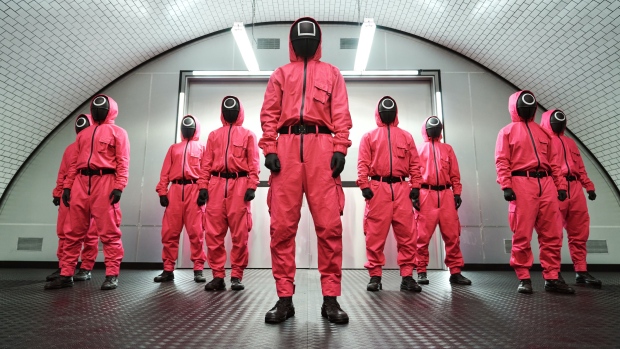
'Squid Game' strikes nerve in debt-ridden South Korea
CTV
'Squid Game,' a brutal Netflix survival drama about desperate adults competing in deadly children's games for a chance to escape severe debt, hit a little too close to home for Lee Chang-keun.
The show has captivated global audiences since its September debut on its way to becoming Netflix's biggest hit ever. It has struck raw nerves at home, where there's growing discontent over soaring personal debt, decaying job markets and stark income inequalities worsened by financial crises in the past two decades.
In the dystopian horrors of "Squid Game," Lee sees a reflection of himself in the show's protagonist Seong Gi-hun, a laid-off autoworker coping with a broken family and struggling with constant business failures and gambling problems.
Seong gets beaten by gangster creditors into signing off his organs as collateral, but then receives a mysterious offer to play in a series of six traditional Korean children's games for a shot at winning $38 million.
The South Korea-produced show pits Seong against hundreds of other financially distressed players in a hyper-violent competition for the ultimate prize, with losers being killed at every round.


Three men who alleged that actor Kevin Spacey sexually assaulted them have settled their civil claims before going to trial at the High Court in London, courts document show.

Neither Sofia Coppola nor Marc Jacobs were convinced a documentary was a good idea. Jacobs wasn’t sure he wanted to be the subject of one and Coppola wasn’t sure she wanted the pressure of being the person behind the camera. This was her friend of over 30 years, after all. What if the film wasn’t good?

Sean Penn finally got his hands on his third Oscar… sort of.

Len Deighton, a prolific writer whose tough, stylish spy thrillers featured on bestseller lists for decades, has died. He was 97.

A great deal of Ryan Gosling’s journey through the film “Project Hail Mary” unfolded in solitude. The “La La Land” actor spent long stretches filming alone on set, or acting opposite an alien creature his character, Dr. Ryland Grace, dubs Rocky.

Cardi B is dragging the Hammer for slow ticket sales.

A planned reboot “Buffy the Vampire Slayer,” that was set to be directed by Oscar-winning director Chloe Zhao, has been cancelled, star and producer Sarah Michelle Gellar said.

Sean Penn, who scored an Oscar for best supporting actor for “One Battle After Another” on Sunday, is in Ukraine to show support to the war-torn country, a senior Ukrainian official told AFP.

The 98th Academy Awards on Sunday saw “One Battle After Another” win big with six awards, including best picture, director, supporting actor and casting.

When Melanie Galeaz posted a fan edit of “Heated Rivalry,” she didn’t know it would lead to her dream job.

The 98th Academy Awards will take place in Los Angeles on Sunday, although things may be done a little differently on Hollywood’s biggest night.

The winners of the 46th Razzie Awards have been announced, and one film had a bit of a sweep when it comes to the best of the worst.

Richard Grenell, an ally of U.S. President Donald Trump who oversaw far reaching changes at the Kennedy Center that prompted many artists to abandon the iconic performing arts venue, will step down as the institution’s president.