Square roots: Lambadi artisans stitch the ordinary into the extraordinary
The Hindu
In an art world that still reflects caste and class divides, embroidered stories by Lambadi women — each beginning as a six inch square — rejects the binary
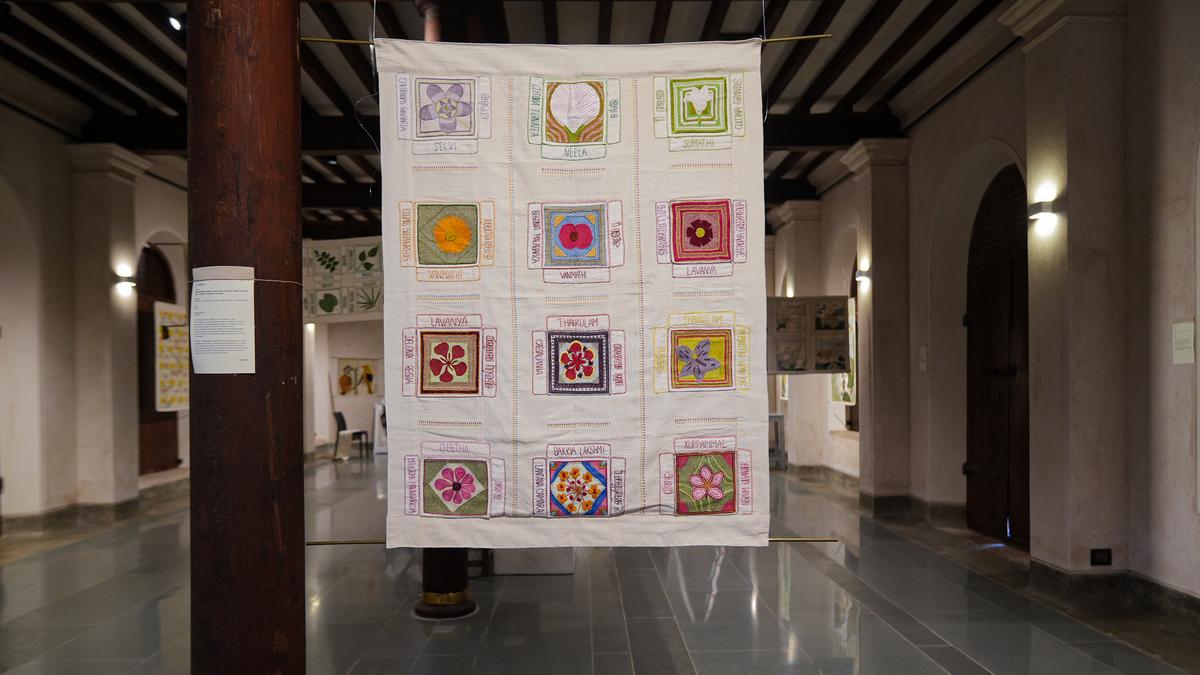
At Home in Sittilingi is an exhibition of embroidered textile art created by 10 women artisans from the Lambadi community. The works are stitched on organic cotton and draw from memory and immediate surroundings — trees that surround them, stories heard from elders, birds marking seasonal change, millets grown in their fields, and the intricacies of domestic life.
Held at Sabha, a thoughtfully restored 160-year-old home in Bengaluru with quiet floors and sunlit corridors, the open, home-like setting lends the show a sense of intimacy. Visitors leave their shoes at the threshold, entering barefoot — an unspoken gesture of reverence and groundedness. This simple act changes the way we engage. We step softly. We pause longer. We meet the works not as distant observers, but as listeners in a room full of stories. The anecdotal texts accompanying each embroidery, written by the women themselves, add texture and voice, making the gallery feel less like a display and more like a gathering.
The works were developed through a four-month artist residency hosted by the Porgai Artisans Association during an “at-home” residency, an artist support model where the women continued to live and work within their own context (at a studio at the Porgai centre) rather than being displaced into unfamiliar institutional settings. Curated by designer Anshu Arora, the residency invited the women to reflect, remember, and reimagine from within their own ground.
Lalitha Regi, co-founder of Porgai, meaning pride and dignity in the Lambadi dialect, and a senior doctor at the Tribal Health Initiative, offers insight into the complexity of participation: “The women had to make many choices in their domestic lives before committing to the residency. It required them to travel 12 kilometres — an unremarkable distance for us, but a world of variables for them. Catching the one bus, ensuring people at home are fed, children taken care of, chores and farm labour attended to… each of their lives holds its own intricate challenges. Once they were made to feel safe, financially and emotionally, and given ownership over their work and creativity, we saw magic.”
That atmosphere of trust and co-creation shaped the work itself. Over the months, hesitation gave way to confidence, and the familiar grammar of Lambadi embroidery transformed into something layered, narrative, and imaginative.
Many of the embroideries carry a playfulness that feels both deliberate and deeply personal: a crooked-beaked bird, a smiling cow, a parrot with twinkling eyes, a bee-eater offering a subtle wink. These are not naive embellishments, but visual signatures of a relationship with the natural world that is familial, reciprocal, and full of mirth. The flora and fauna in these textiles are not passive scenery. They are kin. There is humour, memory, and mischief sewn into the leaves and wings — suggesting a way of being with nature that is less about dominance and more about camaraderie.
The Association has been active in Sittilingi for over 18 years. It began with the revival of Lambadi embroidery and has grown into a cooperative model that centres the artisan not as labourer, but as knowledge holder, designer, and cultural custodian. Today, the collective has 60 women. They are paid fairly, retain control of their process, and make decisions as a group.


Discover the Minor Planet Centre, the key hub for tracking and verifying observations of small solar system bodies.

In this week's Science for All newsletter, XX explains

Test your knowledge with the quiz on Science films at the Oscars through history

Set between the Siwalik hills and the plains, Butwal offers travellers a mix of regional cuisine, pilgrimage trails to Lumbini and the comfort of Hyatt’s new hospitality landmark

Explore 2026's wallpaper trends in India, highlighting botanicals and handmade designs that enhance modern homes with nature-inspired aesthetics.

Mercedes-Benz CLA 250+ with EQ Technology review: design, performance, range and features explained. Discover how the new electric CLA combines advanced AI, long range, fast charging and futuristic styling for the next generation of luxury EVs.

AI tool for sparrow conservation

BTS’s comeback with ‘Arirang’ marks a major global music event. When does the album release, and where can you watch their concert live stream? We have all the details

The 2026 U.S. cholesterol guidelines urge starting screening and treatment at 30 to prevent cardiovascular disease effectively.

Olam Festival 2026 in Thiruvananthapuram returns March 27-29 with 120+ vendors, music, art, and cultural zones.

A few storytellers in Thiruvananthapuram share their journeys, challenges, and evolving methods on World Storytelling Day, inspiring young minds.

76-year-old Kurian Jacob from Kerala triumphs with seven medals, including five golds, at the Open Masters Games in Abu Dhabi.

Explore the nature of the human mind as an emergent property of brain activity and complex neural interactions.