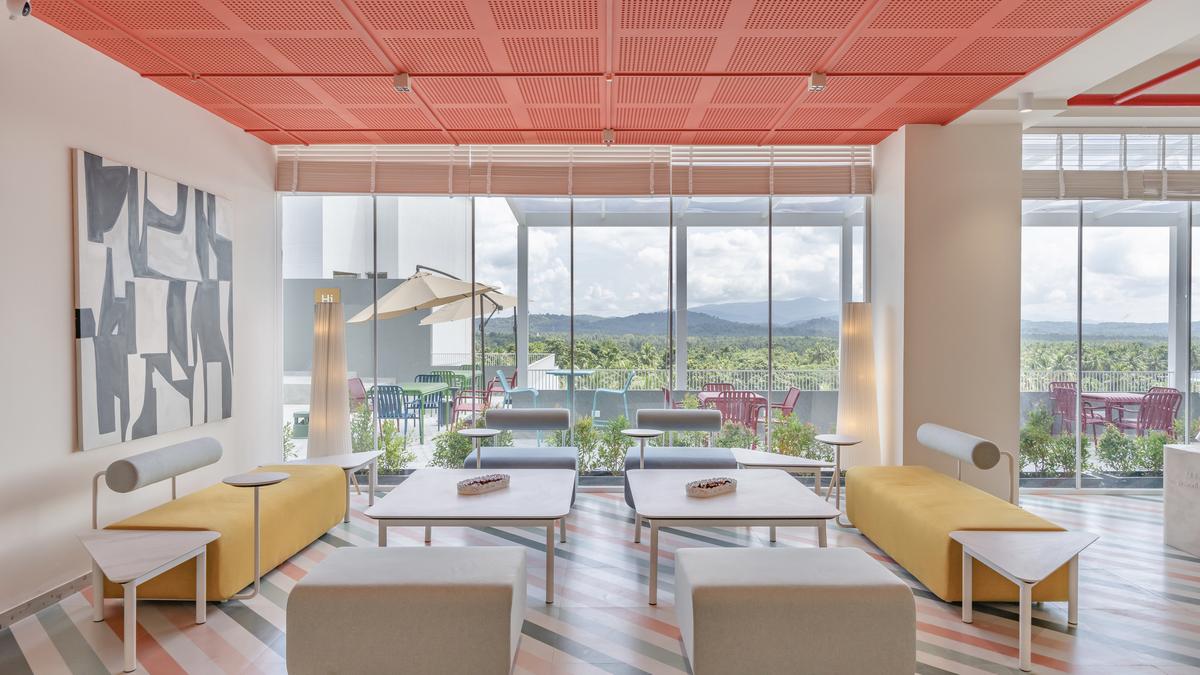
Sparking joy in the workplace
The Hindu
Innovative workspace designs post-COVID prioritize comfort, technology integration, and sustainability, creating stimulating environments for future workspaces.
The COVID-19 pandemic was a defining turning point for future workspaces design. Almost overnight, offices were scrambling to get people to do remote work. WFH (work from home) became the norm and wearing a blazer over pyjama bottoms became the acceptable conference call dress code. Global con-calls brought delegates and officials across the world together to do productive virtual sessions, and ‘zoom’ became the eponym. Over 2020-21, the digital nomad was on the rise. Post-pandemic, nobody wanted to go back to work like before. We were sold on flexible workstyles.
For corporate management, it was clear: the human element of collaborating and working in ‘real’ spaces was sorely missing. You cannot achieve optimal results, sitting miles apart. There’s synergy and purpose in physical interactions. How could offices be designed to be more appealing to the returnee workforce? Workspaces had to be responsive and stimulating, taking into consideration different personalities and variable needs. We look at three diverse approaches to intelligent workspaces by practitioners who evolved workspace design based on distinctive foundational precepts, well before the pandemic.
Vili and Ve Architecture Studio, Kozhikode
Vili and Vé’s designs prioritise comfort. Founder-architect Sreejith Sreekantan believes, “You cannot stuff a lot of people in a space and ask them to work. They have to be comfortable in the office.”
For Sreekantan, designing responsive environments has always been about making emotive links through story-telling by interpreting the mysteries of creation. It’s evident right in his choice of name — Vili and Vé — after the mythical Norse god Odin’s brothers, all three considered primal creators of the world.
Elaborating on the design concept for leading real estate brand HiLITE Properties’ 11,000 sq ft office (13,250 including terraces), Sreekantan outlines three functions. One, the entrance where you are welcomed; two, the spine, where all the main work happens; and three, executive areas where all the heavy-lifting happens. His spatial layout includes mini artistic set-ups that create a visual brand experience using chess as a metaphor. “When you enter the HiLITE offices, the Queen on a chessboard is a sign of invitation,” he says. The King — the most important piece in the game of chess — represents an escort, while rooks and castles figuratively relate to the workforce.
From the pale orange segmented sofas that pop up like Bundt cakes to the vivid red bird cage-styled meeting areas, the offices in Thrissur are a visual delight. The wire ‘cages’ provide a sense of being cocooned, despite their transparency. Even the floor tiles were custom-printed, referencing a RAL colour-library (European colour management system). Sreekantan gives emphasis to both self-reflection and people interaction. “I don’t want people to sit in one place from 9 to 5. I need places for them to breathe, relax and interact,” he says. While the 100-odd corporate staff are closely monitored, the design offers them privacy within the public arena, where ‘they can reminisce about life’. Not only does productivity become 2x, accountability increases and employees readily stay back when required.


Explore 2026's wallpaper trends in India, highlighting botanicals and handmade designs that enhance modern homes with nature-inspired aesthetics.

Mercedes-Benz CLA 250+ with EQ Technology review: design, performance, range and features explained. Discover how the new electric CLA combines advanced AI, long range, fast charging and futuristic styling for the next generation of luxury EVs.

AI tool for sparrow conservation

BTS’s comeback with ‘Arirang’ marks a major global music event. When does the album release, and where can you watch their concert live stream? We have all the details

The 2026 U.S. cholesterol guidelines urge starting screening and treatment at 30 to prevent cardiovascular disease effectively.

Olam Festival 2026 in Thiruvananthapuram returns March 27-29 with 120+ vendors, music, art, and cultural zones.

A few storytellers in Thiruvananthapuram share their journeys, challenges, and evolving methods on World Storytelling Day, inspiring young minds.

76-year-old Kurian Jacob from Kerala triumphs with seven medals, including five golds, at the Open Masters Games in Abu Dhabi.

Explore the nature of the human mind as an emergent property of brain activity and complex neural interactions.

CERN's Large Hadron Collider discovers the Xi-cc-plus particle, enhancing understanding of quantum mechanics and baryon behavior.

Vibha Batra’s latest book, Spotless (Hachette India) is a novel in verse for young adults

In its first edition, the Madras Art Salon spotlights the works of journalist and artist Narayan Lakshman at The Botanical Club, a social space in the British Deputy High Commission, Chennai

Cholesterol enhances melanoma cell invasion by making nuclei squishier, revealing a potential treatment target in cancer progression.