Spaceflight is reckoning anew with new generation of ‘space planes’” Premium
The Hindu
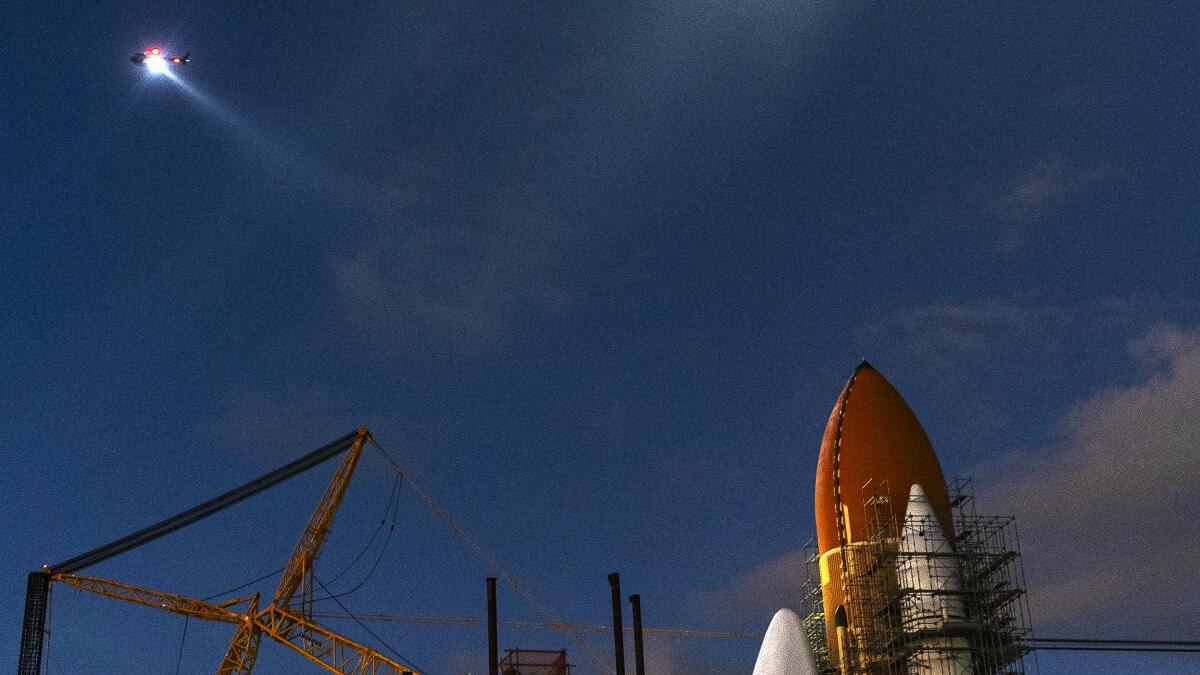
Nasa’s space shuttle operated in low-Earth orbit for 30 years before its retirement in 2011. The US space agency’s replacement for this vehicle, Orion, returned to the conical capsule design familiar from the Apollo missions.
Nasa’s space shuttle operated in low-Earth orbit for 30 years before its retirement in 2011. However, the US space agency’s replacement for this vehicle, Orion, returned to the conical capsule design familiar from the Apollo missions. This was because Nasa intended that this newer craft be used for exploring targets in deep space, such as the Moon.
But in recent years, we have seen a return of the spaceplane design. Since 2010, the US Space Force (and formerly the US Air Force) has been launching a robotic spaceplane called the X-37B into low Earth orbit on classified missions. China has its own military spaceplane called Shenlong.
This year could see a test flight of the company Sierra Space’s Dream Chaser – the first commercial spaceplane capable of orbital flight. If all goes well, the vehicle could be used to resupply the International Space Station (ISS) with cargo and, eventually, crew.
Spaceplanes can fly or glide in the Earth’s atmosphere and land on runways rather than using parachutes to land in water or flat ground like capsules. They’re also more manoeuvrable as the spacecraft reenters the atmosphere, increasing the area of the Earth’s surface where landing is possible from a specific re-entry point.
Spaceplanes also allow a gentler but longer flight path during re-entry and a softer landing, which is easier on crew and cargo than capsules, which can land with a thump. A runway also allows ground support crews and infrastructure to be ready at the landing location.
But spaceplanes are more complex and heavier than an equivalent capsule. The winged body shape poses a particular challenge for designing thermal protection systems (TPS) – the heat-resistant materials that protect the craft from scorching temperatures on re-entry. These additional costs mean it’s impractical to design a spaceplane for a single flight. They need to be used again and again to be viable.
There has been interest in spaceplanes from the earliest days of human spaceflight. A military spaceplane project called Dyna-Soar was started in the US in 1957, then cancelled just after construction started. The vehicle was sophisticated for its time, built using a metal alloy that is able to withstand high temperatures and featuring a heat shield on the front that could be detached after it returned from space, so that the pilot could see clearly as he was landing.


In its first edition, the Madras Art Salon spotlights the works of journalist and artist Narayan Lakshman at The Botanical Club, a social space in the British Deputy High Commission, Chennai

Cholesterol enhances melanoma cell invasion by making nuclei squishier, revealing a potential treatment target in cancer progression.

The designers reinterpret the Swedish artist’s symbolic forms and colour energy through contemporary resortwear silhouettes

Discover the inspiring legacy of Bibha Chowdhuri, a pioneering woman in physics and a trailblazer in STEM history.

Discover the inspiring legacy of Bibha Chowdhuri, a pioneering woman in physics and a trailblazer in STEM history.

Ashdeen’s Spring 2026 collection features saris inspired by the designer’s Parsi gara archive

Red ochre burials, ritual markings and myths across cultures show that red repeatedly marks liminal thresholds such as puberty, sacrifice and death; anthropologists argue that the colour functions as a technology of collective ritual and value, binding communities through shared symbolic acts

India approves 23 institutions for quantum labs under the National Quantum Mission, aiming to advance quantum technology and research.

India approves 23 institutions for quantum labs under the National Quantum Mission, aiming to advance quantum technology and research.

The Gaza conflict exacerbates environmental damage, emitting millions of tonnes of CO2 and threatening climate stability in West Asia.

Chefs and cookery experts share smart kitchen hacks, hybrid cooking methods and appliance tips to help households reduce LPG use without compromising on food

Discover groundbreaking research on Titan's lakes, bat vaccinations, and the unique aroma of ripening bananas in just one minute.

IRSO's NavIC system faces challenges as the last atomic clock fails, reducing operational satellites for navigation services.