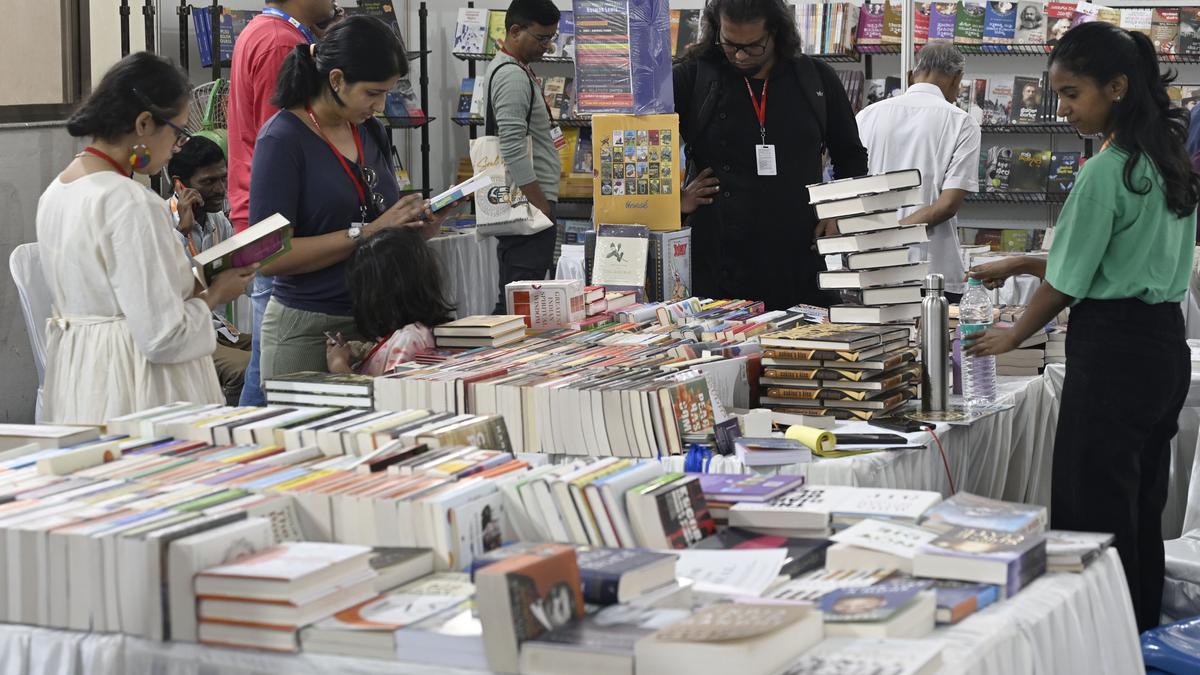
Soul of South festival by Book Brahma highlighted the multilingual nature of Bengaluru
The Hindu
With people from across all South Indian states living in Bengaluru, giving it a rich and diverse linguistic heritage, it would not be wrong to call the city the cultural capital of South India. However, a closer look at the city’s flourishing literature festivals reveals a predominant focus on English and Kannada languages, with little room for other languages. Breaking this linguistic barrier is Book Brahma’s inaugural festival Soul of South: Book Brahma Festival, a vibrant event that celebrates literary voices from across all South Indian languages, concluded last week at the St. John’s Auditorium, Koramangala.
With people from across all South Indian states living in Bengaluru, giving it a rich and diverse linguistic heritage, it would not be wrong to call the city the cultural capital of South India. However, a closer look at the city’s flourishing literature festivals reveals a predominant focus on English and Kannada languages, with little room for other languages. Breaking this linguistic barrier is Book Brahma’s inaugural festival Soul of South: Book Brahma Festival, a vibrant event that celebrates literary voices from across all South Indian languages, concluded last week at the St. John’s Auditorium, Koramangala.
The three-day festival, called ‘Soul of South’, was structured around six venues on one campus. Each section offered a distinctive mix of panel discussions, performances, book launches, and interactive sessions, attracting a diverse audience of literature enthusiasts across the three days.
The last day’s events commenced with a soulful Hindustani classical vocal performance by Pandit M. Venkatesh Kumar, accompanied by Satish Kolli on harmonium and Keshav Joshi on tabla.
Following this was a performance by actor Prakash Raj titled Diverse Languages, Same Feeling, which highlighted the common threads that unite India’s diverse linguistic landscape through poems in Kannada, Telugu, Tamil and Malayalam. Key sessions included a discussion on the latest trends in Malayalam poetry, as well as a panel on the intersection of literature and cinema in Kannada, with renowned filmmakers Girish Kasaravalli and Sumana Kittur. The festival featured discussions on Telugu short stories and emerging trends in Tamil novels, placing regional literature in the spotlight.
Among other key sessions spread across the three days delved into contemporary Kannada novels, subaltern voices in Telugu literature, and the pluralistic dimensions of Karnataka’s languages. A particularly engaging panel examined the impact of generative AI on Indian writing, exploring how technology is shaping the future of literature.
There was a thought-provoking discussions on contemporary theatre, the art of storytelling, poetry in cinema songs, the beauty of languages within Karnataka, and the evolving vision for literature. There was an interesting session focused on the global prospects for South Indian literature, with discussions on the role of literary agents and editors in Indian language publishing. A roundtable with South Indian publishers and international experts highlighted the challenges and opportunities of taking regional literature to a global audience. There was a dedicated venue on the campus focused on storytelling, art master classes, traditional board games, and art competitions for children.
Speaking to The Hindu, Devu Pattar, editor-in-chief, Book Brahma, said the organisers have had an overwhelming experience through the three days. “This is probably the first literature festival that has included all the major South Indian languages. I have attended many literature festivals across the country, but these festivals are predominantly focused on English literature, and literature in the regional language. We have managed to bring authors and poets who write in Kannada, Telugu, Tamil and Malayalam all under one roof.”


Special prayers mark Eid-ul-Fitr celebrations in Madurai

India’s gem and jewellery industry continues to demonstrate remarkable resilience and a spirit of innovation, said Kirit Bhansali, chairman of the Gem and Jewellery Export Promotion Council (GJEPC), at the inauguration of the 4th edition of IIJS Bharat-Tritiya 2026 at Bengaluru International Exhibition Centre (BIEC) here on Saturday, March 21.

HYDGEN dispatches eight modular green hydrogen systems to Surat, enhancing on-site industrial hydrogen generation and operational efficiency.

Fight is between AIADMK and DMK, says Rajan Chellappa

Two habitual offenders arrested in Miyapur for wine shop burglary; police recover stolen cash and bike.

Tiruchi's Smart City projects face underutilisation despite completion, raising concerns about planning, execution, and revenue generation.

Election Observer Anubha Shrivatsava inspects polling booths in Western Ghats, ensuring smooth arrangements amid challenging conditions.

A.P. Minister announces ₹9.8 crore development of Barashaheed Dargah and ₹20 crore international school for minorities in Nellore.

Vice-President Radhakrishnan advocates for modern university syllabi to enhance employability and skill development in today's evolving job market.

A poignant protest at Palakkad Medical College highlights ongoing developmental challenges, initiated by a symbolic wreath-laying by a young girl.

A three-year-old girl was tragically killed by a truck while walking with her mother near Bengaluru.

Iran's President calls for U.S.-Israeli aggression cessation and urges BRICS to ensure regional peace and security.

Harish Rao accuses govt. of cancelling ₹1,070 cr. work sanctioned to Siddipet