Some states are loosening their Covid isolation guidelines, shifting away from CDC recommendations
CNN
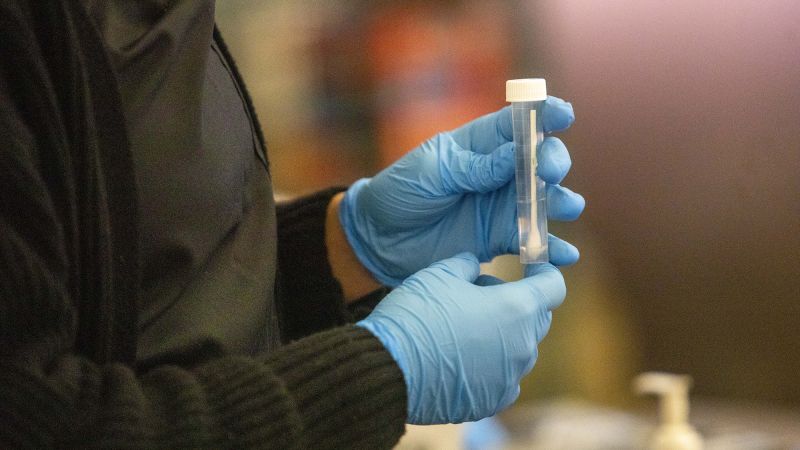
People who test positive for Covid-19 in California and Oregon no longer have to isolate for a set period of time; state policies now say that those with asymptomatic cases don’t have to isolate at all, and others can return to school or work once their symptoms are improving and they’ve been fever-free for at least 24 hours.
People who test positive for Covid-19 in California and Oregon are no longer expected to isolate for a set period of time — and those without symptoms don’t have to isolate at all, state policies now say. People with symptoms can return to school or work once their symptoms are improving and they’ve been fever-free for at least 24 hours, according to the state policies. These two states — which have tended to take a more precautious approach to pandemic policies — are the first to break from federal guidance from the US Centers for Disease Control and Prevention, which recommends at least five days of isolation for anyone with Covid-19. Oregon changed its isolation policy in May when the Covid-19 public health emergency lifted, and California followed suit earlier this month. Officials in both states say the changes reflect policy that’s evolving along with the pandemic. “We are now at a different point in time with reduced impacts from COVID-19 compared to prior years due to broad immunity from vaccination and/or natural infection, and readily available treatments available for infected people,” Dr. Tomás Aragón, director of the California Department of Public Health, wrote in the official order about the change. “Our policies and priorities for intervention are now focused on protecting those most at risk for serious illness, while reducing social disruption that is disproportionate to recommendations for prevention of other endemic respiratory viral infections.” The CDC recommends at least five days of isolation because people are likely to be most infectious during that time, and the science around that hasn’t changed. The recent order from the California health department notes that the potential infectious period spans from two days before through 10 days after symptoms or a positive test. But experts broadly agree that easing isolation timeframes won’t significantly increase community transmission or severe outcomes — in part because the virus has been circulating at very high levels, even with more restrictive guidance in place.


The American Academy of Pediatrics has joined the ranks of organizations that are losing funding for grants that, federal officials say, don’t align with the Trump administration’s missions or priorities.

The Chicago-based artist will draw from two vast photographic archives — including vintage images from Ebony and Jet — in his commission for the center, which will open late next spring.

Christos Tsirogiannis has spent almost two decades trawling through inventories of museums, auction houses and other collections for illegally trafficked antiquities.

The US Centers for Disease Control and Prevention officially abandoned universal hepatitis B vaccination for newborns on Tuesday, signing off on its vaccine advisers’ recommendation for individual decision-making — a move that experts and researchers say will lead to more illness.

The US Food and Drug Administration sent warning letters to Target, Walmart, Kroger and Albertsons after some of the stores failed to remove recalled baby formula linked to a large infant botulism outbreak.

The latest data on respiratory illness in the United States shows that shoppers and merry-makers are spreading more than just holiday cheer: They’re also passing around germs. In many cases, it’s a new virus variant that’s been causing early and busy flu seasons in Asia, Australia and Europe.

With narrative storytelling, multimillion-dollar budgets and A-list casts, Hideo Kojima’s arthouse games — including the critically acclaimed “Metal Gear Solid” and “Death Stranding” franchises — are as cinematic as, well, cinema.

The US Food and Drug Administration intends to put a “black box” warning on Covid-19 vaccines, according to two people familiar with the agency’s plans.

Stained-glass works by the French artist Claire Tabouret have replaced the original windows, which suffered no damage in the fire that destroyed the cathedral’s spire.

Children who were vaccinated against Covid-19 last season had a “substantially lower risk” of emergency department and urgent care visits related to the virus, according to a report published Thursday by the US Centers for Disease Control and Prevention.

As multiple measles outbreaks simmer across the United States, cases are accumulating nearly as quickly as when the West Texas outbreak was at its peak this spring.

A British Nigerian artist who produces large-scale draped sculptures and vortex-like circular drawings has become the first person with a learning disability to claim the Turner Prize, one of contemporary art’s most prestigious accolades.

Relying on testing to guide vaccination recalls an approach the United States tried in the 1980s and early ’90s that still led to thousands of cases of hepatitis B among children every year.