‘Some slackening of momentum but GDP may have risen 6.8% in Q2’
The Hindu
India's GDP projected to grow 6.8% in Q2 2024-25, despite slackening momentum and inflation concerns, per RBI article.
India’s GDP is projected to grow 6.8% in the second quarter of 2024-25, marginally higher than the 6.7% uptick in the first quarter (Q1), as per an economic activity index compiled by the Reserve Bank of India (RBI) based on a range of high frequency indicators that was cited by its officials in an article on Monday.
The article on the “State of the Economy” in the central bank’s October Bulletin noted that while India’s growth outlook is supported by robust domestic engines despite recent geopolitical tensions, some high frequency indicators have shown a slackening of momentum in Q2. This slackening was partly attributable to idiosyncratic factors like unusually heavy rains in August and September, and Pitru Paksha, the RBI officials led by Deputy Governor Michael Debabrata Patra said in the article.
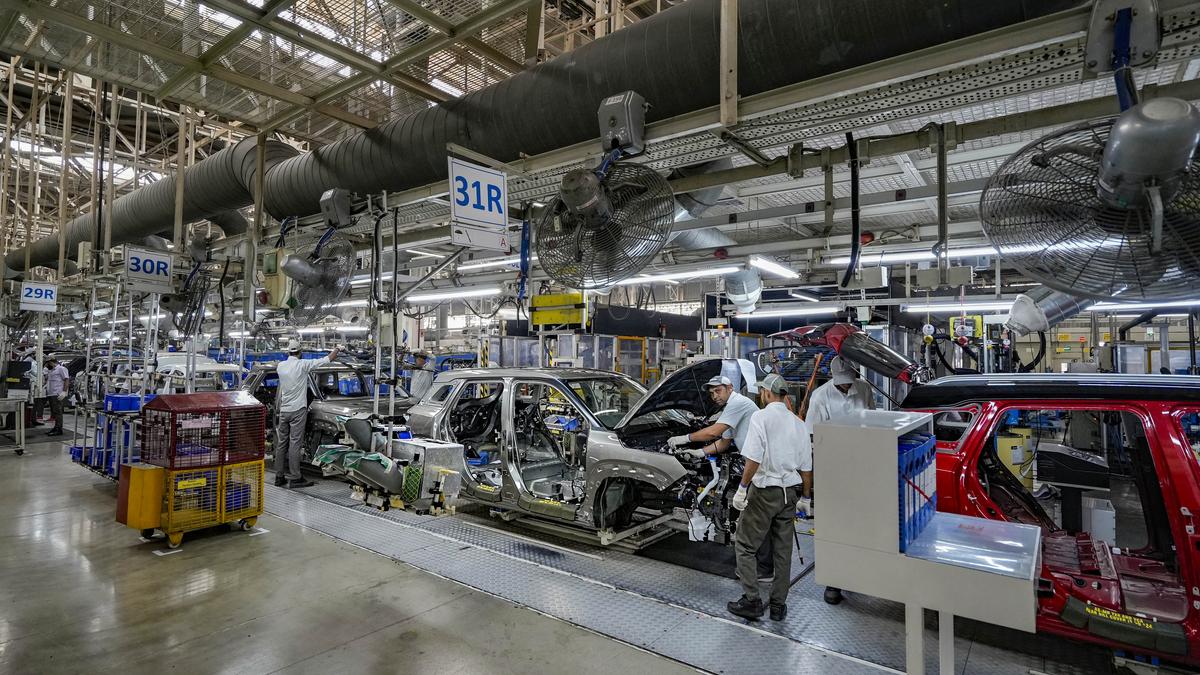
Some of the indicators that have waned include goods and services tax (GST) collections, automobile sales, bank credit growth, merchandise exports and the manufacturing purchasing managers’ index (PMI), the article indicated. “The Indian economy has exhibited marked resilience in spite of a sequential ebb in momentum in the second quarter of 2024-25 on account of a host of factors…” the article said, but pointed to a sequential improvement in consumer perceptions about the current situation and future expectations and continued optimism among industry players about future growth prospects. “Supply chain pressures eased in September, falling below historical average levels, although they remain vulnerable to geopolitical risks which have escalated in October. Our economic activity index (EAI) 26, based on a range of high frequency indicators, projects GDP growth at 6.8% in Q2:2024-25,” the article concluded.
“Looking ahead, private investment is showing some encouraging signs in terms of lead indicators while consumption spending is shaping up for a festival season revival,” the article said, having pointed to a positive outlook among manufacturers about capacity utilisation in the ensuing quarters.
The article, however, flagged concerns around stretched valuations in Indian stock markets and the uncertainty surrounding geopolitical conflicts in the Middle East, which got reflected in the pullback in key indices witnessed in October. “Markets are likely to tread cautiously with an eye on corporate earnings reports for Q2FY25 and trends in global markets,” they added.
Inflation, which had stayed below the central bank’s median target of 4% for two consecutive months through July and August, surged in September as an adverse statistical base effect was compounded by a resurgence in food price momentum, the article noted. While the sharp pick up in retail inflation last month, to 5.5%, was driven by the food group, they noted that core inflation also registered an uptick along with a narrowing of the deflation in fuel prices.
“Food price pressures in respect of vegetables could turn out to be transitory with robust kharif harvest arrivals, although the surge in the price momentum of oils and fats can have second order effects impacting overall inflation through input costs of fast moving consumer goods (FMCGs),” the RBI officials averred.


The Indian rupee plummets 82 paise to a record low of 93.71 against the dollar due to rising crude prices and geopolitical tensions.

Power Minister highlights energy security and renewable transition during Bharat Electricity Summit 2026 amid global tensions.

The rupee hits a record low of 93.08 against the dollar, pressured by rising oil prices and FII outflows.

OpenAI said on Thursday it will buy Python toolmaker Astral, as the ChatGPT maker seeks to strengthen its portfolio against rival Anthropic to gain more share in the artificial intelligence coding tools market.

Crude oil prices drop over 2% as Netanyahu reassures investors amid ongoing Iran conflict and rising energy market concerns.

PPAC designated as nodal agency to enhance data collection on domestic fuel and energy stocks for improved mandate enforcement.

Indian markets plunged over 3% amid soaring crude prices, rupee depreciation, and escalating West Asia geopolitical tensions in March 2026.

Government launches ₹497 crore RELIEF scheme providing credit insurance to exporters affected by the West Asia crisis, focusing on MSMEs.

Crude oil futures rise amid Middle East attacks, pushing Brent above $116 on fears of tightening global supply.

West Asia conflict delays India’s FTA talks with GCC and Israel, while UK and EU agreements proceed as planned in 2024.

Russian Urals oil vessels will reach India on March 21 amid stable fuel prices and diversified LPG imports.

Warner Bros. dominated the Academy Awards, but Paramount’s looming acquisition of the studio signals the biggest restructuring of the industry in decades and a battle over the future of Hollywood itself

HDFC Bank board calls Atanu Chakraborty’s resignation baffling, affirms robust corporate governance and strong market confidence.