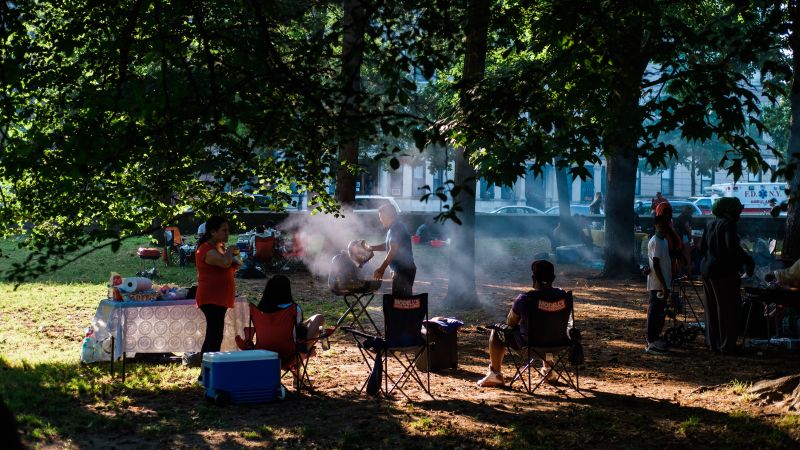
Sizzling out? As peak barbecue season begins, fewer Americans are buying grills
CNN
To BBQ or not to BBQ? That is one question on Americans’ minds heading toward July 4 as grills are not as hot of an item as they once were.
To BBQ or not to BBQ? That is one question on Americans’ minds heading toward July 4 as grills are not as hot of an item as they once were. The grill business saw a massive pandemic-era buying binge, but is now facing consumers worried about inflated meat prices, high interest rates and uncertainty. Many feel no need to upgrade fairly recent purchases. Market leaders like higher-end grill manufacturer Traeger, once a pandemic darling, reported its latest quarter’s grill sales at $76.8 million — a plunge from the $156.1 million the company raked in during the second quarter of 2021. Best-selling outdoor cooker brand Weber has also seen unit shares decline since 2020, according to data from Traqline. (Weber did not respond to CNN’s request for comment.) Retailer Home Depot also reported pressure in big-ticket patio and garden equipment, including grills, during its first quarter earnings call in May as the company reported overall dips in sales and earnings. And it’s not just the big brands. Local stores that sell grills and other backyard cooking gear similarly reported demand slacking off. “It’s trending down,” said Brian Bushfield, general manager at West Coast BBQ Shop in San Diego, California. He noted a sluggish start to June and a slow Memorial Day, despite the holiday being one of the most popular occasions to purchase new grills.


“Today is a difficult day,” CBS executives wrote to staff, explaining the cuts as a tough but necessary reallocation of newsroom resources.

President Donald Trump has repeatedly promised that Americans will get larger tax refunds this year thanks to his “big, beautiful bill.”

President Donald Trump has repeatedly promised that Americans will get larger tax refunds this year thanks to his “big, beautiful bill.”

Oil prices edged lower on Friday after a tumultuous day that saw the international benchmark surge above $119 a barrel as the Middle East conflict deepened energy supply fears.

The war in Iran has delivered what economists call a “black swan” event — an unforeseen shock so destructive, no one is immune to it.

The war in Iran is driving up the cost of buying a home in America.

Eight state attorneys general have filed an antitrust lawsuit to block Nexstar’s pending acquisition of Tegna, which would strengthen the right-leaning Nexstar and shrink the number of station owners in the US.

The Iran war has driven oil prices to their highest levels in years. Now, a wave of attacks in the past 24 hours on energy production sites across the Middle East have turned the spotlight on another crucial fossil fuel: liquefied natural gas, or LNG.

Oil and natural gas prices spiked Thursday, as Iran ramped up strikes on energy infrastructure across the Middle East and attacked one of the world’s most important liquefied natural gas (LNG) facilities in Qatar.

In normal times, the Federal Reserve would more or less ignore an oil price shock like the one we’re in now.

Property brokerage Compass on Wednesday dropped its lawsuit against Zillow, ending a legal clash over how home listings can be marketed online.

Fed officials didn’t make any rate moves at their March meeting and released an updated forecast for the path of the American economy as the war in Iran stretches on.

Fed officials are set to announce their latest rate decision Wednesday afternoon, along with a new forecast for the path of the American economy as the war in Iran stretches on.