Should nature have financial value in Canada’s accounting system? What experts say
Global News
Experts say Canada cannot properly address climate change without recognizing the financial value of natural assets like forests and wetlands.
Canada is already feeling the impact of changing climate, much like the rest of the world. When a heat dome settled over British Columbia this summer, 570 people died. Last month, Hurricane Fiona wreaked havoc across the East Coast. While there may be no easy way out of this, some experts believe that adding financial value to natural assets may help in tackling climate change.
Roy Brooke, the executive director of the Municipal Natural Assets Initiative, which aims to make natural asset management a mainstream practice, said the first step in ensuring Canada has healthy biodiverse ecosystems is to recognize the value of nature in its financial and accounting systems because by doing so governments would be able to properly assess the conditions of natural assets like forests and wetlands.
This means that by keeping a financial record of natural assets, if any of the trees in a forest, for example, get a disease, governments would be able to provide maintenance that would increase the quality of its resilience.
“We cannot address climate change without also addressing nature and biodiversity. We cannot reach any climate change targets. We cannot mitigate and we cannot adapt properly without also ensuring that we have healthy, connected, biodiverse ecosystems,” said Brooke.
According to Natural Resources Canada, an infographic states that “in 2020, natural resources, directly and indirectly, accounted for 15.5% of Canada’s nominal GDP,” with the biggest natural resource being energy.
About 909 communities were also found to be “economically reliant on at least one natural resource sector.”
“Of those communities, 609 are either significantly or highly reliant on at least one of the natural resource sectors,” the government website says, with the resources being minerals and metals or forests.
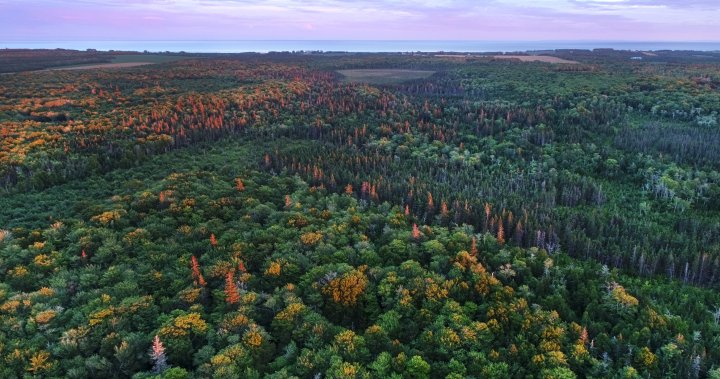
Forests make up a huge portion of Canadian landscape, with Canada having nine per cent of the world’s forests, according to the government.


UNESCO recognized several Maritime historical groups including the executive director of the Black Loyalist Heritage Centre for their work on the Black Loyalist archive.

Aid shipments are beginning to arrive in Cuba and a Russian oil delivery is expected this month, but fuel shortages remain critical.

Tensions flared as CAQ leadership rivals clashed over Quebec’s “third link” project in the first debate to replace Premier François Legault.

Toronto police have charged a 60-year-old man with second-degree murder in connection with the death of Xian Wei Shao, whose remains were discovered in a north end home last week.

Finance Minister François-Philippe Champagne says the government has found ways to cut spending by $60 billion but cautions that published spending cuts require important context.

Three Canadians from Quebec who were stranded in the Persian Gulf since Feb. 28 have returned home following a coordinated repatriation effort.

Federal departments announced that they plan to cut more than 12,000 jobs over three years as part of the Carney government’s spending review plan.

Canada’s Integrated Threat Assessment Centre says the U.S.-Israeli war against Iran has heightened an already present threat against Jewish Canadians and public officials.

Edward Warner, his wife Tania and his seven-year-old step-daughter Ayla were coming back from a friend's baby shower on Saturday when they went through an ICE checkpoint in Sarita.

A fire chief from a village that battled flames during Saskatchewan's destructive wildfire season last year says the province's latest budget does not provide enough funding.

Manitoba’s upcoming budget will include more child care funding and a smaller deficit, as the NDP government aims to balance finances by 2027.

A member of the Royal Canadian Air Force in Winnipeg has just been crowned the World's Strongest Firefighter, outlifting athletes from around the world.

Muslims across Canada are celebrating Eid al-Fitr while some reflect on conflict affecting loved ones abroad, as leaders highlight unity, charity and renewal.