Senate Intelligence Committee criticizes CIA’s treatment of ‘Havana syndrome’ patients
CNN
A bipartisan Senate Intelligence Committee report released Friday slammed the CIA for its treatment of patients with a mysterious ailment known as “Havana syndrome,” determining that “many individuals faced obstacles to timely and sufficient care.”
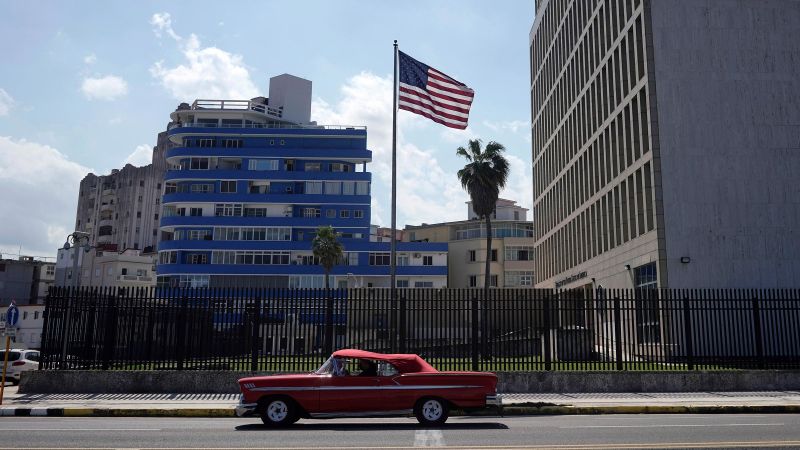
A bipartisan Senate Intelligence Committee report released Friday slammed the CIA for its treatment of patients with a mysterious ailment known as “Havana syndrome,” determining that “many individuals faced obstacles to timely and sufficient care.” The report outlines 11 recommendations for the CIA to implement to address key concerns such as a lack of an “established clear and documented policies, guidance, and criteria for how it refers AHI (anomalous health incidents) reporters to facilitated treatment programs.” The recommendations also include developing written policies for medical care and benefit programs associated with AHIs, conducting a comprehensive organizational assessment of the CIA’s response to AHIs, and reestablishing a standard post-AHI evaluation to all AHI reporters who request one. Examples of insufficient care outlined in the report included patients who “experienced delayed, denied, or pre-conditioned care,” including “long wait times to access facilitated treatment options; were denied facilitated care by a CIA care adjudication board; perceived that their access to facilitated medical care was contingent on their willingness to participate in a NIH clinical research study.” A spokesperson for the CIA told CNN that during the periods covered in the report, the agency worked to both understand the problem and investigate the “possibility that foreign actors were harming US government personnel and their families.” “In that environment, supporting our officers and their families required us to dynamically adapt our programs and processes to changing needs and circumstances. Whether, in hindsight, we could have done better is for others to evaluate, but our commitment to ensuring that our officers and their families had access to the care they needed has never wavered,” the spokesperson said, emphasizing that the agency has “no greater responsibility than to care for the health and safety of our people.” The mysterious illness first emerged in late 2016, when a cluster of diplomats stationed in the Cuban capital of Havana began reporting symptoms consistent with head trauma, including dizziness and extreme headaches.


United Farm Workers is not participating in annual celebratory events this month of its co-founder Cesar Chavez over what it calls serious allegations the union did not specify

Illinois Lt. Gov. Juliana Stratton will win the Democratic primary for an open Senate seat, CNN projects, a stunning rise for a little-known state officer now on a glide path to Washington.

President Donald Trump promised his endorsement was forthcoming in the GOP Texas Senate runoff and said he wanted whoever he didn’t pick to drop out. But now — preoccupied with the Iran war and a doomed voting bill — he’s missed a critical deadline.

The Senate has kicked off extended debate on the “SAVE America Act” — one of President Donald Trump’s top legislative priorities.

Organized crime in Latin America is proving difficult to defeat with the kind of decapitation strategy apparently favored by US President Donald Trump.

The conservative movement’s internal debate over the Iran war entered a new phase on Tuesday, with the first resignation of a prominent Trump appointee who criticized the war.

Arizona’s attorney general has filed the first-ever criminal charges in the US against a major prediction market company, accusing Kalshi of running an illegal gambling operation in violation of state law.

President Donald Trump’s brief and aggressive attempt to corral an international coalition to police the Strait of Hormuz concluded in disappointment on Tuesday.

House Oversight Chair James Comer on Tuesday issued a subpoena to Attorney General Pam Bondi to appear for a deposition on April 14 as part of the panel’s Jeffrey Epstein probe.

President Trump’s latest comments about the Iran war make him look out of the loop and unprepared.

Travelers are experiencing long security lines at a number of airports as TSA workers continue to work without pay. Follow for live updates.

A senior US intelligence official appointed by President Donald Trump abruptly announced he is stepping down from his post on Tuesday, citing misgivings about the administration’s war with Iran.

CNN’s 5 Things AM brings you the news you need to know every morning.