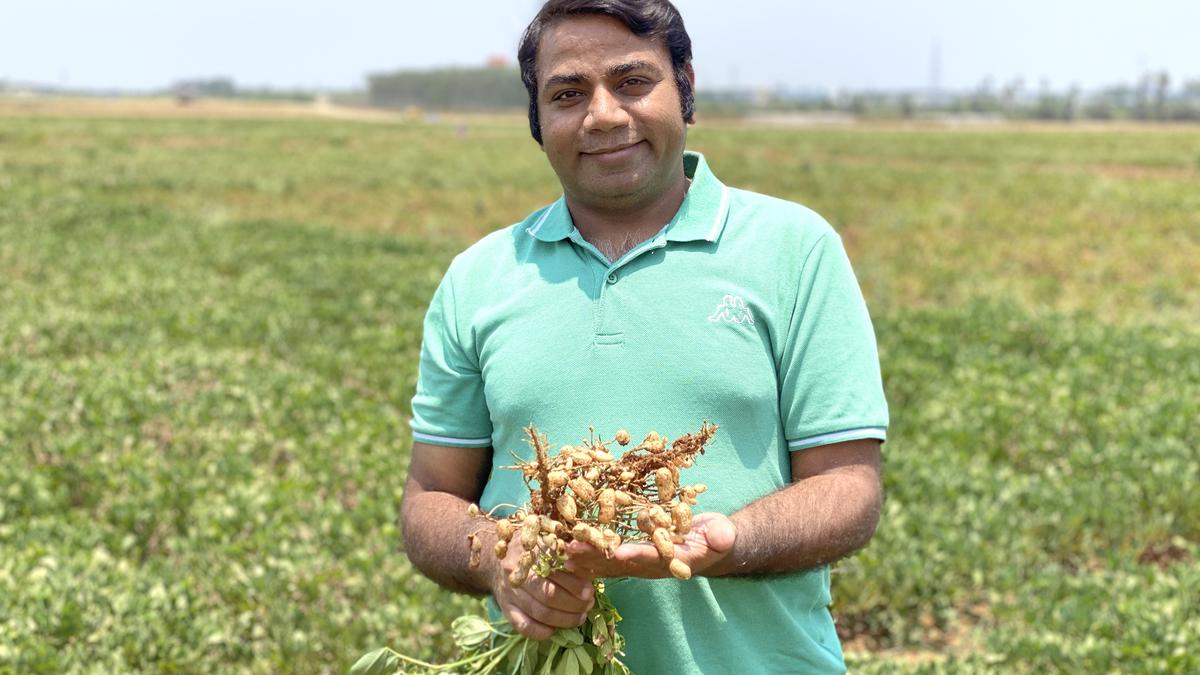
Scientists unlock genetic key to higher peanut yield
The Hindu
Unlocking genetic key to higher-yielding peanut varieties through pan-genome analysis published in Nature Genetics for crop breeding advancements.
A team of 19 researchers from Australia and China have unlocked the genetic key to developing higher-yielding varieties of peanut or groundnut, a major food and oilseed crop in India.
Their pan-genome analysis, revealing the structural variation associated with seed size and weight traits in peanut (Arachis hypogaea L.), was published in the latest edition of Nature Genetics, a peer-reviewed scientific journal.
The researchers from Western Australia’s Murdoch University, Henan Agricultural University, Shanghai Jiao Tong University, and the Shandong Academy of Agricultural Sciences assembled a pan-genome of peanut expected to serve as a fundamental resource for the genetic enhancement of legume crops.
A pan-genome represents the entire range of genes within a population or species, encompassing both unique and shared genetic material.
The study marks three Chinese lead authors – Kunkun Zhao, Hongzhang Xue, and Guowei Li – as equal contributors. Among its other authors are Annapurna Chitikineni and Rajeev K. Varshney from Murdoch University.
The researchers studied the genome-wide diversity of 269 peanut accessions, including 61 wild species, landraces and improved species. They found significant genomic variations and highlighted two of the most critical traits that affect peanut yield: seed size and weight.
Accession refers to a distinct sample or group of plant material, typically representing a single species or cultivar, collected from a specific location at a particular time. A landrace is a local cultivar improved by traditional agricultural methods.


GHMC intensifies action against property tax defaulters, seizing properties and offering a One Time Settlement scheme for payments.

CCB arrests three drug peddlers in Mangaluru, seizing ₹2.5 lakh worth of MDMA and other valuables.

TVK's 28 candidates in Puducherry include former BJP MLAs, a sitting Independent, and a retired police IG.

BRS submits notice on private member bill to Speaker

CPI-M accepts DMK's five-seat offer for Tamil Nadu Assembly elections, prioritizing INDIA bloc unity over seat demands.

Ricky Rai, son of former underworld operative Muthappa Rai, on Monday appeared before the Bengaluru Traffic Police for questioning in connection with a case involving a Lamborghini performing dangerous stunts at Anil Kumble Circle on March 21.

The Dispur election heats up as 'CongBJP' defections shape a high-stakes contest between veteran candidates from BJP and Congress.

Bengaluru's M. Chinnaswamy Stadium conducts readiness drill ahead of IPL 2026, ensuring upgrades and technical preparations are complete.

First-level randomisation of EVMs completed in Nagapattinam for upcoming elections, ensuring transparency and security.

A district-level committee in Krishnagiri has been formed to assess and verify seizure claims of goods and cash.

Minister Anam Ramanarayana Reddy pledges government support for local fishermen and farmers facing challenges in Andhra Pradesh.

MP M. Sribharat urges collective efforts to revive Visakhapatnam Steel Plant, highlighting key reforms for crucial recovery and growth.

141 candidates have filed nominations for Kozhikode's Assembly elections, with scrutiny on March 24 and campaigning intensifying.