Scientists training AI to analyse chicken communications Premium
The Hindu
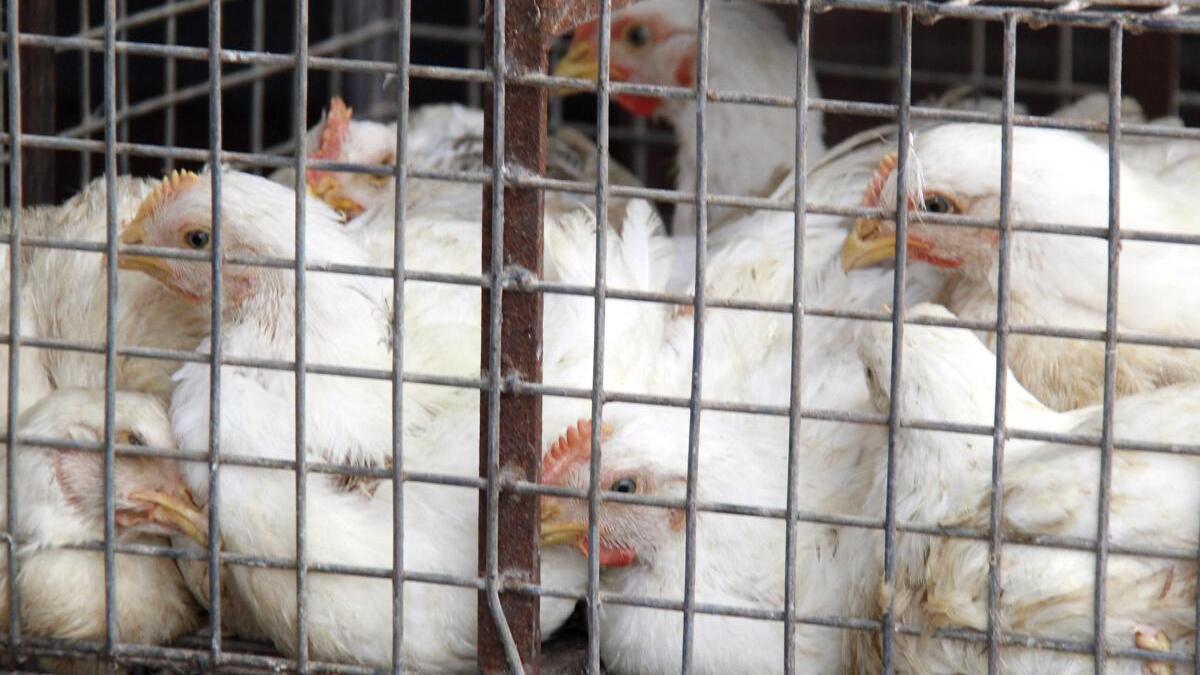
Chickens are quite the communicators — their clucks, squawks and purrs are not just random sounds but a complex language system. These sounds are their way of interacting with the world and expressing joy, fear and social cues to one another.
Have you ever wondered what chickens are talking about? Chickens are quite the communicators — their clucks, squawks and purrs are not just random sounds but a complex language system. These sounds are their way of interacting with the world and expressing joy, fear and social cues to one another.
Like humans, the “language” of chickens varies with age, environment and surprisingly, domestication, giving us insights into their social structures and behaviours. Understanding these vocalizations can transform our approach to poultry farming, enhancing chicken welfare and quality of life.
Our research at Dalhousie University applies artificial intelligence (AI) to decode the language of chickens. It’s a project that’s set to revolutionize our understanding of these feathered creatures and their communication methods, offering a window into their world that was previously closed to us.
The use of AI and machine learning in this endeavor is like having a universal translator for chicken speech. AI can analyze vast amounts of audio data. As our research, yet to be peer-reviewed, is documenting, our algorithms are learning to recognize patterns and nuances in chicken vocalizations. This isn’t a simple task — chickens have a range of sounds that vary in pitch, tone, and context.
But by using advanced data analysis techniques, we’re beginning to crack their code. This breakthrough in animal communication is not just a scientific achievement; it’s a step towards more humane and empathetic treatment of farm animals.
One of the most exciting aspects of this research is understanding the emotional content behind these sounds. Using Natural Language Processing (NLP), a technology often used to decipher human languages, we’re learning to interpret the emotional states of chickens. Are they stressed? Are they content? By understanding their emotional state, we can make more informed decisions about their care and environment.
In addition to vocalizations, our research also delves into non-verbal cues to gauge emotions in chickens. Our research has also explored chickens’ eye blinks and facial temperatures. How these might be reliable indicators of chickens’ emotional states is examined in a preprint (not yet peer reviewed) paper.


The 2026 U.S. cholesterol guidelines urge starting screening and treatment at 30 to prevent cardiovascular disease effectively.

Olam Festival 2026 in Thiruvananthapuram returns March 27-29 with 120+ vendors, music, art, and cultural zones.

A few storytellers in Thiruvananthapuram share their journeys, challenges, and evolving methods on World Storytelling Day, inspiring young minds.

76-year-old Kurian Jacob from Kerala triumphs with seven medals, including five golds, at the Open Masters Games in Abu Dhabi.

Explore the nature of the human mind as an emergent property of brain activity and complex neural interactions.

CERN's Large Hadron Collider discovers the Xi-cc-plus particle, enhancing understanding of quantum mechanics and baryon behavior.

Vibha Batra’s latest book, Spotless (Hachette India) is a novel in verse for young adults

In its first edition, the Madras Art Salon spotlights the works of journalist and artist Narayan Lakshman at The Botanical Club, a social space in the British Deputy High Commission, Chennai

Cholesterol enhances melanoma cell invasion by making nuclei squishier, revealing a potential treatment target in cancer progression.

The designers reinterpret the Swedish artist’s symbolic forms and colour energy through contemporary resortwear silhouettes

Discover the inspiring legacy of Bibha Chowdhuri, a pioneering woman in physics and a trailblazer in STEM history.

Discover the inspiring legacy of Bibha Chowdhuri, a pioneering woman in physics and a trailblazer in STEM history.

Ashdeen’s Spring 2026 collection features saris inspired by the designer’s Parsi gara archive