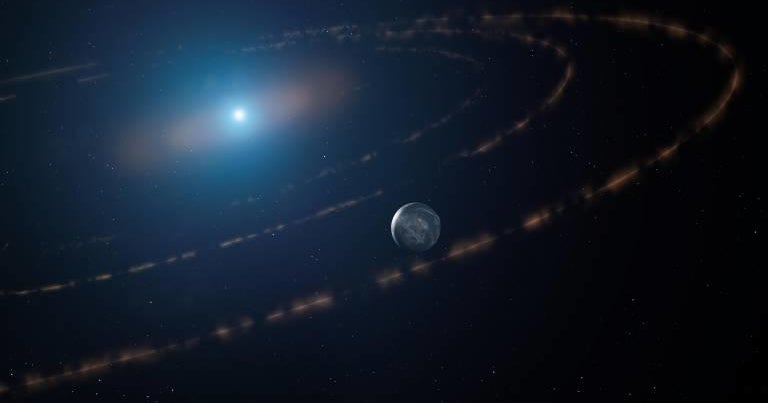
Scientists say there may be a "major planet" that could potentially support life for at least 1 billion years into the future
CBSN
It turns out that stars like our sun may not have to be alive and thriving to sustain life. Scientists say they have discovered a possible "major planet" orbiting a dying sun that could potentially support life for generations to come.
Researchers from University College London made the "unexpected" discovery while observing a white dwarf, the glowing remains of a star that ran out of its hydrogen fuel, 117 light years away. This particular star, known as WD1054-226, has a ring of planetary debris in its orbital habitable zone, otherwise known as the Goldilocks zone, where the temperatures should, in theory, allow the planet to have liquid water on its surface.
If the object discovered is confirmed to be a life-supporting planet, it would mark the first time a life-supporting planet has been found orbiting a dying sun.
