‘Science engagement cannot be separated from fundamental democracy, need to bring humanness back into science’ Premium
The Hindu
A crowd had gathered on the lawns of the quaint campus of National Centre for Biological Sciences (NCBS). They formed circles, each comprising five to six people. Soon they started moving. They went in circles, made a bridge, spun and released, resembling some kind of European folk dance.
A crowd had gathered on the lawns of the quaint campus of National Centre for Biological Sciences (NCBS). They formed circles, each comprising five to six people. Soon they started moving. They went in circles, made a bridge, spun and released, resembling some kind of European folk dance.
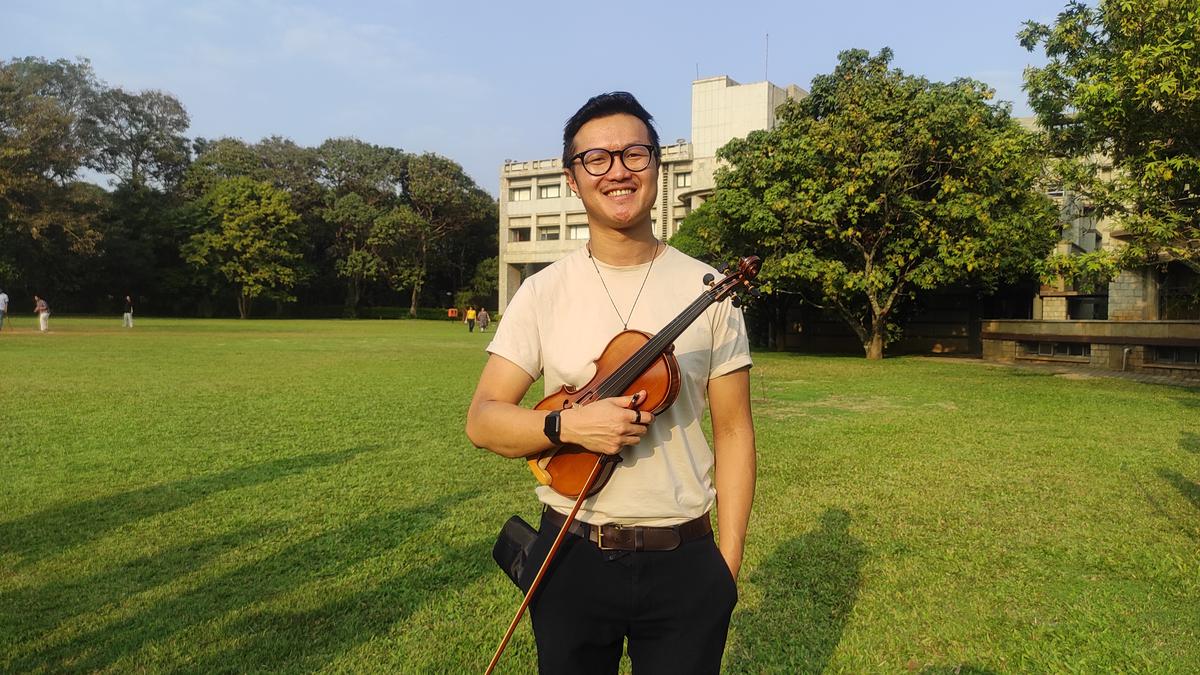
While it may have looked like a group of people having fun, it wasn’t just that. What was witnessed was the demonstration of ‘Merry Dancers’, more commonly known as the northern lights, through Scottish traditional dance, Ceilidh (pronounced as Kay-lee). Giving his instructions to them while playing his fiddle is Lewis Hou, science educator and founder of Science Ceilidh.
Science Ceilidh is a social enterprise that uses traditional Scottish dance and music for science communication, thereby aiming to support STEM, creativity, research and wellbeing in communities. Mr. Hou was in Bengaluru at NCBS, to talk about centring communities in research engagement. He spoke to The Hindu on his vision, what Science Ceilidh stands for and the importance of science communication among local communities.


Bombay HC criticizes BMC for neglecting air pollution, warns against approving new mega projects without compliance measures.

CBI to challenge Supreme Court suspension of Kuldeep Sengar's life sentence in Unnao rape case, citing victim safety concerns.

Vaishnaw credits Make-in-India push for Bengaluru plant after Rahul Gandhi touts Karnataka ecosystem
Vaishnaw credits Make-in-India for Bengaluru's success, acknowledging Rahul Gandhi's praise of Karnataka's thriving business ecosystem.

A special POCSO court in Tamil Nadu has sentenced accused, Kale Biswakarma, 35, from Assam, to undergo imprisonment for remainder of his natural life in case relating to abduction and rape of an eight-year-old girl in Arambakkam in Tiruvallur district

The ‘ban’ on films at the International Film Festival of Kerala is worrying

Minister Muthusamy defends DMK as a positive force, attributing its support to effective governance and public welfare initiatives.

Madurai residents embraced the festive spirit as Christmas eve celebrations unfolded across the city on Wednesday night. Iconic churches were transformed with vibrant illumination, shimmering ornaments, and elaborate nativity displays.

ED arrests Chandra Prakash Gupta in a $15 million illegal call-center scam targeting U.S. nationals, with ongoing investigations.

Light to moderate rain expected in Tamil Nadu until December 28, with dry weather in the south and possible rain on December 30.

Coimbatore's streets don a festive look on Christmas eve, with cafes offering festival-themed specialties

Arundhati and the power of perspective

Consul General Ramesh Babu Lakshmanan meets VIT Chancellor G. Viswanathan to discuss U.S.-India educational collaborations in Vellore.

Karnataka libraries have not received book funding for four years, leading to ₹526.83 crore in unpaid library cess.