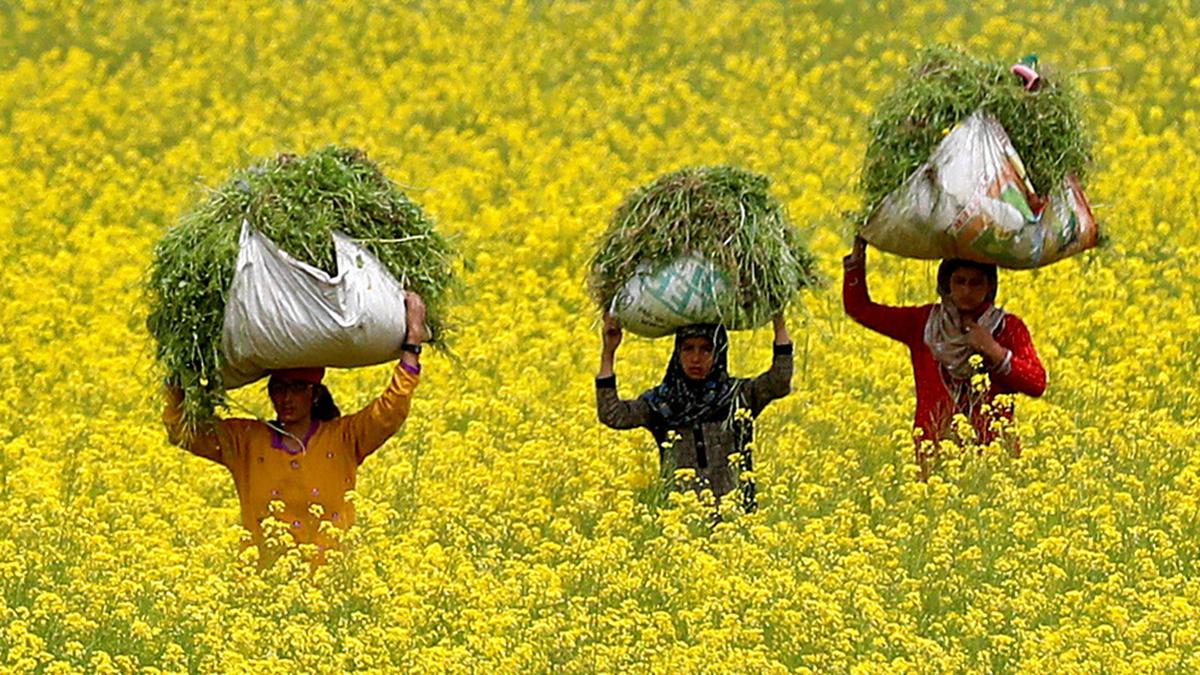
SC delivers split verdict on nod for GM mustard
The Hindu
Supreme Court delivers split verdict on GM mustard crop approval, orders national policy formulation for GM crops.
The Supreme Court on July 23 pronounced a split verdict on the validity of the Centre’s 2022 decision granting conditional approval for environmental release of genetically modified (GM) mustard crops.
The Bench of Justices B.V. Nagarathna and Sanjay Karol however asked the Centre to formulate a national policy with regard to GM crops for research, cultivation, trade and commerce in the country.
The case would now be referred to a three-judge Bench to be constituted by the Chief Justice of India.
On October 18, 2022, the Genetic Engineering Appraisal Committee (GEAC)— a statutory body under the Ministry of Environment, Forest and Climate Change and regulator of genetically modified organisms in the country— recommended the environmental release.
A subsequent decision was taken on October 25, 2022 approving the environmental release of transgenic mustard hybrid DMH-11, a variety of GM mustard.
On July 23, in its judgment, the court said the “national policy shall be formulated in consultation with all stakeholders, such as experts in the field of agriculture, biotechnology, State governments, representatives of the farmers, etc”.
It said the government should conduct a national consultation, preferably within the next four months, with the aim of formulating the national policy on GM crops.


Diya Chitale and Manav Thakkar reach semifinals, while Yashaswini Ghorpade upsets top seed Sreeja Akula at National TT Championships.

DYFI criticizes A.P.'s job calendar for failing unemployed youth, demanding a revision to include 1 lakh posts and higher age limits.

‘Lethargic’ officials who left Chambal sanctuary to the mercy of sand miners will be held liable: SC
Supreme Court holds negligent officials accountable for enabling illegal sand mining in Chambal Sanctuary, emphasizing habitat protection laws.

Work on the Srisailam Left Bank Canal tunnel resumes after 13 months, with completion targeted by 2027-end, says Minister Reddy.

Ancient ‘Vanni’ tree at Sri Meenakshi Sundareswarar Temple tilts; steps on to restore it

Bengaluru Metro penalises 14 passengers for disrupting services with loud singing, following a viral clip of their antics.

ASR district plans a 122 km world-class trekking network, enhancing tourism and local employment across Araku, Paderu, and Lambasingi.

Development without impact: Coastal residents of Kanniyakumari and Nagercoil constituencies voice discontent

Environmentalists in Kakinada celebrate World Sparrow Day, urging conservation efforts for sparrows and migratory birds.

T.K. Govindan secures full support from K. Sudhakaran for Kerala Assembly polls 2026 as a UDF-backed Independent candidate.

Karnataka implements weekly reviews and control rooms to combat rural drinking water shortages during the summer months.

BJP leads candidate selection for upcoming bypolls, while Congress faces internal challenges and community pressure in Bagalkot and Davangere.

A man died in a Kolkata hospital lift, prompting accusations of negligence against the West Bengal government and hospital authorities.