‘Saving lives’: How AI is helping doctors better predict heart failure
Global News
Amidst the surging rates of heart failure across Canada, experts say the urgency for accurate prognostic tools has never been more needed.
Amidst the surging rates of heart failure across Canada, experts say the urgency for accurate prognostic tools has never been more needed. Yet, within this challenging landscape, promise is emerging from the realm of artificial intelligence (AI).
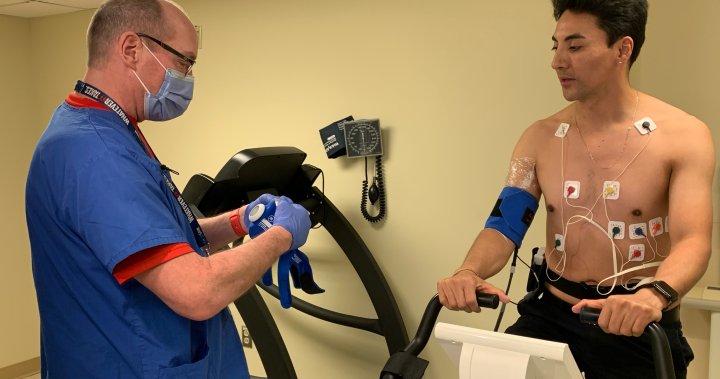
Researchers at the Peter Munk Cardiac Centre in Toronto have unveiled SEATTLE HF, an AI system demonstrating precision in forecasting a patient’s heart health compared to physicians.
“We recognize that we are limited in how much information we can combine at once,” explained Dr. Carolina Alba, staff cardiologist at Peter Munk Cardiac Centre.
“Of course, (doctors) are very well trained and we have a lot of experience seeing thousands of patients with specific conditions, but we know that our brain is limited. Now we can rely on the use of predictive models.”
Alba told Global News that the goal of the AI tool is not to replace doctors, but only to assist them in making a better judgment for a patient, whether it involves recommending heart surgery, adjusting medication dosage or exploring alternative treatments.
“Right now we rely on family doctors’ judgments or our judgment to make these decisions. We know that we are a little bit off. So by having these models, I think that we can allocate resources much better and we can make sure that we can help everybody who would have the most benefit from this type of care,” she said.
Around 750,000 Canadians live with heart failure, a chronic condition caused by the heart not functioning as it should or a problem with its structure, according to the Heart and Stroke Foundation. And 100,000 are diagnosed with this incurable disease each year. It is also a growing problem not just in Canada, but across the world.
Although there is no cure for heart failure, early diagnosis and the right treatment plan can extend life expectancy and improve quality of life.


It was both a big win and hopefully not too big of a loss for the Edmonton Oilers on Sunday.

Some experts say that a cyberwar through 'proxies' may be the next stage of the Iran war, with civilian infrastructure also coming under threat.

The study is being billed by the university as "the first to study a wide range of factors which link ADHD symptoms and mental ill health symptoms over time."

The group says MAGA Energy hasn't paid its lease for three years, and therefore the company is no longer allowed on their land in Edmonton.

The analysis by the Canadian Climate Institute says oilsands producers will pay an average of about 50 cents per oil barrel, if the minimum carbon price rises to $130 per tonne.

Between November 29 and February 27, authorities recorded 406 outbreaks of bird flu in domestic birds in 32 European countries and 2,108 outbreaks in wild birds, they said.

Dr. Michael Domeier, director of the Marine Conservation Science Institute, told Global News that they tag the adult females as they are the most interesting.

Regina’s recycling contamination is currently triple the limit and city is urging resident to change sorting habits now to avoid citywide fines and higher resident fees.

The study found that higher ultra-processed food intake at age three years was associated with adverse behavioural and emotional symptoms at age five years.

Edmonton's single-use waste rules were controversial and unpopular when introduced in 2023 — but new data shows the changes are having the intended effect of reducing garbage.

Carney's speech to Australia's parliament highlighted a soon-to-launch Canadian low earth orbit satellite network that experts say could soon compete with Elon Musk's Starlink.

The Pentagon said in a statement Thursday that it has “officially informed Anthropic leadership the company and its products are deemed a supply chain risk, effective immediately.”

Opioid overdose deaths in Canada are falling, but there's growing concerns on a certain veterinary tranquilizer being cut into fentanyl and other opioids.