Saudi officials use AI, drones and thousands of cameras to keep hajj pilgrims safe
The Hindu
During the holy month of Ramadan this year, the system spotted when the Grand Mosque had reached full capacity.
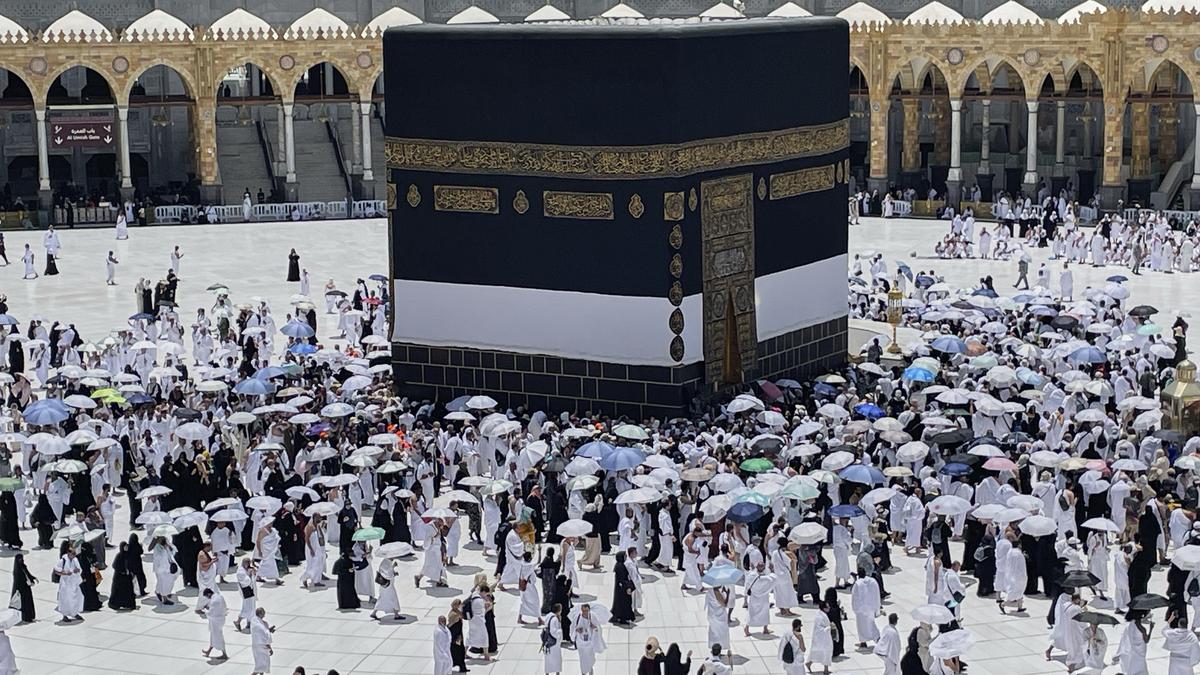
Working day and night in front of maps, screens and seemingly endless data, Saudi officials have harnessed artificial intelligence to help manage the million-strong sea of pilgrims during the hajj.
The technology has proven pivotal to track the overwhelming amount of footage from more than 15,000 cameras in and around the holy city of Mecca.
The systems are tuned to spot abnormal crowd movements or predict bottlenecks in foot traffic: a potential life-saver at a packed event with a history of deadly stampedes.
Software is also used to help guide more than 20,000 buses deployed to transport pilgrims between holy sites during one of the world's biggest annual religious gatherings.
It is all part of the tech arsenal that Saudi Arabia is deploying as 1.4 million faithful from across the globe descend on Mecca and its surrounds.
"In our traffic control room, we use specialised cameras that have AI layers to analyse movements, crowded areas" and predict behaviours, said Mohamed Nazier, chief executive officer for the General Transport Centre at the Royal Commission for Mecca.
The centre has a main control room in Mecca filled with screens and maps, where staff use high-tech tools including AI for round-the-clock monitoring.


Saudi Arabia expels Iranian military staff amid escalating tensions and ongoing missile attacks during the U.S.-Israeli war on Iran.

Russia claims control of Potapivka village in Ukraine's Sumy region amid ongoing military efforts to establish a buffer zone.

Iranian missile strikes on Israeli towns cause widespread damage and injuries, marking a significant escalation in the ongoing conflict.

As Gor makes first trip as U.S. Special envoy to South Asia, Delhi watches strategic signals closely
Sergio Gor's inaugural trip as U.S. Special Envoy to South Asia signals strategic U.S. engagement amid regional tensions.

Slovenians vote in a tight election between liberal and populist candidates, impacting the country's future domestic and foreign policies.

Netanyahu asserts U.S.-Israel alliance fights Iranian threats, emphasizing global security after missile strikes on Israeli and European targets.

Israeli settlers attack Palestinian villages in the West Bank, causing injuries and destruction amid ongoing settlement expansion.

Britain asserts no evidence of Iran planning missile strikes on Europe, despite Israeli claims of missile capabilities.

UNESCO reports over half of countries have banned phones in schools due to concerns about attention, cyberbullying, and social media impact.

Analysis reveals a U.S.-operated Patriot missile likely caused a pre-dawn explosion in Bahrain, injuring numerous civilians.

Sri Lanka raises fuel prices by 25% amid ongoing West Asia conflict, impacting petrol and diesel costs significantly.

Iran strikes near Israeli nuclear research center as Trump threatens attacks on Iranian power plants
Iran's missile strikes near Israel's nuclear site escalate tensions as Trump threatens retaliation against Iranian power plants.

Saudi Arabia intercepts one of three ballistic missiles targeting Riyadh amid ongoing regional tensions and threats from Iran.