Satire | How does one get through Delhi winters? By reading classic literature
The Hindu
The idea of hell as an inferno must have come from Dante’s cunning inversion of Delhi’s cold, smoggy winter
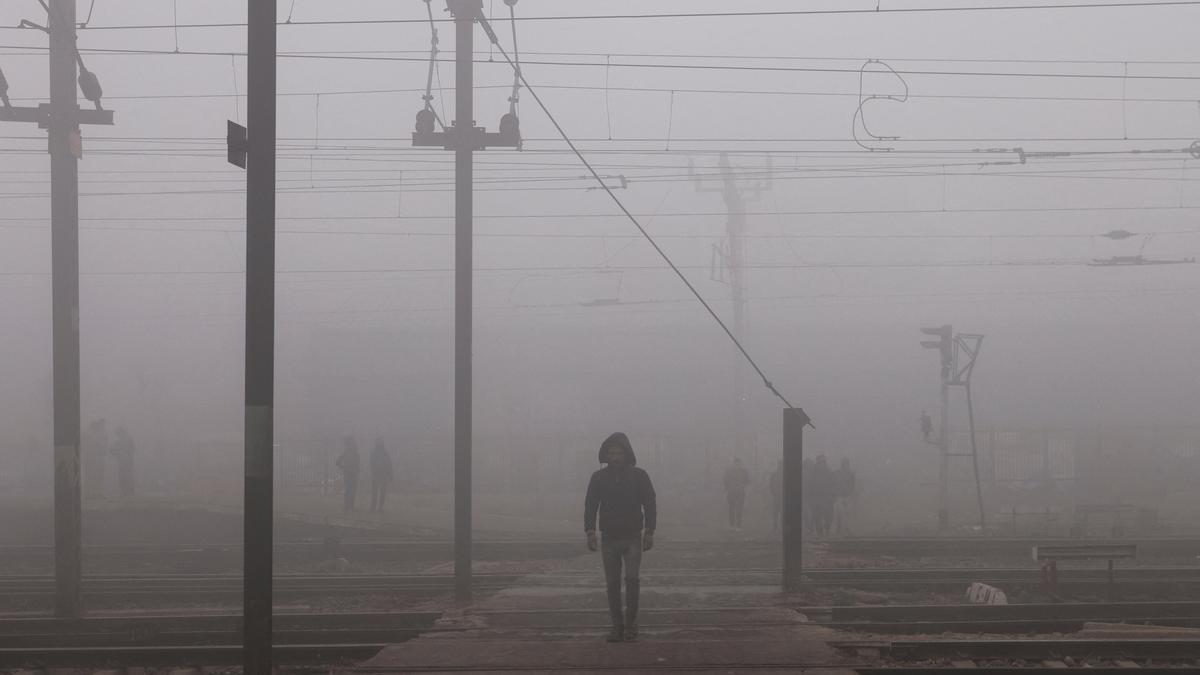
How can anyone step outside in the Delhi winter and not suffer? I’m amazed every time I see a life form on the street that is not coughing or gasping. Sometimes that life form is a cow, dog or pigeon. But many are unmistakeably human. How? How can they absorb the air equivalent of water-boarding and go about as if the torture isn’t real?
The latest instalment of my annual torture began in late October when Delhi’s Air Quality Index (AQI) settled down in the 300-500 range (‘severe’ to hazardous’). There hasn’t been a day since that I haven’t paid my ‘lung tax’ in the form of unending coughing fits.
At one point, my son Kattabomman began to worry I was going to die. Apparently, his teacher had said in class that air pollution kills. I explained to him that it’s not that simple — yes, air pollution kills, but it does so gradually, over many years, until one fine day you’re on a ventilator and it hits you that your achhe din are well and truly behind you.
Of course, even healthy Indians know this already. But it’s different when you feel it in your chest cavity, when your breathing gets as shallow as the poll promises made by animated electoral bonds in human form.
So how does one get through the hell hole that India’s capital turns into every winter? In my case, what keeps me going is literature, the one with the capital L.
I want to thank both my chief minister and the Central government — which is based out of New Delhi for a reason — for not only providing free air (not even GST on it) to all Delhiites, but also fortifying it with supplements such as nitrogen oxide, sulphur dioxide, cement dust and carbon monoxide so that you feel compelled to turn to literature. Where else can you find an answer to the question: what’s the meaning of breathing when clean air is rarer than a clean politician?
So I’ve been re-reading Macbeth, and I’ve made some exciting discoveries. Did you know that its opening scene was actually inspired by Shakespeare’s sojourn in Delhi in the winter of 1604? He was waiting at the Ashram flyover when the line, “Hover through the fog and filthy air” came to him. A Shakespeare scholar from Oxford tells me the three witches actually stand for construction work, vehicle exhaust, and biomass burning. Is it any wonder Macbeth is considered a timeless classic?


The Railway Ministry has decided to regularise the services of Surat-Mangaluru Junction-Surat bi-weekly Special Express along with nine other special trains.

Training held for zonal election officers in Thoothukudi

Defence Minister highlights BRO's vital role in enhancing border infrastructure, national security, and socio-economic growth in India.

Andhra University celebrates its 91st and 92nd convocations, honoring graduates and distinguished personalities for their contributions and achievements.

Coimbatore students receive earthen bowls to provide water for birds, promoting conservation on World Sparrow Day.

Residents of Hosahundi village in Kasaba hobli of Mysuru taluk have opposed the proposed construction of a flyover at Devalapura Cross on National Highway 275-K (Outer Ring Road), urging the authorities to drop the project and adopt alternative measures to improve road safety.

A brain-dead head constable’s family consented to organ donation under the Jeevandan programme, giving two patients a new lease of life through kidney transplants.

A-G informs Madras High Court no govt. sanction needed for FIR in K.N. Nehru's cash-for-jobs scam case.

President of Karnataka Beary Sahitya Academy U. H. Umar on Wednesday appealed to Madhu Bangarappa, Minister for School Education and Literacy to introduce Beary as the third optional language from Class 6 from the academic year 2026-27.

Karnataka Dalit Sangharsha Samiti (DSS) has urged the State government to begin the process of filling up 56,432 posts only after rectifying the mistakes in fixing the roster and implementing the internal reservation among Scheduled Castes.

Rebel nominations in Karaikal expose tensions within electoral alliances, risking voter fragmentation ahead of the Puducherry Assembly elections.

CCPA prohibits restaurants and hotels from imposing unfair LPG charges, labeling them as unjustified and against consumer protection guidelines.

Andhra Pradesh receives ₹19.47 crore for 44 handloom clusters, benefiting over 10,000 weavers under the National Handloom Development Programme.