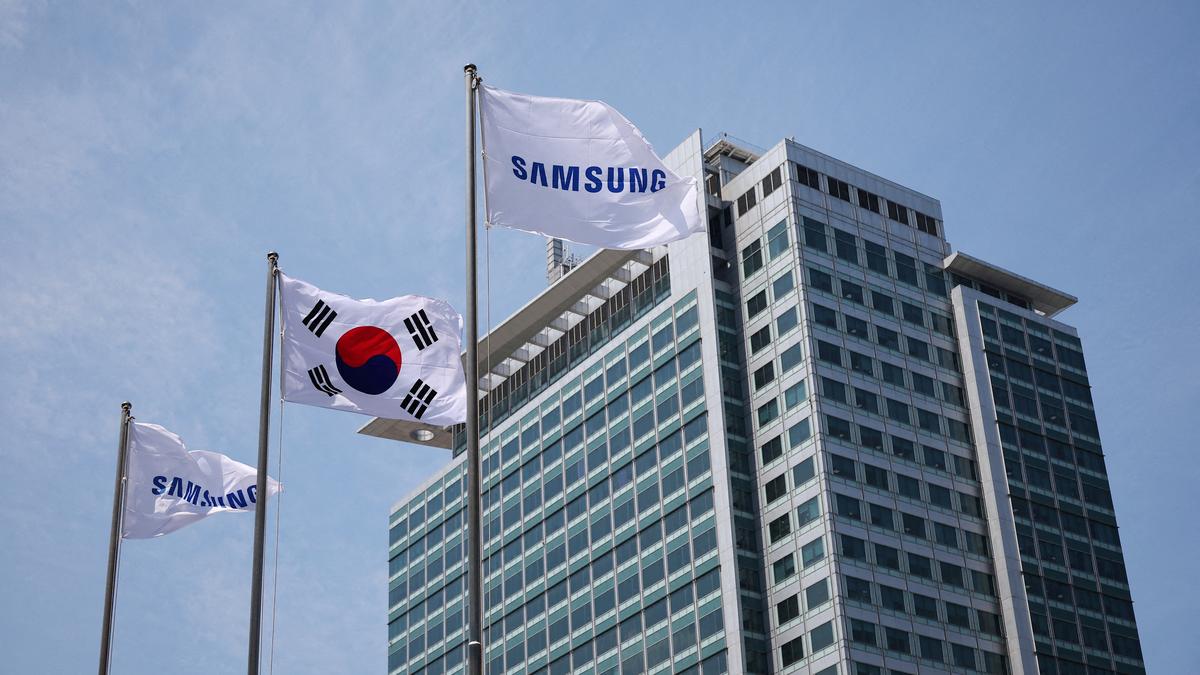
Samsung's third-quarter profit recovery slows as it struggles in AI chips
The Hindu
Samsung’s third-quarter profit fell short of analyst estimates as it struggled with manufacturing AI chips.
Samsung Electronics estimated on Tuesday its third-quarter operating profit jumped 274%, but that was short of analysts' estimates as the tech giant struggled to capitalise on strong demand for chips used in artificial intelligence servers.
The world's largest memory chip, smartphone and TV maker estimated an operating profit of 9.1 trillion won ($6.78 billion) for the three months ended Sept. 30, versus a 10.3 trillion won LSEG SmartEstimate.
That would compare with 2.43 trillion won in the same period a year earlier and 10.44 trillion won in the preceding quarter.
Samsung has been the world's biggest memory chipmaker for three decades but it increasingly faces competition in both conventional and advanced chips.
High-margin chips used in AI servers are driving a recovery in the chip market after a post-pandemic downturn last year. Still, Samsung has lagged behind SK Hynix in supplying high-bandwidth memory (HBM) chips to AI leader Nvidia .
Demand remains lacklustre for commodity chips used in PCs and smartphones upon which Samsung relies more than rivals, analysts said.


Garbage collection resumes in Bengaluru amid contractor disputes over payment delays and new waste segregation rules by BSWML.

Hyderabad faces traffic challenges due to rising vehicle numbers; government appoints international consultant for effective infrastructure solutions.

Discover the Delhi Capitals' IPL 2026 player roster, schedule, and support staff as they pursue their first championship.

Sanya Malhotra and Aditya Rawal have started shooting for their upcoming romantic-thriller, Sundar Poonam.

Telangana Government plans a ₹940 crore double-decker elevated corridor from Panama Godowns to Hayatnagar on the Vijayawada highway.

PM Modi emphasizes India's pursuit of diverse gas and crude oil sources amid the global energy crisis due to West Asia conflict.

Kerala BJP chief Rajeev Chandrasekhar challenges Congress to prove undisclosed assets allegations in court, dismissing them as distractions.

As per information by Minister of State for Civil Aviation Murlidhar Mohol to a question in the Rajya Sabha, ₹146.89 crore has been utilised under the UDAN scheme till October 31, 2025.

Supreme Court rules women officers in Armed Forces deserve equal opportunities, upholding their right to permanent commission and pension benefits.

Telangana government assures no fuel shortage; Hyderabad police commissioner urges citizens to avoid panic buying

Telangana government employees will receive 10-20% discounts on electric vehicles to promote eco-friendly transportation, announces Transport Minister.

Discover the engaging teaser of 'Pallichattambi,' a period drama starring Tovino Thomas, releasing on April 10.

SP P. Jagadeesh reviews night patrols in Anantapur to enhance security and public safety during Operation Night Safety.