Sales at stores are suddenly surging in the US economy’s latest show of strength
CNN
The backbone of America’s economy remains solid, despite a slowing job market, elevated interest rates and still-high inflation.
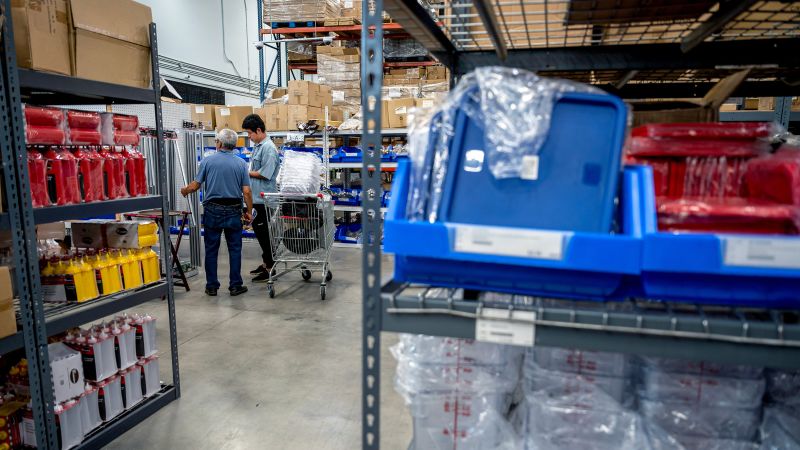
The backbone of America’s economy remains solid, despite a slowing job market, elevated interest rates and still-high inflation. Sales at US retailers unexpectedly surged in July, the Commerce Department said Thursday, rising by a solid 1% from the prior month, up from June’s downwardly revised 0.2% decline. That trounced economists’ expectations of a 0.3% gain. Retail sales, which are adjusted for seasonal swings but not inflation, make up a sizable chunk of overall spending. July’s reading is a boon for the US economy because the country’s economic growth hinges on Americans spending their dollars. It is the economy’s latest show of strength in the face of several economic hurdles squeezing the US consumer. Sales jumped across most categories last month, rising the most at car dealerships, which likely reflects a rebound from the cyberattack on software systems that dealerships use earlier this summer. Those sales spiked by 3.6% in July. Excluding that category, retail sales were up by a still-strong 0.4% in July from June. Retail spending on electronics and at grocery stores also rose robustly last month, up by 1.6% and 1%, respectively. Americans also continued to spend at bars and restaurants at a healthy pace. Meanwhile, sales were down at specialty stores and clothing retailers in July.


The White House on Friday released its long-awaited national artificial intelligence legislative framework, a move to prevent states from enacting their own laws and enforce the Trump administration’s light-touch approach to AI regulation.

“Today is a difficult day,” CBS executives wrote to staff, explaining the cuts as a tough but necessary reallocation of newsroom resources.

President Donald Trump has repeatedly promised that Americans will get larger tax refunds this year thanks to his “big, beautiful bill.”

President Donald Trump has repeatedly promised that Americans will get larger tax refunds this year thanks to his “big, beautiful bill.”

Oil prices edged lower on Friday after a tumultuous day that saw the international benchmark surge above $119 a barrel as the Middle East conflict deepened energy supply fears.

The war in Iran has delivered what economists call a “black swan” event — an unforeseen shock so destructive, no one is immune to it.

The war in Iran is driving up the cost of buying a home in America.

Eight state attorneys general have filed an antitrust lawsuit to block Nexstar’s pending acquisition of Tegna, which would strengthen the right-leaning Nexstar and shrink the number of station owners in the US.

The Iran war has driven oil prices to their highest levels in years. Now, a wave of attacks in the past 24 hours on energy production sites across the Middle East have turned the spotlight on another crucial fossil fuel: liquefied natural gas, or LNG.

Oil and natural gas prices spiked Thursday, as Iran ramped up strikes on energy infrastructure across the Middle East and attacked one of the world’s most important liquefied natural gas (LNG) facilities in Qatar.

In normal times, the Federal Reserve would more or less ignore an oil price shock like the one we’re in now.

Property brokerage Compass on Wednesday dropped its lawsuit against Zillow, ending a legal clash over how home listings can be marketed online.

Fed officials didn’t make any rate moves at their March meeting and released an updated forecast for the path of the American economy as the war in Iran stretches on.