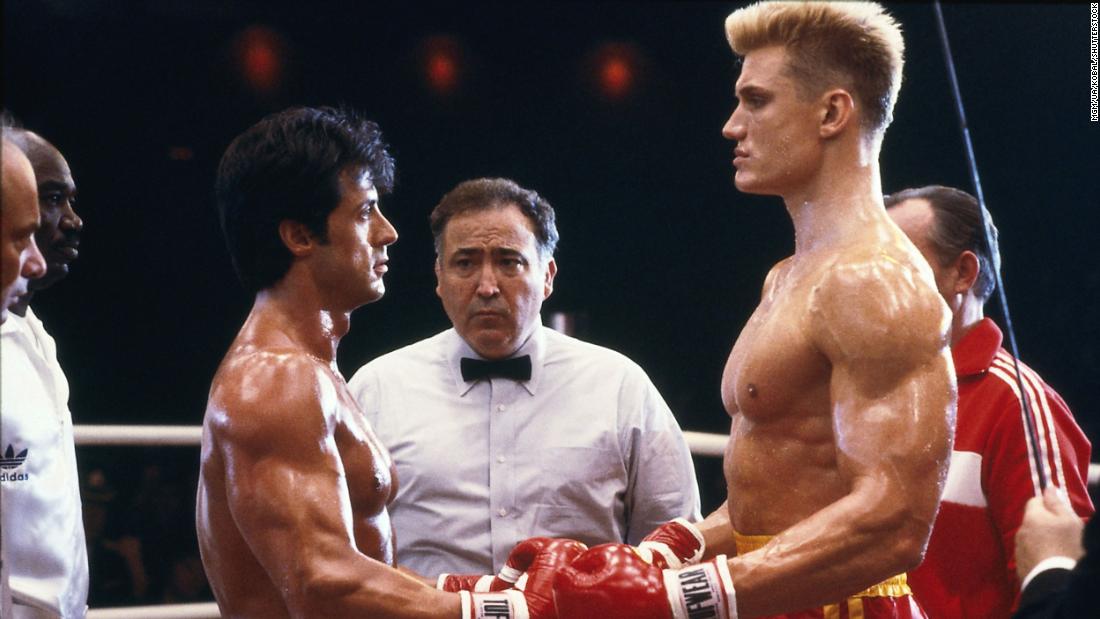
Russians were go-to movie villains in the 1980s. What a new Cold War might bring
CNN
How will the promise of a second Cold War impact the portrayal of Russia in movies and television? To see a glimpse of what could be in the future it's worth looking to the past.
There was no one kind of Cold War movie during that period, but a variety that tugged at different threads. The plots ranged from traditional spy fare and stock, go-to villains to Soviet invasions of the US to hopeful demonstrations of Russians and Americans finding common ground, even if their countries didn't. Others focused on the threat of nuclear annihilation, a concern exemplified by earlier movies like "Failsafe" and "Dr. Strangelove" but brought to vivid life -- and directly into living rooms -- in the '80s.
That last bracket included "The Day After," a 1983 TV movie considered so provocative that the Reagan administration appealed to ABC not to broadcast it. Shown with limited commercial interruption because of the content, the movie drew a massive audience -- a cultural moment captured, fittingly, in the FX series "The Americans," which dealt with Soviet spies operating within the US.


A young, well-liked facilities manager at the Kennedy Center has gone from being described as “in charge of HVAC and toilets” to head of the renowned arts institution.

Democrats in Florida are hoping to capitalize on the party’s recent special election overperformances and come out on top Tuesday in a special state House election for a Palm Beach district that includes President Donald Trump’s Mar-a-Lago residence.

The Supreme Court on Monday appeared ready to limit mail-in ballots, a move that would reinforce the justices’ pattern of shrinking voter protections and that has, at bottom, favored Republican interests and the Trump administration.

An Air Canada plane traveling from Montreal collided with an emergency vehicle on the runway at New York City’s LaGuardia Airport in the late hours of Sunday night, killing two pilots and injuring dozens of people.

Top Senate Republicans on Capitol Hill believe their party is unified behind a plan to reopen the Department of Homeland Security. Now, they need to sell the plan to Democrats.

Markwayne Mullin will serve as Donald Trump’s next Department of Homeland Security secretary, elevating the US senator to helm the agency at the center of the president’s controversial immigration enforcement effort and an ongoing shutdown.

President Donald Trump’s sudden turnabout and, according to him, rapidly advancing peace talks made for an abrupt shift in the administration’s approach to the Iran war.

The Supreme Court’s conservative majority appeared dubious of state laws that allow the counting of mail ballots that arrive at election offices after Election Day as justices heard oral arguments in a challenge to Mississippi’s five-day grace period for mail ballots.

The chief district judge in New Jersey appointed Robert Frazer, a career prosecutor, to serve as US attorney for the state, ending for now a dispute over the legality of the office’s leadership that threatened to derail criminal investigations.

Tens of thousands of taxpayer dollars were spent on expenses for hair and makeup artists and a horse for the advertisement showcasing outgoing Department of Homeland Security Secretary Kristi Noem in front of Mount Rushmore, according to invoices seen by CNN.

President Donald Trump was presented Sunday with a potential off-ramp to the more than month-long Department of Homeland Security shutdown: fund every part of the department except enforcement operations by Immigration and Customs Enforcement, two sources familiar with the conversations told CNN.

Immigration and Customs Enforcement agents are heading to 13 airports today to help with crowd management as travelers at some airports wait in hours-long security lines amid the DHS shutdown. Follow here for the latest.

A consortium of the nation’s top architectural and historic preservation groups is targeting President Donald Trump’s plans to temporarily close and extensively renovate the Kennedy Center, filing a new lawsuit Monday that asks a federal judge to indefinitely halt the project.