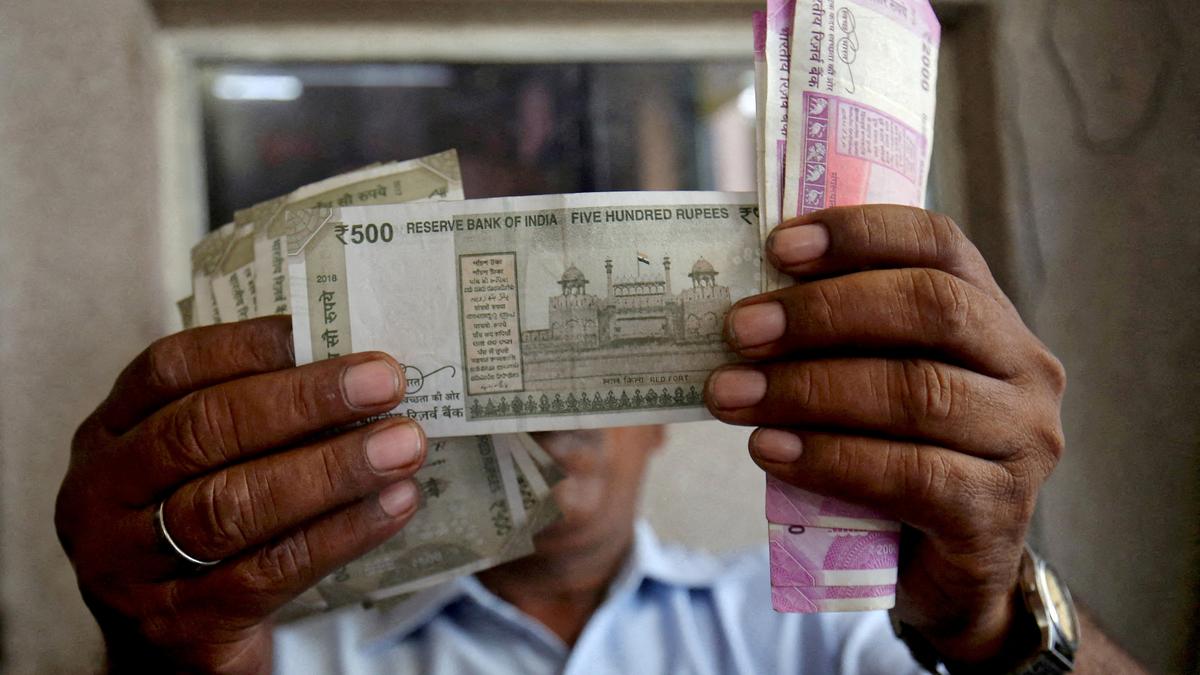
Rupee recovers from all-time low, rises 9 paise to 83.69/$ in early trade
The Hindu
Rupee rebounds from all-time low as foreign fund outflows weigh, RBI intervention prevents further depreciation.
The rupee recovered from its all-time low level and appreciated 9 paise to 83.69 against the US dollar in early trade on Friday, amid a positive trend in domestic equities.
Forex traders said foreign fund outflows from Indian equities following the government's decision to hike the tax rate on capital gains weighed on the local currency and restricted the upmove.
At the interbank foreign exchange market, the local unit opened at 83.72 against the American currency, then rose to 83.69 against the American currency, registering a rise of 9 paise from its previous close.
On Thursday, the rupee dropped by 7 paise to close at an all-time low of 83.78 against the US dollar.
"The rupee remains under significant pressure, hovering near all-time low levels. This strain is due to the government's recent decision to hike the tax rate on capital gains, sparking major outflows of Foreign Institutional Investments (FIIs).
"However, the Reserve Bank of India (RBI) has been actively capping the downside, preventing further depreciation by maintaining the rupee at around 83.75," CR Forex Advisors MD Amit Pabari said.
Meanwhile, the dollar index, which gauges the greenback's strength against a basket of six currencies, was at 104.30, lower by 0.05 per cent.


L&T confirms 95% of its West Asia project sites are safe, while addressing logistics challenges amid ongoing regional conflicts.

Mines Ministry to auction 19 critical mineral blocks on March 23, expanding strategic resources for clean energy and technology sectors.

Mines Ministry to auction 19 critical mineral blocks on March 23, expanding strategic resources for clean energy and technology sectors.

Five top firms lose ₹1 lakh crore in market value, with HDFC Bank experiencing the largest decline of ₹56,124.48 crore.

HDFC Bank terminates three senior officials over client onboarding issues at its DIFC branch amid ethical concerns following chairman's resignation.

Air India CEO warns of potential flight cuts and reduced travel demand due to rising fuel costs amid ongoing Gulf conflict.

Options are widely used by retail traders to speculate on the value of the stock for immediate gains and such behaviour in large scale can distort the market

India achieves 1 billion tonne coal production for the second consecutive year, ensuring stable energy supply and economic growth.

Generic drugmakers in India launch affordable Semaglutide versions, targeting a $1 billion diabetes and weight loss market.

Indian and Asian refiners eye Iranian oil purchases as U.S. waives sanctions amid energy crisis linked to the Iran-Israel war.

Iran war impacts pesticide prices, warning of a 20-25% rise and increased risk of counterfeit products during the kharif season.

India's forex reserves fell by $7 billion to $709.76 billion, according to RBI data for the week ending March 13.

Natco Pharma will launch its Semaglutide injection (multi dose vials) in the domestic market on Saturday.