Rubio on Next Steps in Venezuela
Voice of America
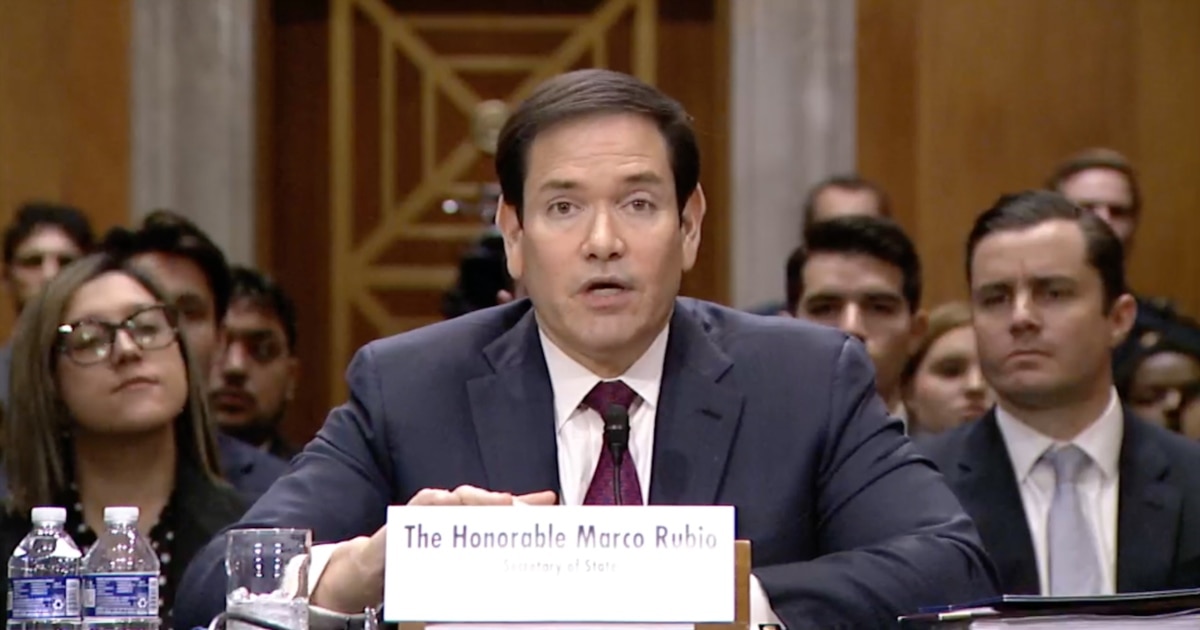
Secretary of State Marco Rubio in recent testimony before the Senate Foreign Relations Committee laid out the United States’ goals for Venezuela after the removal president and now indicted narcotrafficker Nicolas Maduro.
Secretary of State Marco Rubio in recent testimony before the Senate Foreign Relations Committee laid out the United States’ goals for Venezuela after the removal president and now indicted narcotrafficker Nicolas Maduro.“We want to reach a phase of transition where we are left with a friendly, stable, prosperous Venezuela, and democratic, in which all elements of society are represented in free and fair elections.” Step one is to create stability in Venezuela. One of the tools available to the United States to achieve this is the sanctions on Venezuelan oil, said Secretary Rubio. “So, we entered into an arrangement with [the government], and the arrangement is this:” On the oil that is sanctioned and quarantined, the U.S. will allow Venezuela to move it to market at market prices – not at the discount China was getting. In return, the funds from that will be deposited into an account that the U.S. will have oversight over. And that money will be spent for the benefit of the Venezuelan people.Venezuela was facing a fiscal crunch, in need of money to fund the police, the sanitation workers, and the daily operations of government, said Secretary Rubio.“And so, we’ve been able to create a short-term mechanism. . .in which the needs of the Venezuelan people can be met through a process that we’ve created, where they will submit every month a budget of this is what we need funded. We will provide for them at the front end what that money cannot be used for. And they have been very cooperative in this regard. In fact, they have pledged to use a substantial amount of those funds to purchase medicine and equipment directly from the United States.” The second phase is a period of recovery, and that is the phase in which we want to see a normalized oil industry, said Secretary Rubio, one which is not dominated by cronies, graft, or corruption.Another part of the recovery phase is for the Venezuelan opposition to regain their freedom to participate in public life. “Part of that is the release of political prisoners, by some estimates up to 2,000,” said Secretary Rubio. “They are releasing them probably slower than I would like them to, but they are releasing them. And in fact, you’re starting to see some of the people being released beginning to speak out and participate in political life in the country. We have a long ways to go.”The transition in Venezuela will take time, Secretary Rubio acknowledged. “At the end of the day we are dealing with people over there that have spent most of their lives living in a gangster paradise, so it’s not going to. . .turn around overnight. But I think we’re making good and decent progress.”
