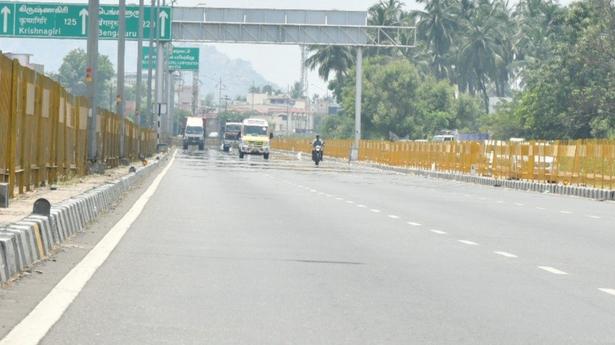
Road data for 23,000 km of Tamil Nadu roads getting ready
The Hindu
Around 75% of the basic data has already been submitted to the Tamil Nadu Road Sector Project
Around 75% of basic road data, including geometry, texture, roughness and assets such as culverts and bridges, for 23,000 km of State Highways and major district roads has been submitted to the Tamil Nadu Road Sector Project (TNRSP). The remaining data would be coded and uploaded in a month.
“This road condition assessment data will help officials and engineers plan the future spending on roads. It will also assist them in identifying black spots by incorporating traffic data and in carrying out corrective measures,” explained sources in the Highways Department.
Of the 23,000 kilometres, 11,640 km were major district roads and 11,780 km were State highways, said Parasuraman, managing director of the Chennai-based Indian Road Survey and Management (IRSM), which had been conducting the survey since last September.
“We have equipment fitted in network survey vehicles with 13 lasers to scan both above and below the roads’ surface. We scan up to 1.5 m below the surface, where we collect data based on the vibration,” he added.
The vehicle can cover up to 150 km of road a day depending on the traffic. Since lasers are used, the survey cannot be done at night. Usually, such surveys are done manually.


CM announces Cabinet Sub-Committee on Musi rejuvenation; rehabilitation for all displaced

Ramanathapuram identifies 145 polling stations as sensitive, ensuring security with paramilitary forces ahead of assembly elections, says DEO.

BJP Puducherry president V. P Ramalingam files nomination for Raj Bhavan, joined by Union Minister Mandaviya and Khushbu Sundar.

History-sheeter 'Thoppai' Ganesh shot dead by police in Chennai after attacking officers during attempted escape.

The government plans to amend the FCRA, introducing new regulations for NGO asset management and accountability for key functionaries.

The draft policy for “Responsible Digital Use Among Students”, released on Monday by the Department of Health and Family Welfare, has recommended that parents set structured routines with clear screen-time rules and prioritise privacy, safety, and open conversation with children on digital well-being.

Police Observer Sushant Kumar Saxena conducts surprise inspection at Shencottai police station, reviewing warrants and security arrangements ahead of elections.

Andhra Pradesh government to launch key projects in April, focusing on industrial growth and infrastructure development, says Nara Lokesh.

Lok Sabha refers the Corporate Laws (Amendment) Bill to a JPC amid opposition concerns over CSR provisions dilution.

SHG members in Kanniyakumari use snakes and ladders to raise election awareness and boost voter turnout.

Government accelerates consultations for early implementation of the Women’s Reservation Act to ensure women’s representation in 2029 elections.

CM A. Revanth Reddy distributes ₹1 crore insurance cheques to families of deceased Electricity department employees, enhancing financial security for workers.

The Bengaluru Traffic Police (BTP) registered 634 cases of drunk driving during a week-long special enforcement drive conducted across the city between March 16 and March 22.