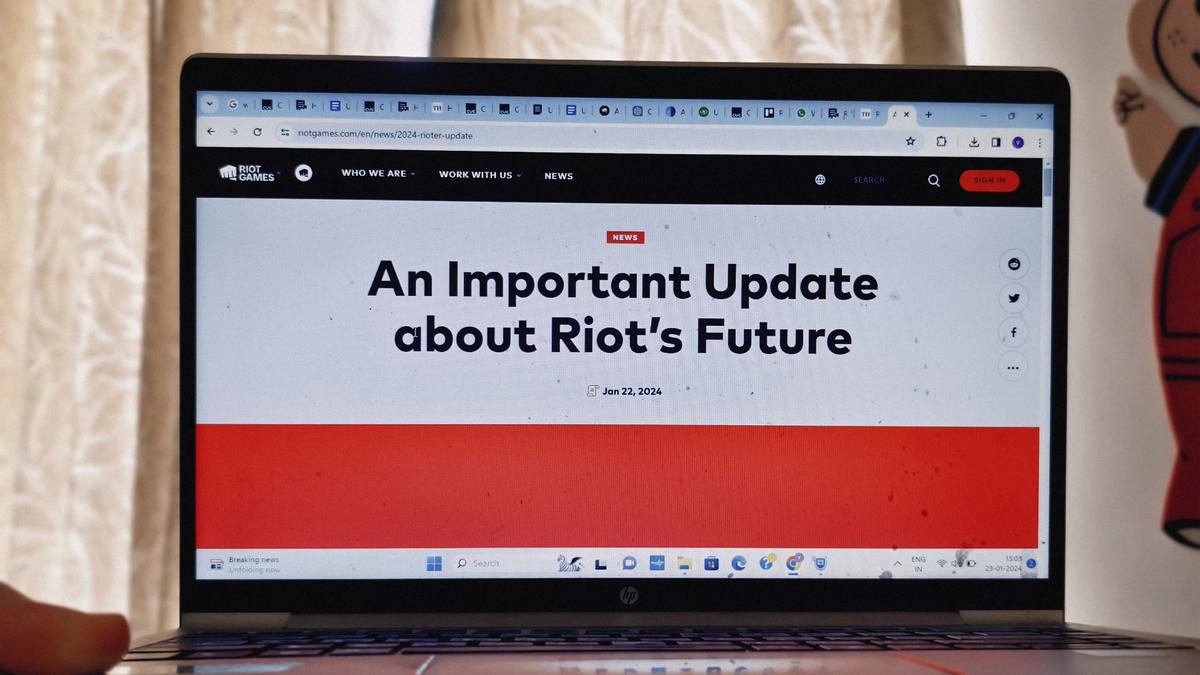
Riot Games to lay off 11% of workforce
The Hindu
Riot Games has announced plans to reduce its global workforce by nearly 11%, affecting approximately 530 roles.
Riot Games announced on Tuesday(January 22 in the US) that its latest restructuring effort, will result in the elimination of about 11% of its global workforce, impacting roughly 530 roles.
The decision stems from the company’s expansive growth since 2019, where it evolved into a multi-game, multi-experience entity. Despite aiming to enhance player experiences, the lack of a focused trajectory led to unsustainable costs and underwhelming returns on substantial investments.
The restructuring is a strategic move to realign the company’s focus on aspects that generate maximum player value. The impact is particularly felt outside the core development teams, affecting employees across various departments.
To ensure transparency, Riot Games has initiated a communication process, wherein employees globally will receive emails, notifying them of potential impacts on their roles. Subsequent one-on-one meetings with senior leaders and people team partners are scheduled within 48 hours, adhering to local employment processes.
(For top technology news of the day, subscribe to our tech newsletter Today’s Cache)
Departing employees will receive a comprehensive compensation package, including severance pay, cash bonuses, continued health benefits, and additional funds for future expenses.
Equity holders will retain vested shares, and former employees will have access to career support services


Union Minister skips crucial NCTP meeting amid backlash over controversial Transgender Rights Bill, raising concerns within the community.

Former Minister Semmalai urges parties to limit freebies and prioritize development for Tamil Nadu's future prosperity.

New Mangalore Port will receive 72,700 tonnes of LPG next week, including a 16,714-tonne discharge on March 22.

The Centre lifts air fare caps after three months, citing stabilized operations and rising aviation fuel costs amid geopolitical tensions.

Residents of Salem South demand solutions for traffic congestion, mosquito issues, and inadequate drinking water supply ahead of elections.

Experience Guuranda in Chennai: A captivating blend of Narungga stories, dance, music, and shadow puppetry celebrating Aboriginal culture.

Police warn against downloading APK files and clicking suspicious links to avoid falling victim to cyber fraud.

CM A. Revanth Reddy reviews Bhadrachalam temple development plans, targeting completion by March 2027 while adhering to Agama Shastra.

First-half blitz helps Punjab FC drub Kerala Blasters FC

Vellore Mayor Sujatha Anandakumar and a councillor face legal action for violating the Model Code of Conduct by distributing sports equipment.

Supreme Court judge Justice Nagarathna highlights government's role in court backlog, urging judicial reforms for effective litigation management.

Kerala LDF ministers declare assets nearing ₹2 crore each amid upcoming elections, revealing financial details and legal challenges.

Indiaspora, a San Francisco-based non-profit organisation which connects leaders of the Indian diaspora, is holding its 2026 Indiaspora Forum on March 22-24 and also a Global AI Summit on March 25, 2026, at JW Marriott Prestige Golfshire Resort in Bengaluru.