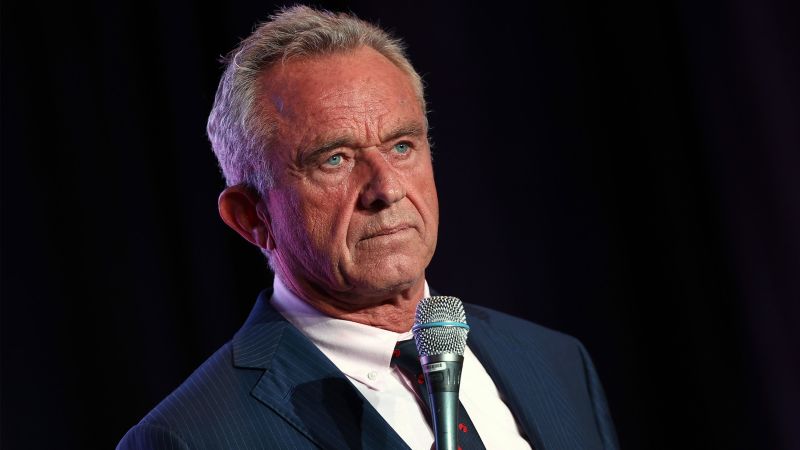
RFK Jr. says he had ‘visceral reaction against’ removal of Robert E. Lee statue in Charlottesville
CNN
Independent presidential candidate Robert F. Kennedy Jr. said he had a “visceral reaction against” the removal of the statue of Confederate Gen. Robert E. Lee that was once the focal point of the deadly 2017 “Unite the Right” rally in Charlottesville, Virginia.
Independent presidential candidate Robert F. Kennedy Jr. said he had a “visceral reaction against” the removal of the statue of Confederate Gen. Robert E. Lee that was once the focal point of the deadly 2017 “Unite the Right” rally in Charlottesville, Virginia. Kennedy said in an interview with podcast host Tim Pool on Friday that he opposes “destroying history” when asked about the Charlottesville City Council’s decision in 2021 to remove the town’s statute of Lee and melt it down to create new public art. Kennedy, who went to law school at the University of Virginia, said he had a personal reaction to seeing the statue removed. “I have a visceral reaction against the attacks on those statues,” Kennedy said. “There were heroes in the Confederacy who didn’t have slaves, and you know, I just have a visceral reaction against destroying history. I don’t like it.” “I think we should celebrate who we are,” Kennedy added. “We should celebrate the good qualities of everybody.” The 2017 decision to remove the statute of Lee from a park in Charlottesville sparked outrage, including from White nationalist sympathizers who gathered at the “Unite the Right” protest that August and violently clashed with counter-protesters. Heather Heyer, a counter-protester, was killed when a man drove his car into a crowd. Kennedy said he doesn’t “think it’s a good, a healthy thing for any culture to erase its history,” and suggested historical figures like Lee should be celebrated for their positive qualities even if they also took actions that are now “regarded as immoral … or wrong.”


Florida GOP congressman Rep. Neal Dunn was thrust into the spotlight after Trump said he had a heart problem and underwent surgery

White House chief of staff Susie Wiles has been diagnosed with early stage breast cancer, President Donald Trump announced Monday.

An Afghan man who served alongside US special forces and fled his native country after its takeover by the Taliban died over the weekend shortly after being detained by immigration authorities, according to his family and an advocacy group.

5 things to know for March 16: War with Iran, Oscar winners, Travel chaos, Severe weather, US airmen
CNN’s 5 Things AM brings you the news you need to know every morning.

The retirement of Illinois Sen. Dick Durbin after nearly 30 years in office sparked an expensive three-way Democratic primary that has showcased the party’s divisions over how to confront President Donald Trump’s immigration crackdown and introduced pro-crypto forces as an influence seeking to shape the midterm elections. The contest is also setting up a test of Gov. JB Pritzker’s political clout in the state as he eyes a potential 2028 presidential bid.

One month into the partial government shutdown, hundreds of Transportation Security Adminstration workers going without full pay have quit, prompting more travel headaches amid ongoing staffing shortages, a winter storm in the Midwest and spring break travel.

Moves to create massive new immigration detention facilities are catching local officials by surprise, leaving them and their communities scrambling for answers.

The Israeli military said the brother of the man who drove a vehicle laden with explosives into a Michigan synagogue Thursday was a Hezbollah commander killed in a strike last week.

A Rhode Island community had their own “Miracle on Ice” last night when Colin Dorgan whose mother, father and grandfather were killed in a devastating shooting last month, scored the game winning goal in double overtime to lead the Blackstone Valley Schools’ hockey team to the championship game.

As the politics around Israel shift in the US, many Democratic lawmakers and candidates are seeking distance from the American Israel Political Affairs Committee. It comes as the group is spending big to shape the outcome of primaries across the country.

Louisiana Sen. Bill Cassidy in February weighed possible political peril against a long career in medicine, ultimately casting the critical vote to confirm known vaccine skeptic Robert F. Kennedy as the president’s Health and Human Services secretary.

As CENTCOM commander, it’s up to Adm. Brad Cooper to keep the military campaign on track until a political decision is made to end it — however long that may take.

As the war with Iran continues, oil prices are soaring and airlines will see higher fuel costs – which could hit travelers around the world in their wallets.