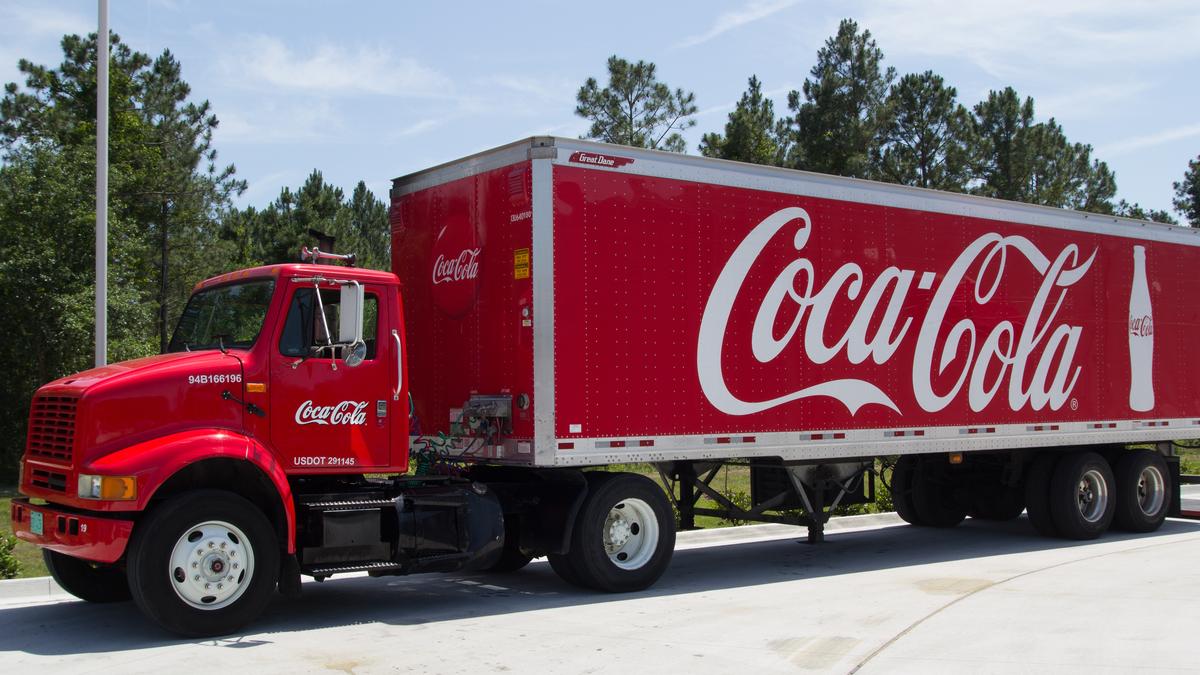
Review of Sara Byala’s Bottled — How Coca-Cola Became African: The story of Africa’s ubiquitous beverage since 1928
The Hindu
Reflecting the entrenched realities of globalisation, development and capitalism, Bottled narrates the tale from the perspective of Africa where Coca-Cola is available everywhere, when most life-saving medicines are not
Cities across the world are suffering from a severe water crisis as climate change fears turn real; there’s also a huge pushback against the use of sugar with diabetes on the rise. Yet, travel to virtually any place on earth, and one is likely to find a bottle or can of Coca-Cola. How has this carbonated drink become ubiquitous across the water-stressed world, and whose primary constituent is locally sourced water only?
The story of Coca-Cola reflects the entrenched realities of globalisation, development and capitalism, and Sara Byala’s Bottled tells it from the perspective of Africa where the sugary drink is available everywhere, when most life-saving medicines are not. “In its profound breadth and depth, Coca-Cola offers an unequalled lens onto modern Africa,” she writes.
Yet, as Byala points out, “there would be no Coca-Cola without the African kola nut”, and she begins her story with how America got enamoured with the west African tree and its seed which has a caffeine-yielding stimulant. “In May, 1886, as Europe was scrambling to carve up the African continent, John Pemberton [in Atlanta, America] created the earliest version of a beverage that would soon be called Coca-Cola, a drink whose name and whose origin, came in part, from Africa.”
Coca-Cola, says Byala, narrates its African story as one of “unstopped progress” that began with its first bottling in South Africa in 1928, and is now present in every African nation as the continent’s single largest private employer “with a multiplier effect”.
Byala, a senior lecturer at the University of Pennsylvania, provides an in-depth assessment of how a global beverage brand adjusted its marketing strategy to the socio-political demands in conquering a continent. While she undertook fieldwork in eight countries, Egypt, Eswatini, Ghana, Kenya, Nigeria, Rwanda, South Africa, and Zimbabwe, Byala guided research assistants to conduct interviews in several nations.
From Cape Town to Cairo — the accompanying illustrations and photographs, including one of a Coca-Cola stall in front of the Sphinx, Egypt tell a thousand words more — the company aligned with everything from education to the anti-apartheid struggle in locating the beverage in the lives of people. “The more I researched and spoke to people, the more the story of Coke appeared as a parable for late capitalism, full of both cause for concern and seeds of optimism,” she says.
By 2020, more than three quarters of a million Africans were being supported by Coca-Cola, not to mention that 10-12 indirect jobs were being created in related industries. It is a familiar narrative on how corporations contribute to solutions while generating problems in the first place.


Indian vessels can freely sail through the Strait of Hormuz without needing permission, confirms a senior government official.

The Hindu Morning Digest gives a select list of stories to start the day. Read the top news today on March 25, 2026

An IndiGo flight at Vijayawada airport was grounded due to a tyre burst, but all 79 occupants are safe.

Tamil Nadu Assembly election 2026: TMC(M) gets five seats in NDA, to contest on BJP's 'Lotus' symbol
TMC(M) secures five NDA seats, to contest Assembly elections using BJP's 'Lotus' symbol in Tamil Nadu.

The Karnataka government will discuss with officials the possibility of creating a portal for unemployed youth to share their details and access job opportunities in micro, small and medium enterprises (MSMEs), Minister for Small Industries and Public Enterprises Sharanabasappa Darshanapur said in the Legislative Council on Tuesday.

AIADMK's 2026 manifesto promises free rations, women's benefits, education reforms, and economic growth initiatives for Tamil Nadu.

U.S.-Israel war on Iran LIVE: Follow The Hindu for updates on the West Asia conflict on March 24, 2026

Join the 'Click & Commit' campaign on World TB Day, uniting Chennai's community to pledge against tuberculosis.

Brahmin candidates join Naam Tamilar Katchi, marking a significant shift in Tamil Nadu's political landscape and inclusivity.

Over 750 wheelchairs are prepared in Thoothukudi for accessible voting, ensuring convenience for differently abled and elderly voters.

Madras HC dismisses S.P. Velumani's petition challenging I-T assessment of ₹7 crore as unexplained election expenses from 2016.

The Lok Sabha passes a contentious Transgender Bill, sparking praise from the government and criticism from opposition parties.

Kamal Haasan announces support for DMK in 2026 elections, emphasizing the need for 'Dravidian Model 2.0' for Tamil Nadu's welfare.