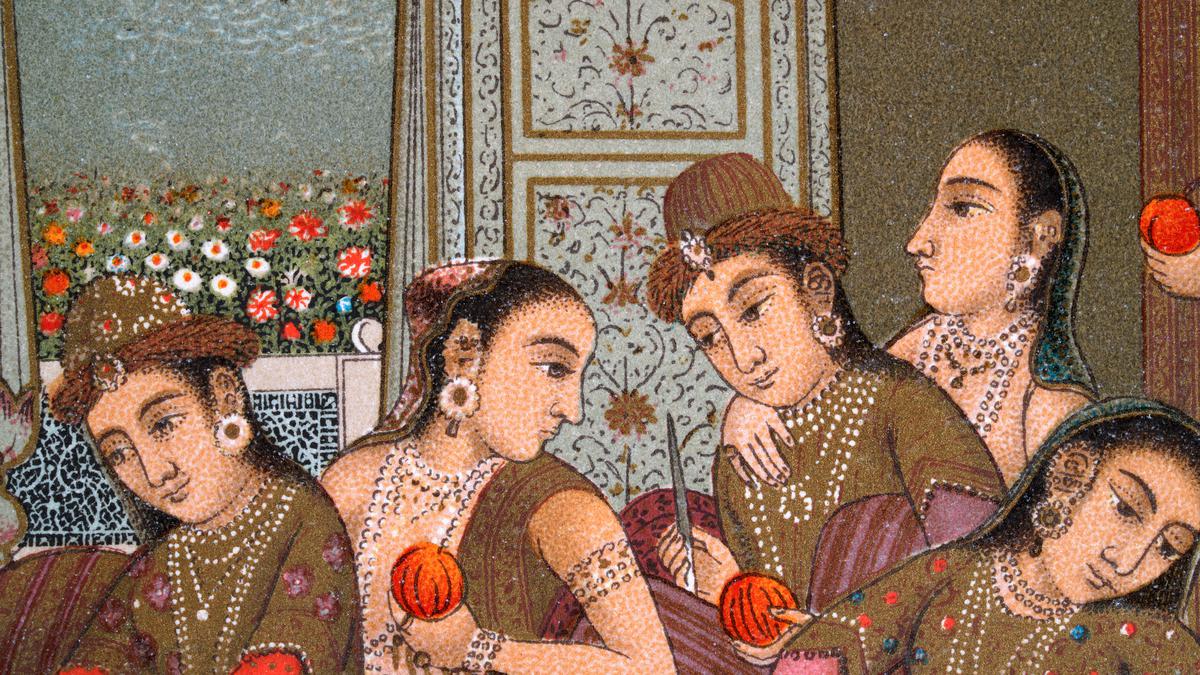
Review of Ruby Lal’s Vagabond Princess — The Great Adventures of Gulbadan: The Mughals’ memory keeper
The Hindu
At 63, Gulbadan Banu Begum, the only woman historian of the Mughals, was prompted by her nephew Emperor Akbar to write about his dynasty
Most people tend to have cliched ideas about the role of women in the Mughal empire. The royal women were not cloistered away in zenanas. They lived separately, but were much respected; they were educated and had a voice of their own. The emperors often turned to them for guidance and advice.
Historian Ruby Lal’s book, Vagabond Princess: The Great Adventures of Gulbadan, is an account of Gulbadan Banu Begum, literally ‘Rosebody’, Babur’s daughter and an exceptional but under-appreciated figure. Gulbadan wrote a historical memoir of the Mughals when she was in her sixties, ‘Ahval-i Humayun Badshah’ or the ‘Humayun Nama’, providing an insight on life under her father Babur, brother Humayun and nephew Akbar. Gulbadan is the first and only woman historian of the Mughal era.
Akbar asked his aunt to write the book as she had known and interacted with three Mughal emperors. Her book is not political unlike the other accounts of the time. It provides details of everyday life in the royal palace and is also an account of the empire as it was taking shape. The princess travelled, crossed the seas, was showered with gold and diamonds, and led an adventurous life.
Gulbadan’s peripatetic life started early. Humayun consulted the women in the palace on how to deal with his rebellious son Hindal who had fled to Agra from Alwar. When he decided to forgive him, he asked Gulbadan, who had just got married, to go and fetch him. Her mother Dildar did not allow her to do so as she was too young. Gulbadan, however, took many trips between Kabul, Agra and other places with her family as and when politics and war demanded.
Gulbadan was very fond of her father who spent a lot of time with his wives in Agra when he was not warring and expanding his empire. She does not talk about how stressful this situation of many women and many wives could have been. However, she mentions that Maham, the senior wife of Babur, and also her guardian mother, got agitated when other women moved in with them.
The family took short trips for various reasons. To get over a family tragedy, Babur sent the women to Dholapur 35 miles south of Agra. They travelled by royal boats from the banks of the Yamuna. Shortly after Humayun fell critically ill, Gulbadan mentions the well-known episode of Babur offering his life in exchange for Humayun’s — Humayun got better and Babur passed away.
It was a period when men interacted with men, and women with women. Lal says the homo social arrangement at the heart of Mughal life persisted in Agra. It was also a time when the royals lived in tents and camps. For generations, Mughal women had convoyed with their men in battle zones which meant travel. During conflicts, “elders gave advice and the younger women brought solace.”


Four injured in SUV collision with a stranded goods carrier on Narsingi ORR, causing significant traffic congestion.

Parliament Budget Session LIVE: Follow The Hindu's latest updates on the Parliament Budget Session on March 23, 2026.

T. Nagar faces severe infrastructure challenges amid commercial growth, impacting emergency services and resident quality of life.

Five individuals detained after a man's death due to a lift malfunction at R.G. Kar Hospital in Kolkata.

In 2014, Amazon introduced its first smartphone, hoping to take on Apple and Samsung. Instead, the Fire Phone, overseen directly by founder Jeff Bezos, was scrapped in barely over a year, one of Amazon’s highest-profile flops.

A data jam on March 28 by OpenCity will have participants studying how the Assembly constituencies in and around Chennai are faring on a set of parameters

IUML files police complaint over a fake Facebook post targeting its leader, warning against misinformation and potential legal action.

Experience global flavors at Vizag's 'World Flavours' food festival, celebrating cultural unity through authentic international cuisines.

Three men were killed in a road mishap after their mini truck crashed into a stationary truck near Medahalli in east Bengaluru on Saturday night, police said.

Kerala's critical sectors face LPG shortages despite a 20% relief allocation, impacting restaurants and hotels significantly.

Explore the Sattankulam custodial torture deaths of P. Jayaraj and his son J. Benicks, revealing a shocking tale of police brutality.

Explore the Sattankulam custodial torture deaths of P. Jayaraj and his son J. Benicks, revealing a shocking tale of police brutality.

The 2026 Assembly elections in India will involve Assam, West Bengal, Kerala, Tamil Nadu, and Puducherry across 824 constituencies.