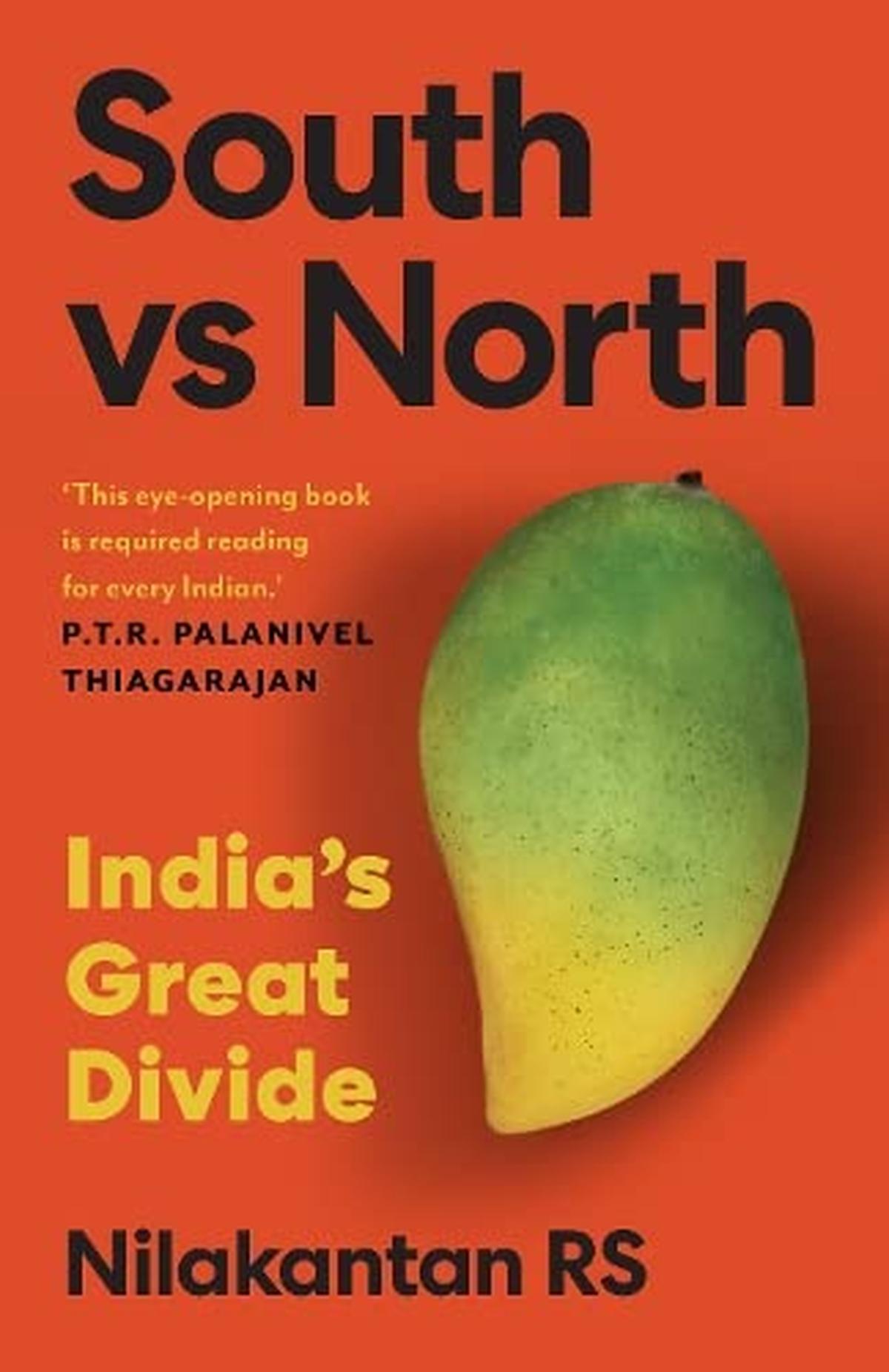
Review of Nilakantan R.S.’s South vs North: The Great Divide: Apples and oranges
The Hindu
There has to be a better way to reward southern States, which perform better on all indices, argues a new book
Why are the southern States doing so much better than the north? That’s the question data scientist Nilakantan R.S. strives to answer in his new book, South vs North: India’s Great Divide. At the time of independence, he writes in the Introduction, the southern States were indistinguishable from the rest of India in terms of their development metrics. Today, the difference couldn’t be starker.
Backed with data, statistics, research and reporting, he provides the possible reasons, starting with the most important economic resource a State can have: its people. “A healthy and well-educated population with a reasonably well-run government is likely to have better economic prospects. The income levels and job prospects in south India are, unsurprisingly, significantly better than in the north.”
But this success may also put the southern States, which are performing well, under pressure. If increasing centralised policy-making is one area of concern, the south’s better management of population growth is also working to its disadvantage, he argues. “Resource allocation by the Indian Union heavily favours the north and works against the south. The south is taxed more, both in absolute terms and on a per capita basis, but receives far less allocation in return, simply because its population growth is lower.”
The book is divided into three parts, with the first part taking stock of the divergence between the northern and southern States in terms of development metrics like health, education and economic prospects. He is critical of the methodology and data of several government reports like the Good Governance Index or the way NITI Aayog tracks the sustainable development goals (SDGs). “The purpose of comparing States in these reports seems to be to rate the State governments of the day based on the policy prerogatives of the Union [government].”
The second section deals with the consequences of such divergence, first in the performance of the States, and some “absurd rankings”. In the last part, Nilakantan offers possible solutions to “avoid the threats of violence and balkanisation, and find better ways to resolve the difficult resource allocation problems facing India.” With data-driven examples, the writer makes a compelling argument against the logic of a “one size fits all” policy, driven by the government at the Centre. If there is one important takeaway for policy-makers all across India, it is that girls must be educated; and the government must ensure that they don’t drop out, by giving them nutritious meals and access to menstrual hygiene, as several southern States have done.
He argues that a centralised policy, as opposed to State-driven ones, serves no real purpose other than “political credit” ahead of elections.
The chapter on the economy deals with the aspect of India’s incentives towards agriculture, which has historically resulted in disguised unemployment. Nilakantan says the government needs to relook this sector's policy approach especially in the context of the biggest crisis that humans face in the form of climate change.


Three doctors were arrested by the Mico Layout traffic police on Monday (March 23) after a video allegedly showing them triple-riding without helmets with one of the pillion riders seen drinking from a bottle went viral on social media.

Assembly protest ends in arrests as BJP targets Government over guarantees

Andhra Pradesh accelerates city gas distribution with streamlined approvals, enhancing access to cleaner energy and supporting sustainable urban development.

Sattankulam father-son custodial deaths case: Trial court convicts all nine accused police personnel
Nine police personnel convicted in Sattankulam custodial deaths; sentencing to be announced on March 30.

Minister Laxmi Hebbalkar supports local protests against a solid waste management plant in Turmuri, addressing residents' concerns.

Sattankulam father-son custodial deaths case: Trial court convicts all nine accused police personnel
Nine police personnel convicted in Sattankulam custodial deaths; sentencing to be announced on March 30.

Erode district conducts first EVM randomisation for April 23 Assembly elections, ensuring transparency and fairness in allocation.

TNCC conducts public consultation in Erode to gather community input for its upcoming election manifesto.

CID to investigate sexual assault allegations against suspended Moodbidri Police Inspector P.G. Sandesh, reveals Home Minister Parameshwara.

A 50-year-old woman was found dead in southwest Bengaluru’s Kengeri in the early hours of Monday, the police said.

Papanasam dam's water level reaches 66.15 feet, with inflow at 76 cusecs and discharge at 300 cusecs.

Development without impact: Coastal residents of Kanniyakumari and Nagercoil constituencies voice discontent

Rampant encroachments in Tiruchi threaten pedestrian safety and traffic flow, undermining smart pavement initiatives and exacerbating congestion.