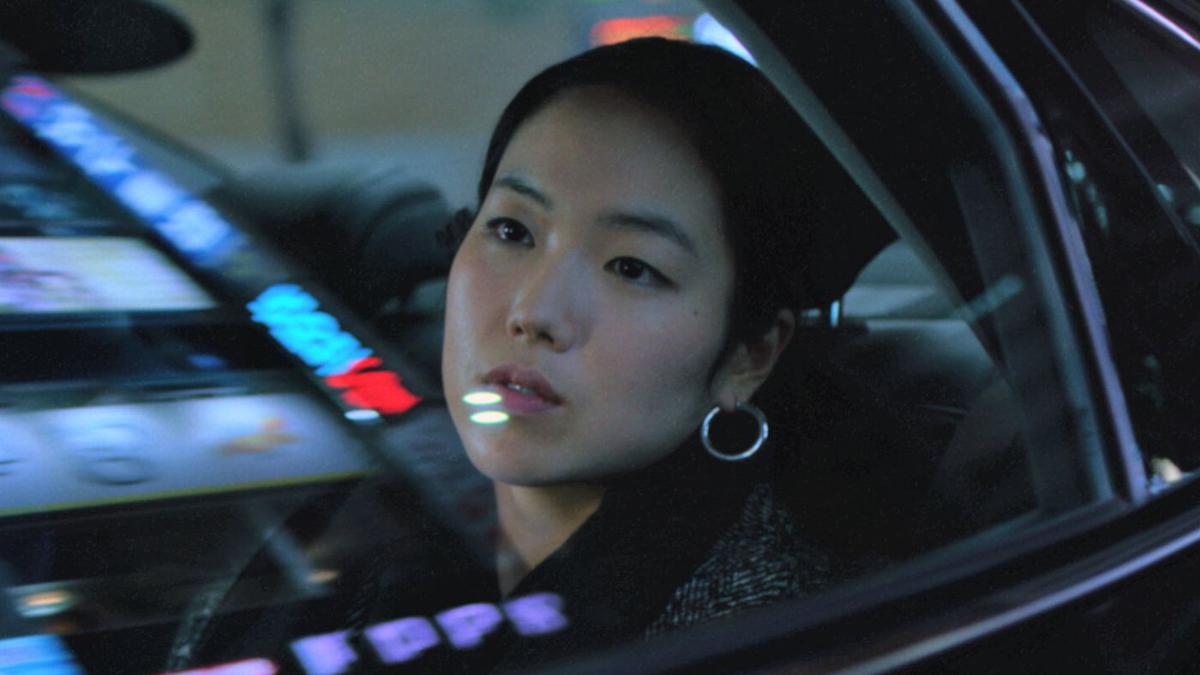
‘Return to Seoul’ movie review: Davy Chou and Park Ji-Min sensitively translate the chaos of defining one’s identity
The Hindu
Displaying the chaotic curiosity of chasing down your own self, Davy Chou in collaboration with Park Ji-Min creates a unique watching experience
Thrumming with a universally resonant restlessness, Davy Chou’s Return to Seoul is a film in constant yet comforting motion. Zipping across gummy afternoons, and nights awash in a neon glow, Chou guides the audience across a multi-continental journey to define one’s self. Though, in a refreshing change of pace, he does not choose to be preachy or profound about it. In a story that addresses adoption and belongingness, Chou gives a persistent treatment while still ensuring unexpected twists and turns.
After her flight to Tokyo gets cancelled, Frédérique “Freddie” Benoît (Park Ji-Min) impulsively chooses to reroute her two-week vacation to Seoul. For Freddie, who was born in South Korea and later adopted by French parents, this impromptu detour to her birth country turns out to be more than what she bargained for. Befriending the manager of the guest house (who luckily also speaks French), Freddie declares that her intentions in Seoul are not concerned with some cliched desire to reunite with her birth parents. However, she soon finds herself first at the Hammond Adoption Agency, and then on a bus travelling to meet her biological father. Overwhelmed by the consequences of her own choices, Freddie frantically asks the driver to return to Seoul but soon calms down and takes her seat.
There is a similar internal push-and-pull that forms the baseline of the nearly two-hour runtime of Return to Seoul.
In Seoul, Freddie is told that she has “pure Korean traits”, and strangers express shock when she tells them that she doesn’t wish to look for her biological family. Later, when she meets her father, he tells her that she should move back to Korea where he would help her get married to a Korean man. As Freddie, Park Ji-Min provides a quietly impactful performance of a person in their 20s repeatedly asserting their impendence in the face of these assumptions. Exploring the unchartered territories that exist within her, she takes every chance to reiterate that she is French. This loud declaration quietens and changes tone over the next eight years, as she returns to Seoul multiple times, each visit enabling Freddie to fully piece herself together.
As Freddie grows up — from a free-spirited stubborn 25-year-old to woman in her 30s — Return to Seoul takes this time to document the familiar ache of wresting control of your youth from the events that happen to you. Davy Chou noted that the first instance of Freddie not having control of what happens to her was when she was given up for adoption, setting off a lifetime of swinging between two vastly different cultures. Chou’s writing reflects Freddie’s desperation as an adult to take back control of where her life goes. Each segment is lit up by its own distinctive visual style and pace, and Chou’s fresh writing compliments Freddie’s unpredictable actions. Rather than placating an increasingly tangled situation, Chou bids farewell to Freddie without neat closure, which is in tandem with the mood he establishes throughout the film. Shot with an air of mystery, the palpating beats of a thriller which lead to the quiet of self-reconciliation, Return to Seoul ends as it begins; only a snapshot of Freddie’s ongoing journey.
As Freddie, in her debut acting role, Park Ji-Min infuses life into the memorable character of an adoptee in her second coming of age in her birth country. With acute precision, she portrays the desire to cut through the noise, to pin down ‘a self’.
Displaying the chaotic curiosity of chasing down your own self, Davy Chou in collaboration with Park Ji-Min creates a unique watching experience. With Celine Song’s Past Lives currently running in theatres, Return to Seoul, makes for a satisfying double feature on the subject of identity, immigration, and the perpetual desire for agency.


BTS's comeback concert in Seoul drew over 100,000 fans, featuring their new album "ARIRANG" and a global livestream.

Khalid Rahman is reuniting with Malayalam superstar Mammootty after Unda (2019). The Thallumaala director has teamed up with the veteran for Mattancherry Mafia.

Bollywood actor Akshay Kumar paid tribute to the martial arts grandmaster and Hollywood’s action star, Chuck Norris, who passed away on Thursday, March 19, 2026.

Renowned Odissi dancer Madhumita Raut, aged 59, dies of cardiac arrest, leaving behind a legacy of artistic achievements.

Chuck Norris, iconic martial arts master and actor, dies at 86, leaving behind a legendary legacy and internet memes.

South African naturalist Steve Boyes speaks on ghost elephants, ancestral tracking, and Werner Herzog’s documentary exploring Angola’s elusive highland giants

Actor-director Amol Palekar will receive META's Lifetime Achievement award for 2026 on March 25 in New Delhi.

India's artists unite against rising censorship, advocating for creative freedom and support for marginalized voices in the arts.

Written and directed by Kunal, the film also stars Sparsh Shrivastava and Vanshika Dhir

This year, Bharatnatyam artistes will present the Tyagaraja Aradhane as a dance performance

This year, Bharatnatyam artistes will present the Tyagaraja Aradhane as a dance performance

The actor, along with director Sushant Shah, speak about their upcoming series ‘Chiraiya’, Divya’s process of working on the dialect, Sushant’s approach to telling a story about women, and more

An independent video, ‘Feel the Spark’ by Raleigh Rajan with vocals by Ciera Dumas that celebrates Tamil literary giants, garnered 1.4 million views in less than 36 hours.