Responsible practices in rice cultivation critical to reducing greenhouse gas emissions: Report
The Hindu
Bengaluru-based biotech company String Bio has published a white paper which calls for urgent scaling up of sustainable approaches in rice cultivation.
Rice is a staple dish in most South Indian homes. But what a large section of people are unaware of is that the cultivation of the carbohydrate-rich grain is a major contributor to the emission of two greenhouse gases (GHG) - methane and nitrous oxide.
Bengaluru-based biotech company String Bio has published a white paper calling for sustainable practices in rice cultivation.
“It presents a very interesting duality. We can’t do without rice. At the same time sustainability is an attribute that we need to start thinking about when we talk about rice cultivation,” said Dr. Ezhil Subbian, CEO of String Bio, while launching the report.
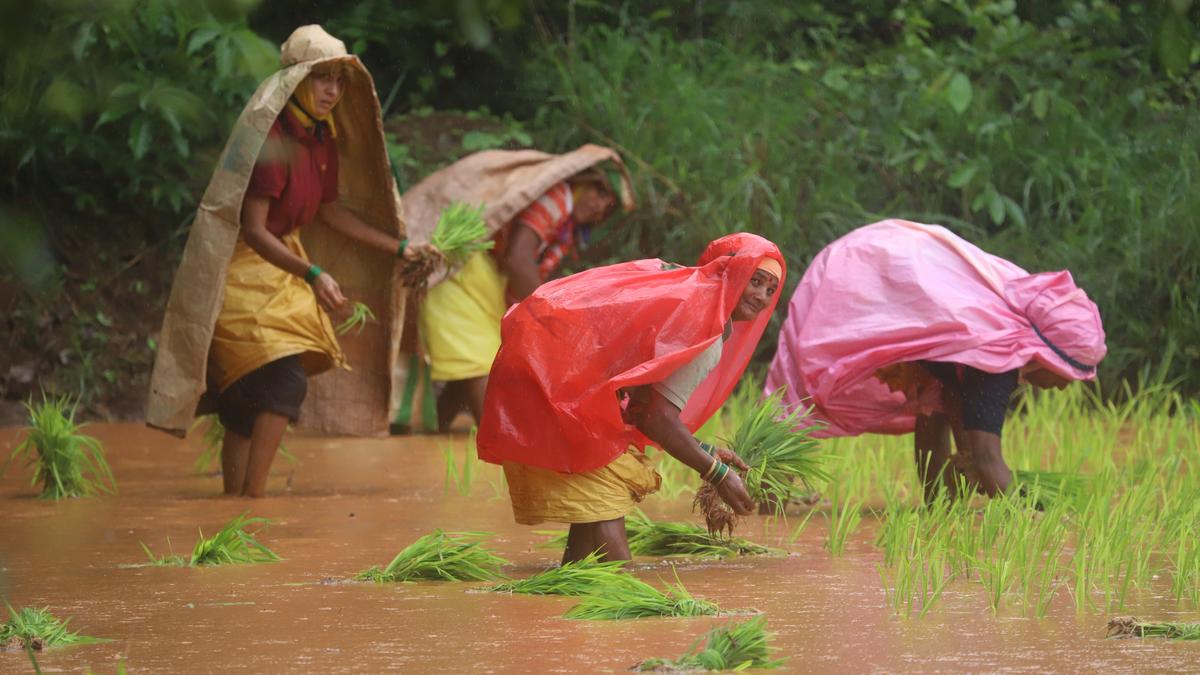
Rice cultivation practices across the globe follow flooding of the rice field to improve the growth of the crop and produce higher yields. But this cuts off the oxygen transfer from atmosphere to soil. As a result, the organic matter in the soil undergoes anaerobic fermentation which results in emission of methane.
Rice cultivation today accounts for nearly 10% of global methane emissions. At the same time, it has also been a victim of climate change.
According to the report titled ‘Responsible Rice: Call for Action’, recent trends in rice cultivation indicate a stagnation in crop yields and the rise in temperatures may lead to a 5-10% decrease in crop yields for every degree Celsius increase.
In the future, this could pose a major challenge to sustained production of rice, a cereal grain consumed by around 50% of the global population and critical for food security, underlining the importance of sustainable practices in rice cultivation.


Three youths radicalised by ISIS and AQIS arrested in Vijayawada for planning terror activities across India.

T.N. CM Stalin challenges PM Modi on government preparedness for West Asia crisis, emphasising leadership responsibility over public outsourcing.

Telangana DCA warns against unsupervised semaglutide use, stressing the importance of medical supervision and safe purchasing practices.

From origami classes at Rosary matriculation school to the two-day Makers Market in Mylapore, Chennai resident Priya Subramaniam has come a long way.

Election Commission bans exit poll results in Tamil Nadu from April 9 to April 29 ahead of Assembly elections.

Residents of Tambaram express concern over inadequate infrastructure amid rapid urban growth, highlighting traffic, drainage, and waste management issues.

Explore the defining moments and developments of Tamil Nadu's 16th Assembly, marked by political confrontations and administrative innovations.

Kerala CM Pinarayi Vijayan defends his remarks on G. Sudhakaran, labeling him a 'class traitor' amid election tensions.

Social media rumors spark panic buying of petrol in Belagavi, causing long queues and temporary fuel shortages at stations.

Delhi Budget 2026 LIVE: Follow live updates from The Hindu on the Delhi state budget for 2026-27, on March 24, 2026

Shorts News:WatchNetanyahu says Trump sees chance of striking deal with Iran

The facility in New Colony will benefit over 17,000 consumers, say officials

Water pipeline leak causes traffic congestion and waterlogging in Miyapur, Hyderabad, prompting detours and delays for commuters.